HBG
  • Subscribe
  • Digital Edition
    • Digital Edition
    • Digital Brand Index
    • Digital Archive
  • Beverage Guide
    • Flavor and Cocktail Construction >
      • A Guide to: Flavor Pairings and Recipe Development
      • A Guide to: Cocktail Construction
      • Flower Aroma Compounds
      • Peanut Aroma Compounds
      • A Guide to: Herb Aroma Compounds
      • A Guide to: Spice Aroma Compounds
      • Fruit Aroma Componds
      • Japanese Flavors
      • A Guide to Indigenous Mesoamerican Cocktail Ingredients
    • Production Fundamentals >
      • A Guide to: Water
      • A Guide to: Alcoholic Fermentation
      • Intro to the Fermentation of Grain
      • A Guide to: Distillation and Stills
      • A Guide to: Filtration
      • A Guide to: Oak Barrels
      • ​A Guide To: Non-Enzymatic ​Browning
      • Introduction to Cacao and Chocolate Making
    • Non-Alcoholic Beverages >
      • Kamaʻāina Beverages >
        • Hawaiian Sun
      • Non-Alcoholic Beer Produced by Restricted Fermentation
      • Non-Alcoholic Beer and Wine Produced by Dealcoholization
      • Hawaii Beverage Guide Perspective on: Non-Alcoholic Beer and Wine Program Integration
      • 2022 No/Low Alcohol Beverage Market Perspective
    • Beer >
      • Kamaʻāina Brewers >
        • Kauai Breweries >
          • Kaua'i Island Brewing Co.
        • Oahu Breweries >
          • Aloha Beer Co
          • Beer Lab
          • Broken Boundary Brewery
          • Hana Koa Brewing Co
          • Honolulu Beerworks
          • Inu Island Ales
          • Lanikai Brewing Co
          • Waikiki Brewing Company
        • Maui Breweries >
          • Maui Brewing Co
          • Maui Seltzer
          • Kohola Brewery
        • Big Island Breweries >
          • Big Island Brewhaus
          • Ola Brewing
          • Hilo Brewing
          • Kona Brewing
      • Athletic Brewing
      • Firestone Walker Brewing Co
      • Golden Road Brewing
      • Stella Artois Summer Solstice Lager
      • San Miguel
    • Cider >
      • Kamaʻāina Ciders >
        • Paradise Ciders
    • Sake
    • Spirits >
      • Kamaʻāina Distillers >
        • Aloha Awamori
        • Hali'imaile Distilling Company
        • Hanalei Spirits
        • Hawaii Sea Spirits
        • Hawaiian Shochu Co
        • Island Distillers
        • Ko Hana Rum
        • Kolani Distillers
        • Koloa Rum >
          • Koloa Cacao Rum
        • Ko'olau Distillery
        • Kuleana Rumworks
        • Kupu Spirits >
          • Kupu Whiskey
        • Royal Hawaiian Spirits
      • Bitters
      • Brandy >
        • Cognac >
          • Martell
        • Spanish Brandy >
          • Emperador >
            • Fundador
      • Gin >
        • Ginebra San Miguel
        • Indoggo Gin
      • Liqueurs and Cordials >
        • ​Destileria Barako: Ube Cream Liqueur
        • Skrewball
        • Chareau
      • Ready Made Cocktails >
        • 10 Barrels Brewing Co.
      • Rum >
        • Copalli Rum
        • Lemon Hart and Son
        • Real McCoy Rum
        • Tanduay Rum >
          • Tanduay: Especia Spiced Rum
      • Shochu
      • Agave Spirits
      • Tequila >
        • Del Maguey
        • Codigo 1530
        • Tequila Comisario
        • El Cristiano
        • Casa Sauza
        • Real Del Valle
        • Tequila Komos
        • El Hempe
      • Bourbon Whiskey >
        • Old Hillside Whiskey
      • Irish Whiskey >
        • Irish Distillers: Midleton Very Rare, Irish Distillers: Redbreast, Spot Whiskey, Jameson
        • Slane Irish Whiskey
      • Vodka >
        • Kai Vodka
        • Haku Vodka
    • Wine >
      • Kamaʻāina Wine Makers >
        • Maui Wine
      • Winemaking >
        • A Guide to Viticulture
        • A Guide to: Wine Prefermentation Practices
        • A Guide to: Wine Microbes
        • A Guide to: Wine Alcoholic Fermentation Physical Environment
        • A Guide to: Wine Fermentation Chemical Environment
        • A Guide to: Wine Bottling
        • A Guide to: Post Fermentation Flavor Adjustments
        • A Guide to: Post Fermentation Process: Stabilization
        • A Guide to: Wine Faults
        • A Guide to: Wine Polyphenols
        • A Guide to: Wine Aroma Compounds: Pt 1
        • A Guide to: Wine Aroma Compounds:from Yeast
        • A Guide to: High Residual Sugar Wine from Dehydrated Grapes
        • Red and White Grape Aroma Compounds
      • Wine Styles >
        • Natural Wine
        • White Wine Styles >
          • Riesling
          • Sauvignon Blanc
        • Rosé
        • Red Wine Styles >
          • Bordeaux Reds
          • Cabernet Sauvignon
          • Gewürztraminer
          • Grenache
          • Malbec
          • Merlot
          • Non-Alcoholic Wine >
            • Fre: Alcohol -Removed Wine
          • Zinfandel
        • Sparkling Wine
  • Business Strategy
    • Restaurant Finance
    • Your Dapper Consulting: Democratization of Venture Capital
    • Marketing for Small Business Pt 1: Analysis
    • Marketing for Small Business Pt 2: Marketing Communications Strategy
    • A Guide to Pricing Strategy
  • News and Events
    • Cheers to Seventy-Three Years
    • Navigating COVID-19
  • About
    • Contact
    • Terms & Conditions
  • Tequila-AI
Picture
Photo By: Adobestock

A Guide to: Wine Bottling

By: Brent Nakano
​When bottling wine, the factors to take into account are making sure nothing gets out, that only the desired amount of oxygen gets in, and microbial stability. Then, during transport and storage, conditions should be adequate to support proper preservation and, if desired, proper development of the wine.


Podcast-style audio summary

 Pre-Bottling Adjustments

​Final Turbidity
Turbidity is used to predict the potential for unwanted changes to occur in the bottling. These changes include microbial instability, and the development of tartrate crystals or casses. For more on these instabilities: www.hawaiibevguide.com/post-fermentation-process-stabilization
Recommended Maximum Turbidity for filtered wine
  • White wine: 5 NTU
  • Red wine: 10 NTU
  • Rosé wine: 8 NTU
Recommended maximum turbidity and reducing sugars for unfiltered wine.
Unfiltered white wine
  • >12% alcohol
  • <6 g/L reducing sugars
  • 6-10 NTU

Unfiltered red wine
  • >13% alcohol
  • <6 g/L reducing sugars
  • 11-25 NTU

Unfiltered rosé wine
  • >12% alcohol
  • <6 g/L reducing sugars
  • 9-15 NTU
Reducing sugars, the most common of which are glucose and fructose, have the ability to “reduce” other compounds [1].

Dissolved Gas Adjustments [2]
Prior to bottling, the gasses in wine are adjusted because they accumulate during winemaking and can be detrimental to the final product.

The amount of gas in a wine is a function of temperature as noted in the Ideal Gas Law (PV=nRT)
Pressure x Volume = The amount of substance (in moles) x Avogadro’s constant x Temperature
  • Carbon Dioxide Adjustments
  • Oxygen Adjustments
  • Gas Adjustment Process: Sparging
<
>
Carbon Dioxide Adjustments
Ideal Quantity:
  • White Table Wine 0.8 and 1.3 g/L.
  • Red Table Wine: <0.5 g/L.

Problem Quantity:
  • Greater than 1.3 g/L
  • In white wine this appears fizzy.
  • In red wine the AWRI notes it may enhance perceived acidity, tannin and bitterness and reduce perceived sweetness.
  • Less than .08 can appear flat.
  • Source: Fermentation Process. This is particularly a problem in wines with minimal oxygen contact (reductive style wine) because the environmentally sealed tanks used are prone to trapping in gas.
Oxygen Adjustments
Ideal Quantity: < 0.5 mg/L

​Problem Quantity: 1 mg/L of oxygen can indirectly result in the loss of up to 4 mg/L free sulfur dioxide. It can also cause excessive oxidative reactions which can cause detrimental aromas.

Source:
Total package Oxygen (TPO)
Total concentration of oxygen in a packaged wine where:
Total Package Oxygen =
Dissolved Oxygen + Headspace Oxygen
  • Dissolved Oxygen (DO) results from various stages in winemaking including the clarification and stabilization.
  • Headspace Oxygen (HSO) is the quantity of oxygen in the headspace of the bottle. 3 In the first 2-4 months post-bottling, the AWRI notes HSO accounts for >60% of the TPO.
Impact of Oxygen on Wine During Storage and Bottle Aging
During bottle aging, oxidative reactions can cause beneficial or detrimental changes to the wine. Common changes include:

Volatile aroma compounds. While some desired aroma compounds can be decreased by oxidative reactions, reductive aromas caused by sulfur compounds can be mitigated by some oxygen. For more on reductive aromas see Wine Faults 
 
Phenolic compounds where
  • In red wine: Anthocyanins and tannins in red wine complex with each other through aldehyde bridging. The most common type of aldehyde bridge is from acetaldehyde produced by the oxidation of ethanol.
  • In white wine: Browning can occur through the oxidation of flavanols
  • For more on phenolic reactions with ethanol read A Guide to: Wine Polyphenols at: www.hawaiibevguide.com/a-guide-to-wine-polyphenols

Reduction of wine preservative concentration, especially that of SO2.
For more insight on oxidative reactions during bottle aging: Tarko, T., Duda-Chodak, A., Sroka, P., & Siuta, M. (2020). The impact of oxygen at various stages of vinification on the chemical composition and the antioxidant and sensory properties of white and red wines. International journal of food science, 2020. https://doi.org/10.1155/2020/7902974
Sparging Gasses
  • Nitrogen, Carbon Dioxide, Argon or a combination of the aforementioned.
  • Gasses should be food grade and purity should be 99.5%.

Factors that impact sparging
Alcohol concentration reduces gas solubility.
Decreased temperature increases gas solubility. For example, in wine oxygen saturation points:
  • 8 mg/L at 20ºC
  • 14 mg/L at 0ºC.

Process:
Sparging the bottle
  • The inert gas is pumped into the bottle before filling. This eliminates the oxygen out of the bottle.
  • In modern, often automated bottling lines, a counter-pressure filler helps to minimize headspace oxygen. This allows a displacement of 60 – 80% of the headspace oxygen through a vacuum or inert gas application. AWRI case studies found ~1 mg/L HSO pickup if cylindrical closures are applied without a vacuum.

Sparging the wine
  • Bottling temperature: ~15°C
    • Allows for sufficient reaction speed.
    • Allows for better label adherence.
  • A gas line is connected to a valve at the bottom of the tank.
  • To maximize surface contact of >100,000 m2 per m3, 0.1 to 0.3 liters of gas per liter of wine is pumped through sinters which have a pore size of 2-100 μm
    • 15 μm is the most common pore size.
    • Smaller sinters can be more efficient but can also block more easily and/or limit gas flow rate.
  • Contact time is ~30 seconds.
  • Once complete, the dissolved oxygen is measured, and the process is repeated until the desired oxygen level is reached.

Drawbacks to sparging wine:
Sparging can potentially remove some positive volatile aroma compounds. For this reason, minimizing sparging is ideal.​​


Bottle filling process 4

Wine filling can have various levels of automation and occurs in the following steps as noted by the AWRI.
  • Bottle Rinser
  • Headspace (Ullage
  • Wine Fillers
<
>
Bottle Rinser
Bottles are rinsed to purge any unwanted debris. This is done using
  • Filtered or UV treated water. Depending on the system, the rinsing water can be cleaned and reused.
  • Filtered air can also be used.
Headspace (Ullage)
Headspace is the air gap between the liquid and the closure. It is used to mitigate thermal expansion’s impact which can cause the cork to pop off, and to meet the packaging and regulatory specifications.

Headspace Calculations and Proper Fill Height5
Scott Labs notes that the fill height is typically provided along with a corresponding bottling temperature by the bottle’s manufacturer. This is primarily influenced by the type of gas used to fill the headspace, bottling temperature, the bottle size and enclosure type where:
The bottling temperature is critical as it influences the wine’s volume. For example, if bottling at 58°F with 4.5 ml in ullage, that ullage will be reduced to under 3 ml at 68°F.

​The pressure in the headspace is also provided at specified temperatures. This helps to ensure that the cork does not pop off when temperatures are increased, and that the cork can be pulled out of the bottle. For example, the cork quality council recommends for a 45mm cork a pressure of 0psi at 64ºF and for a 49mm cork 0 psi at 64ºF (14.70 psi = 1 atmosphere).
Closure type impacts ullage as screw caps will have more headspace compared to cylindrical closures. For example ullage when bottling at 20°C:
•For standard CE.T.I.E cork mouth bottles (Australian Guidelines):
> 12 mm
•For screw cap (standard Bague Verre Stelvin finish): >30mm 6
Wine Fillers

Small bottling operations
Filler Structure: Fillers are composed of a filler “bowl” that is blanked with inert gas, filler heads positioned to dispense the wine into bottles, and is positioned vertically above the filler heads.

Filling Process: Wine is then pumped from a tank into the filler bowl as required. Bottles are placed under the filler head containing a filling spout. The base plate and bottle rise, which opens the filling valve and wine enters the bottle until the desired fill level is reached

Large Bottling Operations
Filler Structure:
  • Continuous line wine fillers are composed of multiple filler heads which are arranged around a rotary carousel.
  • To regulate headspace pressure, the bottle can be filled isobarically against the filler spout using counterpressure, counterpressure with a vacuum, or counterpressure with double inert gas pre-evacuation technology.
  • Modern bottling lines can an array of sensors include electro-pneumatic glass filling valves, cameras and level probes to ensure consistent fill heights.

Filling Process: The rinsed bottle is mechanically placed underneath a filler head. As the bottle is filled, inert gas is injected into the bottle. This creates sufficient pressure to drive excess liquid back into the holding tank through an inlet in the valve. Vacuum units adjust the pressure before the bottle is enclosed.

Bottle Attributes

Shape

Bottle shape is an advertising tool that helps to indicate what is in the bottle.7 The Wine and Spirits Educational Trust has a great resource on bottle shape which we have summarized and can be referenced in full from:
WSET. The ultimate guide to wine bottle shapes and sizes. (2022, May 4). Retrieved July 19, 2022, from www.wsetglobal.com/knowledge-centre/blog/2022/april/05/the-ultimate-guide-to-wine-bottle-shapes-and-sizes

Parts of the bottle
  • A bottleneck
  • Shoulders that link the body of a bottle to the bottleneck
  • The body
  • Punts and Kicks are the indentations at the bottom of the bottle. Now generally cosmetic, they are a vestigial feature of a hand blown bottle that allowed the bottle to stand upright. They can be used in wine service to better hold the bottle.
  • Alsace/Germanic bottle
  • Burgundy bottle
  • Provence bottle
<
>


Shape:
Taller and thinner than other types, with gentle sloping shoulders.
Main Grape: Riesling
•French Riesling bottles are often brown.
•German Riesling bottles are often green.
Picture
Alsace/Germanic Bottle


​Shape: 
Sporting a longer neck than the Bordeaux bottle, it has distinctive sloping shoulders, making it resemble a cone.
Grapes: Chardonnay, Pinot Noir.
Picture
Burgundy Bottle


​Shape:
Resembles a bowling pin
Grapes: Côtes de Provence wine and other rosé wines.
Picture
Provence Bottle
  • ​Bordeaux bottle
  • ​Sparkling wine bottle
  • ​Port bottle
<
>


​Shape:
The most common bottle shape, it has a cylindrical neck, high shoulders, and straight sides.
Grapes: Traditionally Cabernet Sauvignon, Merlot, and Bordeaux style blends. However, this is the most commonly used bottle type.
Picture
Bordeaux Bottle


​Shape:
Similar to a Burgundy bottle, but heavier and thicker to resist the high pressure.
Grapes: Champagne and other sparkling wines like Cava or Prosecco
Picture
Sparkling Wine Bottle


​Shape:
Resembles a Bordeaux bottle, but the neck has a bulb to trap excess sediment during pouring.
Grapes: Port, Sherry, Madeira, and other fortified wines.
Picture
Port Bottle

Bottle Color and Size

  • Color
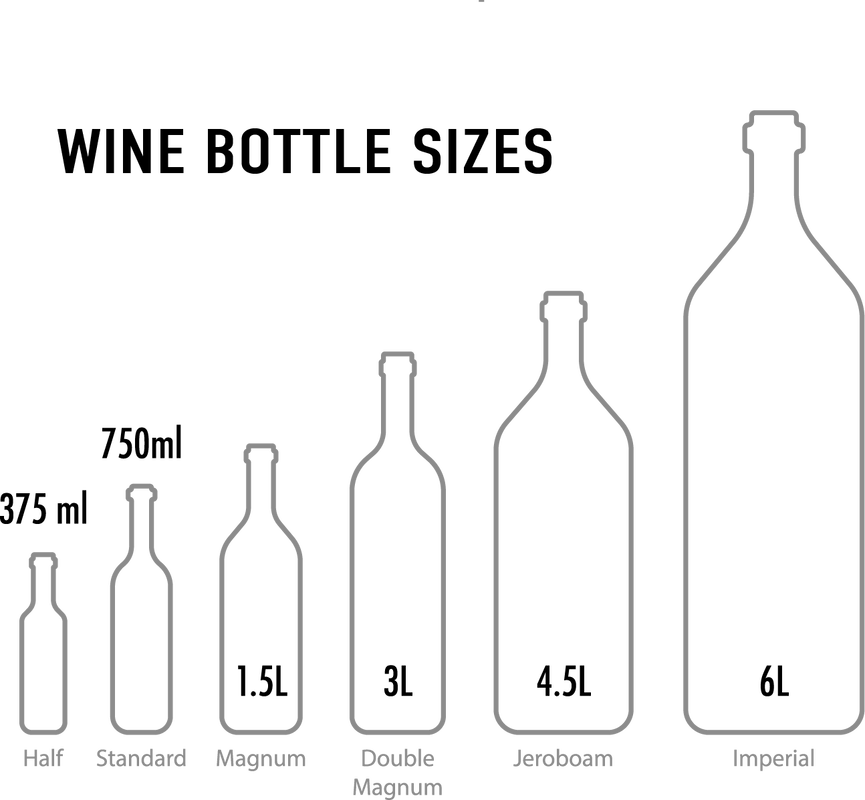
  • Size
<
>
Bottle Color
As mentioned in the section of bottle shape, bottle color can be a marketing ploy. However, it can serve to minimize the rate of oxidation. For more on this see the section: “Bottle Storage Conditions: Light”. Blake et al 2009 reported the following light transmission by bottle color 8 :
  • Clear: 95% Transmission
  • Green 50% Transmission
  • Brown: 10% Transmission
Bottle size
Influences on temperature stability
  • Temperature, as a measure of the average kinetic energy of a molecule, influences the speed at which reactions occur in a wine as it ages.
  • Specific heat refers to the amount of energy (in joules) required to raise the temperature of one gram of liquid by one degree Celsius. Therefore, the more volume a liquid has, the more energy required to raise the temperature one-degree Celsius. Therefore smaller bottles will be more prone to temperature changes whereas larger bottles will resist temperature changes


​Influences on headspace to liquid ratio
This impacts oxygen consumption as bottles with the same enclosure have the same ulage/volume of air but different volumes of liquid. This means the more liquid the lower the relative oxygen in the bottle and the slower the aging.
Picture
Photo By: Shutterstock

​Packaging Material 9

Glass and containers that use a polyethylene terephthalate liner are common packaging materials. The following is a summary of a great literature by: Thompson-Witrick KA, Pitts ER, Nemenyi JL, Budner D. The Impact Packaging Type Has on the Flavor of Wine. Beverages. 2021; 7(2):36. https://doi.org/10.3390/beverages7020036
  • Glass
  • ​Polyethylene terephthalate (PET)
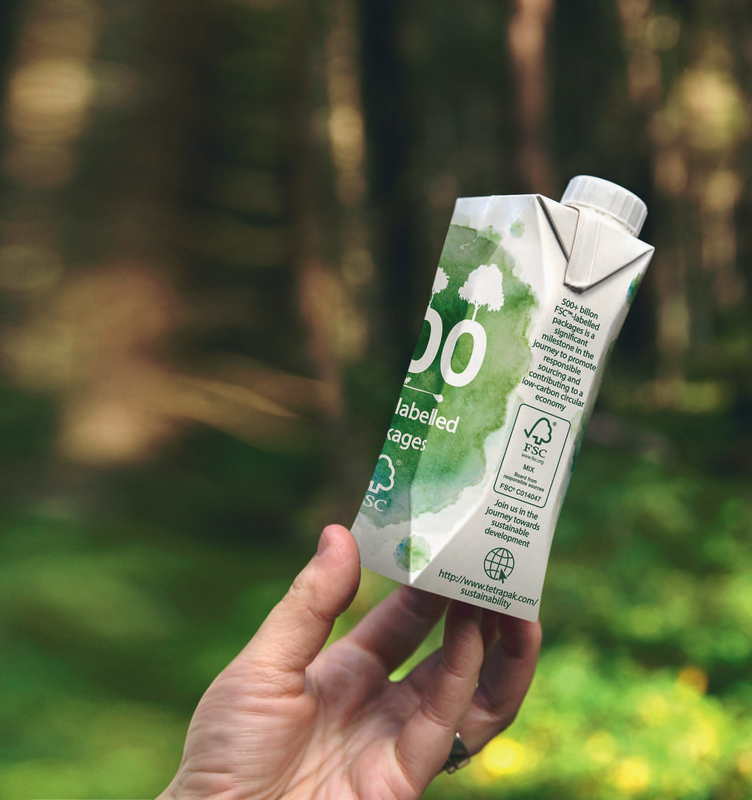
  • ​Tetra Pak®
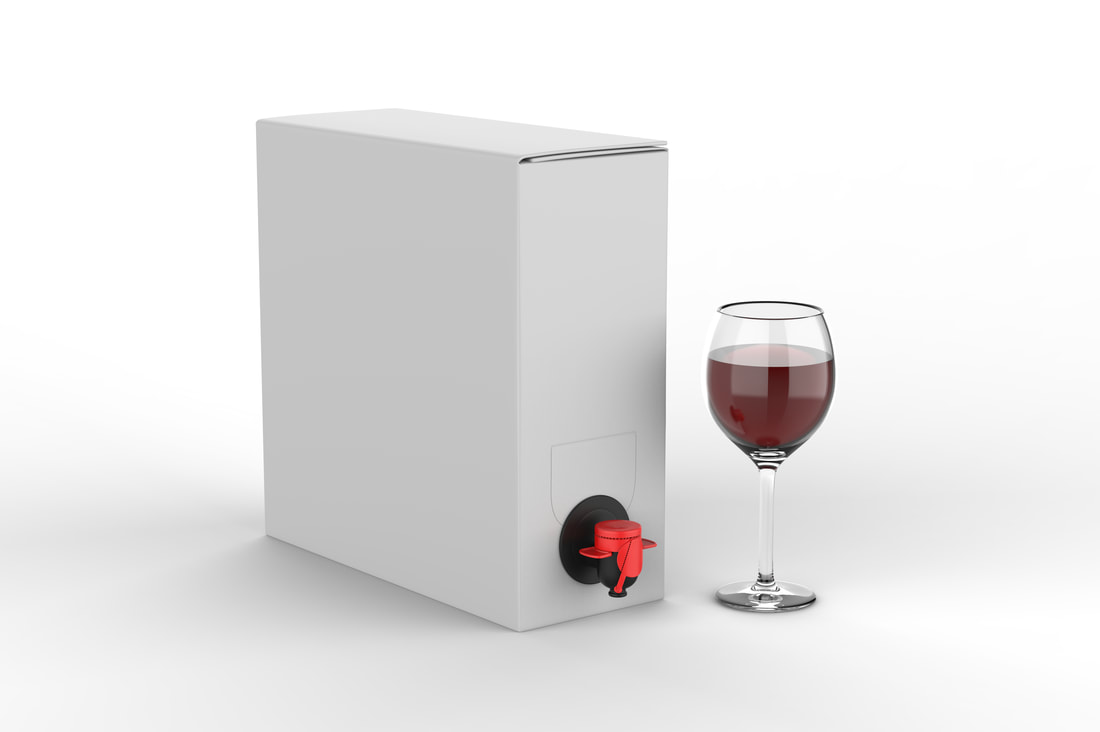
  • ​Bag-in-Box
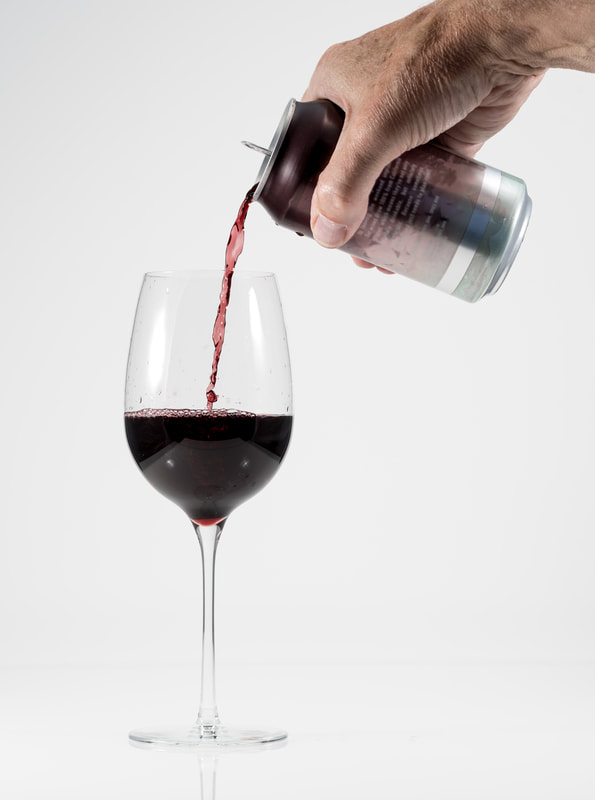
  • ​Aluminum Can
<
>
Materials and construction
  • Silicon dioxide sand, sodium oxide from soda ash, calcium oxide, magnesium oxide from dolomite, and aluminum oxide from feldspar.
  • The bottle materials are combined and molded in a gas burning kiln. The interior of the bottles is chemically treated to make them nonporous.

Benefits
  • No oxygen ingress or other vapor barrier.
  • Inert with no flavor scalping.

Disadvantages
  • Manufacturing costs can be higher than other materials.
  • Shipping costs can be higher than other materials due to weight.
  • Durability issues.
Materials and construction
  • A polymer of ethylene glycol and terephthalic acid.
  • PET material is formed into pellets which can then be reheated and formed into different shapes.
  • Multiple layers or an oxygen scavenging layer can be used to improve gas barrier properties. The transmission of gasses through the packaging material is caused by the polymer’s crystalline structure.

Benefits
Relative to glass, PET is:
  • Relatively inexpensive.
  • Lightweight therefore can reduce shipping costs and environmental impact during transportation.
  • Shatterproof.

Disadvantages
  • PET bottles are more permeable to oxygen than glass, therefore, shortening the shelf life of the wine.
  • PET is prone to flavor scalping. For more on this topic see the section on flavor scaping.
  • Though, recyclable PETs structural integrity will wear down over time.
Materials and construction
  • Tetrahedron-shaped, folded paper tube package composed of:
  • Paperboard provides the structure of the packaging that is laminated with polyethylene polymers for moisture resistance.
  • An aluminum layer that protects from oxygen and light.
  • Another polyethylene layer to protect the aluminum from the wine.
  • A plastic screw top lid with barbs that cut open the protective film.
  • For a great video on TetraPak construction watch: Tetra Pak (Director). (2018). Tetra Pak Packaging Material - Packed with Innovation [Film]. www.youtube.com/watch?v=fR-esiS1Pn0

Benefits
Beyond the similar benefits as PET bottles:
  • Limits oxygen and light.
  • Increased stackability compared to other wine packaging options.

Disadvantages
Similar disadvantages as PET bottles.
Materials and construction
  • A rigid outer box or container.
  • A flexible welded double bag composed of
  • The outer bag: Polyester, which serves as a higher barrier layer
  • Inner bag: Low-density polyethylene (LDPE) or ethylene vinyl acetate (EVA).
  • Wine pouches are filled under a vacuum and then sparged with nitrogen.
  • A polypropylene valve. While this was a major oxygen ingress point in the past, the current iteration uses a single-piece valve that closes once the lever is released.

Benefits
Beyond the similar benefits as PET bottles: The minimal oxygen ingress after opening allows for a shelf life of two to three weeks. This works by the bag collapsing as the wine is removed through the valve.

Disadvantages
Similar disadvantages as PET bottles.
Materials and construction
  • Aluminum
  • A bisphenol A (BPA) free polymer coating of 1–10 μm to protect against wine’s acidic pH causing corrosion due to the high reactivity of bare aluminum. As the interior liner of the can touches the wine, it is considered a food contact substance, it is regulated by the FDA
  • Nitrogen (N2) is used to increase the internal pressure of the can to prevent it from collapsing as the thin aluminum has an inherently low internal strength. This also sparges the can of oxygen.

Benefits
Beyond the similar benefits as PET bottles:
  • Resistant to oxidation.
  • Resistant to light degradation.
  • Infinitely Recyclable

Disadvantages
Similar disadvantages as PET bottles and:
  • Due to the lining, there can be flavor scaping.
  • Reductive aromas can develop due to the low oxygen environment.

Bottle Closure (Corks and Caps)

​Beyond keeping wine in the bottle, the bottle closure influences the permeability of oxygen into the bottle and vapors of ethanol and water out of the bottle. These gasses can transfer in two ways.
Oxygen Transfer Around the Bottle Closure10
The primary pathway of oxygen ingress into bottles with cylindrical stoppers (synthetic and natural cork derivatives) is around the cork.11 Research conducted in Bourgogne, France over the past few years by a group of scientists including Thomas Karbowiak, Julie Chanut, Aurélie Lagorce, Régis Gougeon, and Jean-Pierre Bellat has found the following which influences this pathway of oxygen ingress:
Karbowiak et al 2019 found that bottles that oxidized faster than others produced from the same batch of wine and stored in the same way were more likely to be caused by an uncontrolled transfer of oxygen at the interface rather than diffusion through the cork. They also noted that the cork stopper used in one of the most oxidized wines had the lowest surface density of lenticels and the lowest cork density when compared to other corks in the study.
Surface treatment with a paraffin-silicone mixture both reduced the oxygen flow at the interface and decreased the effective diffusion coefficient through the cork. This may occur as a result of reducing cork or bottle defects that cause roughness at the contact point.

For more on a closure’s impact on oxygen ingress: www.awri.com.au/commercial_services/packaging_solutions/closure_assessments/collaborative_closure_trial/


Oxygen transfer through the bottle closure

  • Reaction Mechanisms
  • Differences in bottle enclosure
<
>
Mechanisms that influence oxygen ingress
Diffusion is the act of oxygen going from a higher concentration area outside the bottle to a lower concentration area inside the bottle.

Permeation, is the ability for oxygen to pass through the stopper.

Oxygen Transfer Rate (OTR) [12]
The Oxygen Transfer Rate is the amount of oxygen that passes through the stopper as measured in mg or ml of O2 per day, per month or per year. Lequin et al (2012) in a study of the oxygen diffusion coefficient in raw cork, found that diffusion takes months to occur through a cork stopper.

OTR Calculations: OTR = Δm / SΔt
Where: Δm is the oxygen mass transferred (kg), S is the surface area (m2 ), and Δt is the time (s).
Δm and Δt, require a multitude of experimental measurements and calculations. These are outlined in Lequin et al (2012).

Differences in bottle enclosure
Permeation is primarily influenced by the bottle closure, and the following factor in particular:
The physical size (length and diameter) of the stopper. 13
  • Diameter: 22–24 mm
    Influences the available surface area for oxygen contact.
  • Length: 28–49 mm,
  • Natural cork: 44–49 mm ± 1mm
  • Standard CE.T.I.E (Centre Technique International de l’Embouteillage) wine glass finish bottles have been designed for use with 44 mm length closures.

Particle size of stopper
More porous materials allow increased permeability. This influences both the ingress of oxygen and the regress of alcohol and water vapors. By using an electron microscope, Lambri et al (2012) found that
  • The natural cork stopper showed a defined and uniform network of cells with the most restricted range of cell diameters and the lowest cell size.
  • The cork-based technical stopper had a regular inner structure similar in shape and size to that of the natural cork.
  • Plastic stoppers showed large and variable cells with diameters of 100 μm or more.

Compression of the stopper
  • Agglomerated cork compression of 40% reduction in the volume of the stopper reduced the effective oxygen diffusion by 35% (Chanut et al, 2021).
  • Natural cork compression may not significantly impact the effective diffusion coefficient of oxygen through crude cork (Lagorce-Tachon et al, 2016). However, Chanut et al (2021) notes that it is highly probable that diversity between samples of natural cork masked the effect of the compression.

Closure materials

Natural Cork and its Derivatives

Natural cork’s popularity is due to consumer perception of it being a quality feature compared to synthetic stoppers and screw caps.
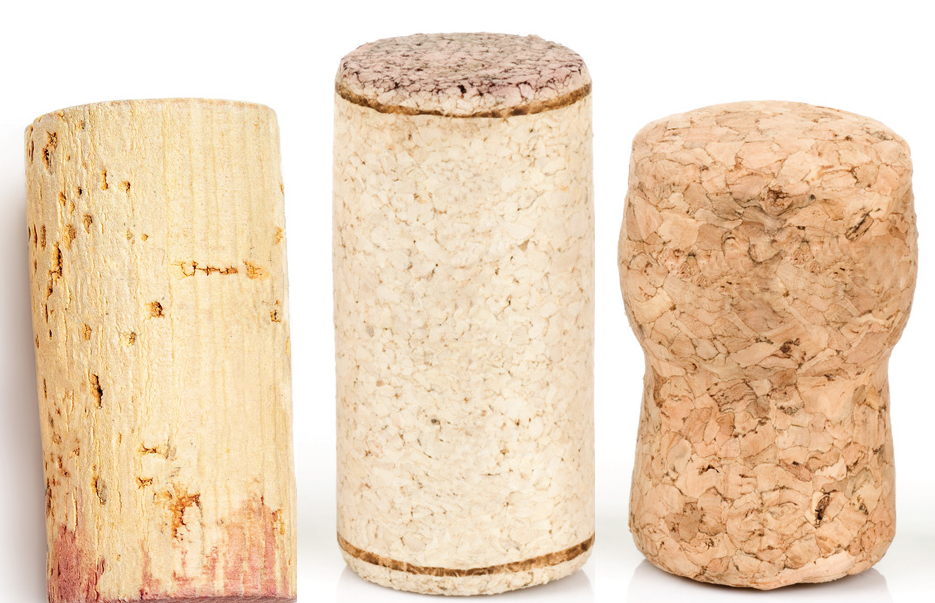
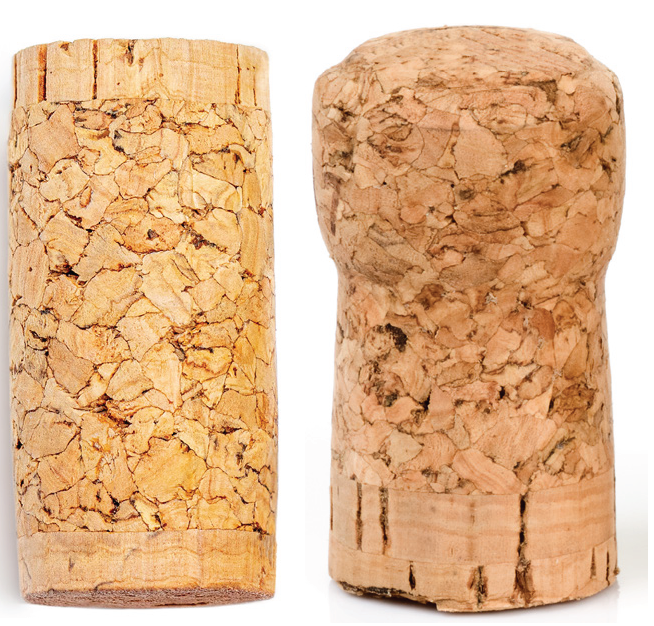
Types of Natural Cork
  • Natural Cork
  • Agglomerated Cork
  • Technical Stopper (1+1 Corks)
  • Colmated Cork
<
>
Natural Cork:
Extracted from cork oak bark as a single piece. Natural cork is composed of suberin, lignin, cellulose, and hemicellulose along with minor quantities of tannins and waxes. Beyond the traditional form factor of a single piece of cork bark being shaped, cork can be mechanically processed into other form factors.
  • Usage: Suitable for long term storage.
  • OTR: 2.03-6.37 mg/Year. Diversity in OTR is due to variation in cell size.
Agglomerated cork15
Derived from by-products resulting from the production of natural stoppers, these cork particles are typically 2–8 mm granules. They are fabricated by individual molding or by extrusion and bound together by agglutinating materials approved for food contact. Cork Quality Council requires agglomerated cork to consist of >75% natural cork material because unapproved agglomerated stoppers contain lower amounts of cork and must introduce plastic micro-spheres to provide resiliency. They can be divided into two general categories by granule size:
  • Macro Agglomerated Cork granules: >2 mm
  • Micro Agglomerated Cork granules: 0.5 to 2.0 mm 16
Usage: Storage generally does not exceed 24 months.

OTR mg/Year: 0.78-2.68 mg/Year. The narrow OTR range is due to cells being more homogeneous but still not uniform.

Benefits
  • Lower cost than natural cork.
  • Completely homogenous within a batch.
Technical Stopper (1+1 Corks) 17
Agglomerated cork body, with natural cork 'discs' glued onto one or both ends using agglutinins approved for use in products that will come into contact with foods. These disks can come in different grades.
  • 1+1 technical stoppers: A disc at each end.
  • 2+0 technical stoppers: Two discs at just one end.
  • Sparkling wine stoppers

​A type of technical stopper. It is composed of a multilayered cylinder with a central body of natural cork or macro agglomerated cork and two micro agglomerated disks at each end. This allows for better control over the pressurized bottle.

Usage: Wines to be consumed in 2-3 years.

OTR: 0.38-2.03 mg/Year. The narrow OTR range is due to cells being more homogeneous than natural cork but not uniform.​ 

​
Benefits
  • Chemically very stable.
  • Behaves well under the torsion when bottling and uncorking.
​Colmated Cork 18
Natural cork body with pores (lenticels) that are filled with the cork powder that was recycled from the finishing of natural stoppers. The binding is made from FDA grade natural resin, natural rubber, or water-based glue. This process is used to rectify irregularities in natural cork that could cause an imperfect seal.

​Usage: Though no official indications for duration of bottle aging are provided by manufacturers or governing bodies, it has been noted that it can be used for a few years of aging.

​
Benefits
  • Homogeneous in appearance.
  • Fabricated in the widest range of shapes and sizes. 


Picture
Picture

Cork Quality Council Grading Standards for Natural Cork [20]

  • Grade A
  • Grade B
  • Grade C
<
>
Grade A - Highest Grade with no maor visual flaws.
Holes or pores: None exceeding 2mm.
Cracks: Must be tight and not open and
  • No cracks originating at the ends which exceed 11% of cork length.
  • No cracks in the body of the cork to exceed 18% of cork length.
  • No horizontal cracks.

Lenticels: Several narrow and shallow lenticels are acceptable if they are free of dust and particles.

No worm holes, hardwood, belly spots, or greenwood
Grade B - Middle grade with no major visual flaws and with surface visual flaws of no depth or substance.
Holes or pores: May not exceed 5mm.

Cracks must be tight and not open and may not
  • Originate at the ends which exceed 18% of cork length.
  • Be in the body of the cork to exceed 25% of cork length.

Lenticels at ends must not be wide or deep and should be free of dust and particles.

No Greenwood. No angled or deformed corks.

Very small chips and lateral worm activity in the middle of the body of the cork may be acceptable.
Grade C - Lowest grade with average visual appearance, one or more major visual flaws of cosmetic nature only, and may be aesthetically unappealing, but functional.

Holes or pores: May be heavy, but no continuous porosity.
  • Cracks, channels, hardwood, or belly spots should exceed 55% of cork length.
  • Lenticels and horizontal cracks on the body may open up when the ends of the corks are bent.
  • Greenwood to 55% of cork length is acceptable unless severe depth or width.
  • Large chips are acceptable.
  • ​No worm activity from end to the side which exceeds 55% of cork length.
Undesirable Cork Flavors and Prevention Methods
  • Additional Cork Treatments
  • Undesirable Cork Flavors and Flavor Scalping
<
>
Additional Cork treatments 19
  • Supercritical CO2 can sanitize cork and prevent undesired compounds from impacting the wine while maintaining permeability.
  • Surface coatings of paraffin waxes or silicon can ease the extraction of the stopper, avoid liquid leakage, and lower the oxygen diffusion through the stopper–glass interface of the bottleneck (Chanut, et al 2021). For more on this see the section “Oxygen transfer around bottle enclosure”.
  • CELIÈGE: The European Cork Federation (www.celiege.eu), represents all the associations of cork producers. It has established an International Code of Cork Stopper Manufacturing Practice called SYSTECODE and has a list of accredited companies from the main cork-producing countries of Portugal, Spain, France, Italy, Germany, Morocco, and Tunisia. Additionally, there are ISO norms for cork-stopper sensory analyses (ISO 22308-2005).
Imparting Undesired Flavors and Flavor Scalping 22
Natural cork can impart aroma compounds into wine including:
  • Cork related taints. Read more about this on page in the  Wine Faults article.
  • Aldehydes and ketones are possibly from the oxidative degradation of fatty acids found in wax and suberin fractions of cork.
  • Terpenes in particular L-camphor and α-terpineol.
  • Esters, volatile phenolic compounds, and terpenes which may impact pleasant notes.
  • Alcohols, aromatic hydrocarbons, pyrazines, dicarbonyls, acids, furans.

Flavor scalping: Natural cork can also adsorb aroma compounds including
  • Ethyl octanoate and ethyl decanoate where adsorption increases with ester chain length increases.
  • Naphthalene.
  • TDN, the kerosene characteristic of Riesling, is most strongly absorbed by natural cork.
  • Volatile phenolic compounds, including guaiacol, 4-methylguaiacol, 4-ethylguaiacol, 4-propylguaiacol, 4-vinylguaiacol, 4-ethylphenol, and eugenol.
  • Methoxypyrazines of IBMP, IPMP, and 3-sec-butyl-2-methoxypyrazine (SBMP).​​

Picture
Picture

Synthetic Stoppers

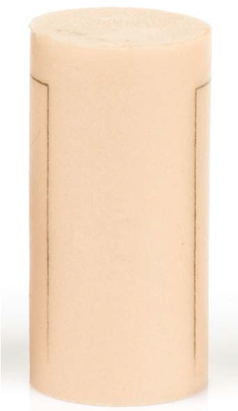
  • Synthetic "cork"
  • Screw Caps
  • Crown Cap
  • Flavor Scalping
<
>
Synthetic cylindrical stoppers
Materials and Production
Typically low-density polyethylene however
styrene–butadiene–styrene, styrene–ethylene–butylene–styrene, or a mixture of low-density polyethylene and ethylene vinyl acetate can be used if produced by the molding process. Lambri et al (2012) noted the inner structures of the molded synthetic stoppers which impact the physical-mechanical properties of the final stopper like density, elasticity, and permeability, vary based on the:
•Properties of the initial expanded-polymer material.
•Management of the heating temperatures.
•Injection and cooling times of the fused raw material into the stamp.
•Type of expansion additive used to create bubbles in the resin.

Oxygen permeability
Generally have a higher oxygen permeability in comparison with cork. This is more pronounced in long periods of storage.

Synthetic stoppers tend to harden over time, loosing tight in the stopper–glass interface, which may result in premature oxidation.

​Usage: High permeability may be ideal for wines to be consumed young or those needing a short aging period.

​Other features

•Affordable
•Has no off-flavor compounds.
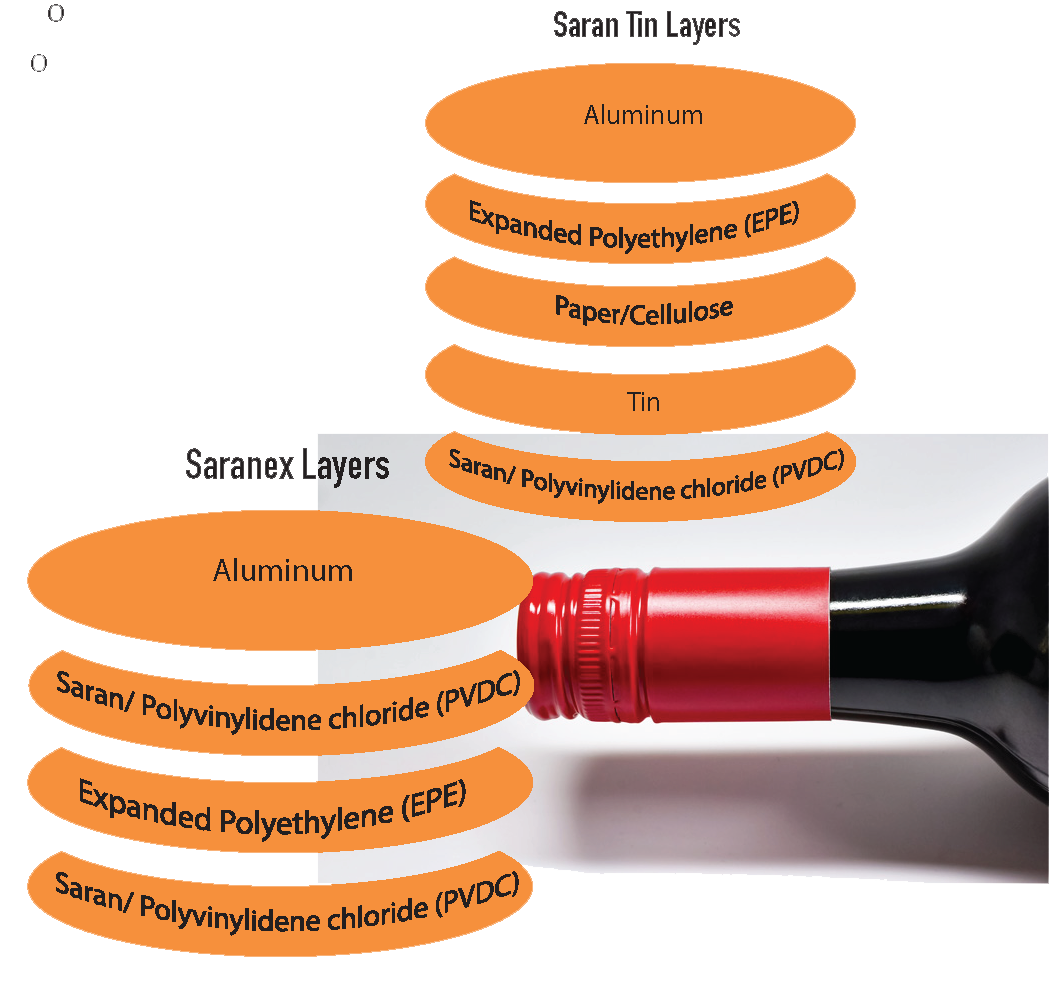
•Expanded Polyethylene (EPE)
An expandable polyethylene layer allows compression against the bottle glass when pressure is applied to the closure and liner.
•Polyvinylidene chloride (PVDC) aka
saran (like the wrap). Provides a barrier against water, chemical resistance to acids, and is impervious to mold and bacteria.
•Tin Layer (if applicable) Reduces the gas transmission properties of the material, reducing oxygen permeability.


Screw caps23

Materials and Production

Screw Cap: Aluminum
The screw cap does not make contact with the bottle neck. Rather it provides structure, keeps the liner affixed, enables easier opening of the seal, and provides a tamper-evident seal.

Screw cap seal
The seal creates the barrier between the contents of the bottle and the external environment and consists of three or four main layers, but can be made up of many smaller layers.
  • Saran Tin Layers
    • Expanded Polyethylene (EPE)
    • Paper/Cellulose
    • Tin
    • Saran/ Polyvinylidene chloride (PVDC)
  • Saranex Layers
    • Saran/ Polyvinylidene chloride (PVDC)
    • Expanded Polyethylene (EPE)

Oxygen ingress
  • Saran Tin: 0.00005-0.0005 cc O2/day.
  • Primarily used in the Australian and New Zealand wine market.
  • Saranex liner: 0.0001-0.001 cc O2/day.
  • Primarily used in the European wine industry because of the perception that wines sealed with Saran Tin can develop ‘reductive’ characters due to the very low levels of oxygen ingress through the liner.

Usage
  • Preserving wine in non-optimal storage conditions like high temperatures as it limits the available oxygen thereby reducing oxidation.
  • Wines are susceptible to oxidation and are expected to be consumed young. White wines for example.

Drawbacks
Can be susceptible to the development of “reductive” characters due to the minimal oxygen environment. For more on this topic see the section: “Dissolved Gas" ​ Adjustments: "Oxygen”.
​Crown caps. the common cap on a beer bottle, are used in the production of sparkling wine as they provide a secure seal and have no oxygen ingess

Imparting Undesired Flavors and Flavor Scalping 23
Synthetic closures adsorb non-polar compounds better than natural cork-derived stoppers due to their high lipophilicity. These non-polar compounds include:
•Volatile compounds of organic acids, and pigments which can cause a loss of aroma intensity and fruitiness.
•Chloroanisoles from cork taint.

Synthetic closures also show significantly greater adsorption of
•Esters of ethyl hexanoate, ethyl octanoate, and ethyl decanoate as well as, naphthalene, and TDN.
•Monoterpene rose oxide, which gives a lychee character to some white wines, was partially absorbed only by the synthetic closures.
•Methoxypyrazines (IBMP, SBMP, and IPMP) have higher adsorption than cork derived stoppers. 24

​

Bottle Storage Conditions

Temperature, humidity, and light exposure increase the reaction kinetics in wine. For this reason, many ancient wine cellars are built underground to better preserve the wine.
  • Temperature
  • Light
  • Humidity
  • Storage Position
  • Oxadative Stability
<
>
 Temperature25
Ideal temperature for general storage: 15–20°C

Lower temperatures will slow the aging process

Degradation occurs if temperatures are:26
  •  25°C for long periods
  •  30°C after 12 months storage decrease quality and caused faulty flavors.
  • 40°C for short periods as it results in visual and sensory changes to a wine in only a matter of days.

Impact on wine
Temperature indirectly impacts the aroma and shelf life of wine through influencing:
  • Reaction kinetics: The speed at which reactions occur in the bottle.  For this reason excessive heat can cause excessive aging.
  •  This can be estimated using the Arrhenius equation which calculates, based on the value of the Arrhenius activation energy, the relative reaction rates between the two temperature values at an instant in time assuming the same starting concentration.
  • The commonly employed rule of thumb is that reaction rate doubles for every 10°C increase in temperature. However, the reactions in wine are complex interactions and can occur in parallel pathways therefore, Butzke (2010) noted, “Aging reactions in wine have substantially different rates, which explains why “speed-aging” just by elevated temperature alone will not yield a wine comparable to one that was aged at a traditional cellar temperature of around 13°C (55°F).”

Reaction equilibrium: The maximum extent to which a reaction can proceed. Thermal expansion of the liquid is caused by thermal cycling (the change of temperature between the hottest and coldest time of day). This can cause leakage or excessive oxygen ingress in wine by the movement of cork stoppers. This can be partially mitigated by proper headspace/ullage volumes as noted in the AWRI’s thermal expansion reference table:
​www.awri.com.au/wp-content/uploads/TN07.pdf

​
The following is a great literature review on temperature influenced reactions in wine: Scrimgeour, N., Nordestgaard, S., Lloyd, N. D. R., & Wilkes, E. N. (2015). Exploring the effect of elevated storage temperature on wine composition. Australian journal of grape and wine research, 21, 713-722.
Retrieved from: www.researchgate.net/
publication/286779906_Exploring_the_effect_of_elevated_storage_temperature_on_wine_composition

​Exposure to light and Lightstrike (Goût de Lumière)
Ideal amount: Light ideally is minimized or excluded during wine storage/aging.

Impact on Wine
Light exposure, especially at 350-500 nanometer wavelengths, which results from fluorescent lighting in retail stores can impact wine aroma. However, it is more significant in white wine than red. In particular it:

Catalyzes oxidation. This can decrease desired aroma compounds like esters. The antioxidant properties of red wine’s phenolic compounds are also why white wine is more susceptible to photodegradation.   More on oxidative reactions including during bottle aging can be found in the section: “Oxygen During Bottle Aging”.​
​Causes photodegradation of methionine and cystine by riboflavin thereby resulting in sulfur compounds Methanethiol (MeSH) and Dimethyl disulfide (DMDS).

Causes browning in white wines.
The AWRI notes that exposure of sparkling wine to 40 watt fluorescent light bulbs at a distance of 35 cm (13.78 inches)
caused lightstruck aroma to develop:
  • In flint (clear) glass where it took 3.3 hours for still wine and 3.4 hours for sparkling wine.
  • In Green glass where it took 31.1 hours for still wine and 18 hours for sparkling wine to develop a lightstruck character.

Mechanisms
Fracassetti et al (2021) notes that there are two different photo-induced chemical reactions caused by light exciting riboflavin at wavelengths of 370-440 nanometers. They
are: 
  • Type I mechanism:
    • Riboflavin reaches its triplet state and reacts directly with electron donors, such as phenols and amino acids.
    • In particular, methionine acts as an electron donor and methional is generated. However, as methional is chemically unstable, and photo-sensitive, it decomposes to Methanethiol (MeSH) and acrolein.
    • Two molecules of MeSH then can yield Dimethyl disulfide (DMDS).

  • Type II mechanism:  The excited riboflavin transfers the excess of energy to molecular oxygen. This forms singlet oxygen which is highly reactive with many compounds including amino acids.

Other photo-induced reactions
Tartaric acid is degraded by the photoactive iron tartrate into glyoxylic acid. 30 This in turn generates xanthylium ions which cause the browning of white wine.  For more on this read:
Scollary, G. R. (2010, October 22). Wine Bottle Colour And Oxidative Spoilage. Wine Australia. Retrieved July 25,
2022, from www.wineaustralia.com/getmedia/142499a3-d147-4a50-99c6-71c05c306438/UM-09021

Mitigation strategies
  • Ascorbic acid and/or SO2 delay light-induced oxidation.
  • Using low riboflavin producing yeast strains.
  • Riboflavin removal prior to bottling by bentonite or activated carbon.
  • The addition of flavan-3-ols.
  • Glutathione (GSH) which can reduce o-quinones back to catechols thereby preventing browning, minimizing some aroma loss, and preventing atypical aging. Hydrolysable tannins addition
    • Ellagitannins (derived from oak) are more reactive to molecular oxygen than the native phenols of wine due to their large number of hydroxyl groups. However, in sparkling wine, their addition can promote the formation of sotolon, a marker of atypical aging.
    • The mechanism or reaction may consist of preventing sulfur compound formation by competition with methionine to donate the electrons active in the reduction of riboflavin. Additionally, singlet oxygen can oxidize tannins to quinones, which in turn are capable of binding MeSH thereby limiting the formation of DMDS.
Humidity
Wines under natural closures can dry out and leakage can occur if the air is too dry. The AWRI in it’s Transport and Storage recommendations notes:
  • Ideal relative humidity: ≈70% .
  • Low humidity: Increases oxygen permeability partially because drier stoppers tend to shrink.
  • Excessive humidity levels, however can promote the growth of spoilage molds therefore humidity management and thorough sanitation of the cellar environment helps to mitigate this development (Echave et al 2021)
Storage position
Historically wine has been stored on its side to keep the cork “wet” and thereby retaining a proper “seal”. However this is not necessarily true for storage of 2 to 5 years post bottling with adequate humidity (>70%) and temperature (~20 °C) shown by Skouroumounis et al 200531 and Lopes et al 2006.32 This is because, while hydration is important to the cork’s mechanical properties. Other factors may also keep the cork hydrated. These include diffusion gradients in which water and alcohol will vaporize first into the headspace through the cork and external humidity can also hydrate the cork. However, given the duration of time that the study was conducted and the historical evidence, horizontal long-term storage may be ideal as a prevention mechanism for cork elements degrading over time.
Oxidative Stability
The oxidative stability in wine is dictated by the concentration of antioxidants and thereby influences the rate of oxidative fractions. These antioxidants can be both grape-derived or added to the wine with the key ones being:

Polyphenols
  • Grape derived polyphenols include condensed tannins and anthocyanins.
  • Hydrolyzable tannins from barrel aging and other enological tannins.

Wine preservatives
  • Sulfur dioxide
  • Ascorbic acid

Wine Making Techniques
Lees Aging derived compounds like glutathione provide oxidative stability.

​Environmental factors during transport33

Shipping filled bottles are more expensive than shipping wine in bulk and bottling closer to the end point of consumption. However, both methods are common. During transport using either of these methods, environmental factors can influence the wine’s final flavor. The Australian Wine Research Institute has a resource that provides tremendous insight into this topic which we have summarized below and can be found here: The Australian Wine Research Institute. Transport and storage. (2022, June 26). Retrieved July 19, 2022, from www.awri.com.au/industry_support/winemaking_resources/storage-and-packaging/post-packaging/transport-and-storage/
​
  • ​Main Container types and differences
  • Environmental factors during transport
<
>
​Main Container types and differences
A 15-month trial where millions of liters of wine were shipped in bulk from Australia to the UK under different conditions. This varied by shipping routes, filling temperatures, and bulk container types. It was found:
  • ISO Tank: No consistent sensory preference tank material
  • FlexiTank: Filling temperatures of 8-19°C did not create a sensory difference in Chardonnay wine that traveled ~44 days in a southern to northern hemisphere transport route.
Findings of environmental factors during transport
The AWRI summarized studies on the environmental conditions during transportation and noted:

Temperature and temperature fluctuation during transport
  • Land transportation has higher temperatures (up to 57 °C) than sea transportation (Up to 44 °C).
  • The most extreme temperatures are experienced during the trans-shipment phase, as relay ports are often located near the equator and the container is generally unprotected...
  • Temperature fluctuations of -10 to 67 °C can be caused when the wine starts in a winter climate and crosses the equator into a summer climate.
  • A 21 °C daily fluctuation was found in wine shipped from California to elsewhere in the United States, and it significantly impacted wine quality.
  • Transportation in insulated or refrigerated containers that allow humidity and temperature control. This, however, adds to the price production cost of the wine. Additionally, airflow in these containers can be non-uniform making it essential to account for this in the transport box design.

Vibration
  • High vibration can cause losses in alcohol and wine aroma by speeding up the reaction kinetics. This impact is minor compared to temperature and light exposure.
  • Cardboard combined with plastic foil packaging provided the best vibration damping and thermal insulation during the transportation of beer. These findings may apply to wine transportation as well.

For a great literature review on the topic of Wine transport:
Tchouakeu Betnga, P. F., Longo, E., Poggesi, S., & Boselli, E. (2021). Effects of transport conditions on the stability and sensory quality of wines. OENO One, 55(2). https://doi.org/10.20870/oeno-one.2021.55.2.4524).


Chemical composition changes from bottle aging

Chemical composition changes from bottle aging
Bottle aging, under proper storage conditions, are oxidative reactions that are influenced by temperature and oxygen ingress (OTR). These impact wine’s:
  • Phenolic composition as discussed in last month's issue of Hawaii Beverage Guide which can be found here: www.hawaiibevguide.com/a-guide-to-wine-polyphenols
  • Wine’s aroma compounds which we will discuss in a future version of, Hawai’i Beverage Guide. In that issue, we will be summarizing where wine’s flavor attributes come from and the impact of aging.

For a comprehensive literature review on bottle aging and storage read: Echave J, Barral M, Fraga-Corral M, Prieto MA, Simal-Gandara J. Bottle Aging and Storage of Wines: A Review. Molecules. 2021; 26(3):713. https://doi.org/10.3390/molecules26030713

Sources and Suggested Reading

1. ETS Laboratories. Understanding "sugar" analyses. . (2015, July 16). Retrieved July 19, 2022, from https://www.etslabs.com/library/29

2. The Australian Wine Research Institute. Gas adjustment. (2021, April 15). Retrieved July 19, 2022, from https://www.awri.com.au/industry_support/winemaking_resources/storage-and-packaging/pre-packaging-preparation/gas-adjustment/

3. The Australian Wine Research Institute. Oxygen pick-up during packaging – understanding total package oxygen. (2021, April 15). Retrieved July 19, 2022, from www.awri.
​com.au/industry_support/winemaking_resources/storage-and-packaging/packaging-operations/oxygen-pick-up-during-packaging-understanding-total-package-oxygen/


4. Australian Wine Research Institute. (n.d.). Steps in the Packaging Process. The Australian Wine Research Institute. Retrieved July 25, 2022, from: www.awri.com.au/industry
_support/winemaking_resources/storage-and-packaging/
packaging-operations/steps-in-the-packaging-process


5. Scott Labs. How to calculate Ullage and fill volume. (n.d.). Retrieved July 19, 2022, from https://scottlab.com/
calculate-ullage-fill-volume


6. Australian Wine Research Institute. (n.d.). Applying Screw Cap Closures. The Australian Wine Research Institute. Retrieved July 25, 2022, from www.awri.com.au/
industry_support/winemaking_resources/storage-and-packaging/packaging-operations/applying-screw-cap-closures


7. WSET. The ultimate guide to wine bottle shapes and sizes. (2022, May 4). Retrieved July 19, 2022, from
www.wsetglobal.com/knowledge-centre/blog/2022/april/
05/the-ultimate-guide-to-wine-bottle-shapes-and-sizes


8. Blake, A., Kotseridis, Y., Brindle, I. D., Inglis, D., Sears, M., & Pickering, G. J. (2009). Effect of closure and packaging type on 3-alkyl-2-methoxypyrazines and other impact odorants of Riesling and Cabernet Franc wines. Journal of Agricultural and Food Chemistry, 57(11), 4680-4690 Retrieved from: https://www.agriculturejournals.cz/public
Files/07582.pdf


9. Thompson-Witrick KA, Pitts ER, Nemenyi JL, Budner D. The Impact Packaging Type Has on the Flavor of Wine. Beverages. 2021; 7(2):36. https://doi.org/10.3390/beverages
7020036


10. Chanut, J., Bellat, J. P., Gougeon, R. D., & Karbowiak, T. (2021). Controlled diffusion by thin layer coating: The intricate case of the glass-stopper interface. Food Control, 120, 107446. https://www.sciencedirect.com/science/
article/am/pii/S0956713520303625


11. Lagorce-Tachon, A., Karbowiak, T., Paulin, C., Simon, J. M., Gougeon, R. D., & Bellat, J. P. (2016). About the role of the bottleneck/cork interface on oxygen transfer. Journal of Agricultural and Food Chemistry, 64(35), 6672-6675. https://pubs.acs.org/doi/full/10.1021/acs.jafc.6b02465

12. Lequin, S., Chassagne, D., Karbowiak, T., Simon, J. M., Paulin, C., & Bellat, J. P. (2012). Diffusion of oxygen in cork. Journal of agricultural and food chemistry, 60(13), 3348-3356. Retrieved from: https://www.researchgate.net/
publication/221865381_Diffusion_of_Oxygen_in_Cork


13. Australian Wine Research Institute. Applying cylindrical closures. (2021, April 15). Retrieved July 19, 2022, from www.awri.com.au/industry_support/winemaking_resources/storage-and-packaging/packaging-operations/applying
-cylindrical-closures/


14. Lambri, M., Silva, A., & De Faveri, D. M. (2012). Relationship between the inner cellulation of synthetic stoppers and the browning of a white wine over eighteen months of storage. Ital. J. Food Sci, 24, 149-158. Retrieved from: www.researchgate.net/publication/250310046
_Relationships_between_the_inner_cellulation_of_synthetic_stoppers_and_browning_of_a_white_wine_over_eighteen_months_of_storage


15. Cork Quality Council. (n.d.). Agglomerated Stoppers. Cork Quality Council. Retrieved July 25, 2022, from https://www.corkqc.com/collections/cork-types/
products/agglomerated-stoppers


16. Corklink. (2014, March 8). Agglomerated or natural corks? Corklink. Retrieved July 25, 2022, from: www.corklink.com/index.php/agglomeratdor-natural-corks/

17. Cork Quality Council. (n.d.). Technical 1+1 Corks. Cork Quality Council. Retrieved July 25, 2022, from: www.corkqc.
com/collections/cork-types/products/technical-1-1-corks


18. CorkLink. (2011, August 3). Different kinds of cork stoppers/closures and their uses. CorkLink. Retrieved July 25, 2022, from: www.corklink.com/index.php/different-kinds-of-cork-stoppersclosures-and-their-uses/

19. Google. (n.d.). Method for direct treatment of Cork Stoppers, using supercritical fluids. Google Patents. Retrieved July 19, 2022, from: https://patents.google.com/
patent/EP2396153B1/en


20. Cork Quality Council. (n.d.). CQC Visual Grading Standards. Cork Quality Council. Retrieved July 25, 2022, from: www.corkqc.com/pages/cqc-visual-grading-standards

21. Lambri, M., Silva, A., & De Faveri, D. M. (2012). Relationship between the inner cellulation of synthetic stoppers and the browning of a white wine over eighteen months of storage. Ital. J. Food Sci, 24, 149-158. Retrieved from: www.researchgate.net/publication/250310046_
Relationships_between_the_inner_cellulation_of_synthetic_stoppers_and_browning_of_a_white_wine_over_eighteen_months_of_storage


22. Australian Wine Research Institute. (n.d.). Applying Screw Cap Closures. The Australian Wine Research Institute. Retrieved July 25, 2022, from: www.awri.com.au/
industry_support/winemaking_resources/storage-and-packaging/packaging-operations/applying-screw-cap-closures/


23. Furtado I, Lopes P, Oliveira AS, Amaro F, Bastos MdL, Cabral M, Guedes de Pinho P, Pinto J. The Impact of Different Closures on the Flavor Composition of Wines during Bottle Aging. Foods. 2021; 10(9):2070. https://doi.org/10.3390/foods10092070

24. Pickering, G.J.; Blake, A.J.; Soleas, G.J.; Inglis, D.L. Remediation of wine with elevated concentrations of 3-alkyl-2-methoxypyrazines using cork and synthetic closures. J. Food Agric. Environ. 2010, 8, 97–101. https://www.researchgate.net/publication/275215465_Application_of_plastic_polymers_in_remediating_wine_with_elevated_alkyl-methoxypyrazine_levels

25. Scrimgeour, N., Nordestgaard, S., Lloyd, N. D. R., & Wilkes, E. N. (2015). Exploring the effect of elevated storage temperature on wine composition. Australian journal of grape and wine research, 21, 713-722. Retrieved from: www.researchgate.net/publication/286779906_Exploring_the_effect_of_elevated_storage_temperature_on_wine_composition

MENU

HOME

SUBSCRIBE

DIGITAL
​EDITION

BEVERAGE
​GUIDE

NEws and
​Events

ABOUT

CONTACT

©2025 Hawaii Beverage Guide
​Terms & Conditions 
Site Map
  • Subscribe
  • Digital Edition
    • Digital Edition
    • Digital Brand Index
    • Digital Archive
  • Beverage Guide
    • Flavor and Cocktail Construction >
      • A Guide to: Flavor Pairings and Recipe Development
      • A Guide to: Cocktail Construction
      • Flower Aroma Compounds
      • Peanut Aroma Compounds
      • A Guide to: Herb Aroma Compounds
      • A Guide to: Spice Aroma Compounds
      • Fruit Aroma Componds
      • Japanese Flavors
      • A Guide to Indigenous Mesoamerican Cocktail Ingredients
    • Production Fundamentals >
      • A Guide to: Water
      • A Guide to: Alcoholic Fermentation
      • Intro to the Fermentation of Grain
      • A Guide to: Distillation and Stills
      • A Guide to: Filtration
      • A Guide to: Oak Barrels
      • ​A Guide To: Non-Enzymatic ​Browning
      • Introduction to Cacao and Chocolate Making
    • Non-Alcoholic Beverages >
      • Kamaʻāina Beverages >
        • Hawaiian Sun
      • Non-Alcoholic Beer Produced by Restricted Fermentation
      • Non-Alcoholic Beer and Wine Produced by Dealcoholization
      • Hawaii Beverage Guide Perspective on: Non-Alcoholic Beer and Wine Program Integration
      • 2022 No/Low Alcohol Beverage Market Perspective
    • Beer >
      • Kamaʻāina Brewers >
        • Kauai Breweries >
          • Kaua'i Island Brewing Co.
        • Oahu Breweries >
          • Aloha Beer Co
          • Beer Lab
          • Broken Boundary Brewery
          • Hana Koa Brewing Co
          • Honolulu Beerworks
          • Inu Island Ales
          • Lanikai Brewing Co
          • Waikiki Brewing Company
        • Maui Breweries >
          • Maui Brewing Co
          • Maui Seltzer
          • Kohola Brewery
        • Big Island Breweries >
          • Big Island Brewhaus
          • Ola Brewing
          • Hilo Brewing
          • Kona Brewing
      • Athletic Brewing
      • Firestone Walker Brewing Co
      • Golden Road Brewing
      • Stella Artois Summer Solstice Lager
      • San Miguel
    • Cider >
      • Kamaʻāina Ciders >
        • Paradise Ciders
    • Sake
    • Spirits >
      • Kamaʻāina Distillers >
        • Aloha Awamori
        • Hali'imaile Distilling Company
        • Hanalei Spirits
        • Hawaii Sea Spirits
        • Hawaiian Shochu Co
        • Island Distillers
        • Ko Hana Rum
        • Kolani Distillers
        • Koloa Rum >
          • Koloa Cacao Rum
        • Ko'olau Distillery
        • Kuleana Rumworks
        • Kupu Spirits >
          • Kupu Whiskey
        • Royal Hawaiian Spirits
      • Bitters
      • Brandy >
        • Cognac >
          • Martell
        • Spanish Brandy >
          • Emperador >
            • Fundador
      • Gin >
        • Ginebra San Miguel
        • Indoggo Gin
      • Liqueurs and Cordials >
        • ​Destileria Barako: Ube Cream Liqueur
        • Skrewball
        • Chareau
      • Ready Made Cocktails >
        • 10 Barrels Brewing Co.
      • Rum >
        • Copalli Rum
        • Lemon Hart and Son
        • Real McCoy Rum
        • Tanduay Rum >
          • Tanduay: Especia Spiced Rum
      • Shochu
      • Agave Spirits
      • Tequila >
        • Del Maguey
        • Codigo 1530
        • Tequila Comisario
        • El Cristiano
        • Casa Sauza
        • Real Del Valle
        • Tequila Komos
        • El Hempe
      • Bourbon Whiskey >
        • Old Hillside Whiskey
      • Irish Whiskey >
        • Irish Distillers: Midleton Very Rare, Irish Distillers: Redbreast, Spot Whiskey, Jameson
        • Slane Irish Whiskey
      • Vodka >
        • Kai Vodka
        • Haku Vodka
    • Wine >
      • Kamaʻāina Wine Makers >
        • Maui Wine
      • Winemaking >
        • A Guide to Viticulture
        • A Guide to: Wine Prefermentation Practices
        • A Guide to: Wine Microbes
        • A Guide to: Wine Alcoholic Fermentation Physical Environment
        • A Guide to: Wine Fermentation Chemical Environment
        • A Guide to: Wine Bottling
        • A Guide to: Post Fermentation Flavor Adjustments
        • A Guide to: Post Fermentation Process: Stabilization
        • A Guide to: Wine Faults
        • A Guide to: Wine Polyphenols
        • A Guide to: Wine Aroma Compounds: Pt 1
        • A Guide to: Wine Aroma Compounds:from Yeast
        • A Guide to: High Residual Sugar Wine from Dehydrated Grapes
        • Red and White Grape Aroma Compounds
      • Wine Styles >
        • Natural Wine
        • White Wine Styles >
          • Riesling
          • Sauvignon Blanc
        • Rosé
        • Red Wine Styles >
          • Bordeaux Reds
          • Cabernet Sauvignon
          • Gewürztraminer
          • Grenache
          • Malbec
          • Merlot
          • Non-Alcoholic Wine >
            • Fre: Alcohol -Removed Wine
          • Zinfandel
        • Sparkling Wine
  • Business Strategy
    • Restaurant Finance
    • Your Dapper Consulting: Democratization of Venture Capital
    • Marketing for Small Business Pt 1: Analysis
    • Marketing for Small Business Pt 2: Marketing Communications Strategy
    • A Guide to Pricing Strategy
  • News and Events
    • Cheers to Seventy-Three Years
    • Navigating COVID-19
  • About
    • Contact
    • Terms & Conditions
  • Tequila-AI