HBG
  • Subscribe
  • Digital Edition
    • Digital Edition
    • Digital Brand Index
    • Digital Archive
  • Beverage Guide
    • Flavor and Cocktail Construction >
      • A Guide to: Flavor Pairings and Recipe Development
      • A Guide to: Cocktail Construction
      • Flower Aroma Compounds
      • Peanut Aroma Compounds
      • A Guide to: Herb Aroma Compounds
      • A Guide to: Spice Aroma Compounds
      • Fruit Aroma Componds
      • Japanese Flavors
      • A Guide to Indigenous Mesoamerican Cocktail Ingredients
    • Production Fundamentals >
      • A Guide to: Water
      • A Guide to: Alcoholic Fermentation
      • Intro to the Fermentation of Grain
      • A Guide to: Distillation and Stills
      • A Guide to: Filtration
      • A Guide to: Oak Barrels
      • ​A Guide To: Non-Enzymatic ​Browning
      • Introduction to Cacao and Chocolate Making
    • Non-Alcoholic Beverages >
      • Kamaʻāina Beverages >
        • Hawaiian Sun
      • Non-Alcoholic Beer Produced by Restricted Fermentation
      • Non-Alcoholic Beer and Wine Produced by Dealcoholization
      • Hawaii Beverage Guide Perspective on: Non-Alcoholic Beer and Wine Program Integration
      • 2022 No/Low Alcohol Beverage Market Perspective
    • Beer >
      • Kamaʻāina Brewers >
        • Kauai Breweries >
          • Kaua'i Island Brewing Co.
        • Oahu Breweries >
          • Aloha Beer Co
          • Beer Lab
          • Broken Boundary Brewery
          • Hana Koa Brewing Co
          • Honolulu Beerworks
          • Inu Island Ales
          • Lanikai Brewing Co
          • Waikiki Brewing Company
        • Maui Breweries >
          • Maui Brewing Co
          • Maui Seltzer
          • Kohola Brewery
        • Big Island Breweries >
          • Big Island Brewhaus
          • Ola Brewing
          • Hilo Brewing
          • Kona Brewing
      • Athletic Brewing
      • Firestone Walker Brewing Co
      • Golden Road Brewing
      • Stella Artois Summer Solstice Lager
      • San Miguel
    • Cider >
      • Kamaʻāina Ciders >
        • Paradise Ciders
    • Sake
    • Spirits >
      • Kamaʻāina Distillers >
        • Aloha Awamori
        • Hali'imaile Distilling Company
        • Hanalei Spirits
        • Hawaii Sea Spirits
        • Hawaiian Shochu Co
        • Island Distillers
        • Ko Hana Rum
        • Kolani Distillers
        • Koloa Rum >
          • Koloa Cacao Rum
        • Ko'olau Distillery
        • Kuleana Rumworks
        • Kupu Spirits >
          • Kupu Whiskey
        • Royal Hawaiian Spirits
      • Bitters
      • Brandy >
        • Cognac >
          • Martell
        • Spanish Brandy >
          • Emperador >
            • Fundador
      • Gin >
        • Ginebra San Miguel
        • Indoggo Gin
      • Liqueurs and Cordials >
        • ​Destileria Barako: Ube Cream Liqueur
        • Skrewball
        • Chareau
      • Ready Made Cocktails >
        • 10 Barrels Brewing Co.
      • Rum >
        • Copalli Rum
        • Lemon Hart and Son
        • Real McCoy Rum
        • Tanduay Rum >
          • Tanduay: Especia Spiced Rum
      • Shochu
      • Agave Spirits
      • Tequila >
        • Del Maguey
        • Codigo 1530
        • Tequila Comisario
        • El Cristiano
        • Casa Sauza
        • Real Del Valle
        • Tequila Komos
        • El Hempe
      • Bourbon Whiskey >
        • Old Hillside Whiskey
      • Irish Whiskey >
        • Irish Distillers: Midleton Very Rare, Irish Distillers: Redbreast, Spot Whiskey, Jameson
        • Slane Irish Whiskey
      • Vodka >
        • Kai Vodka
        • Haku Vodka
    • Wine >
      • Kamaʻāina Wine Makers >
        • Maui Wine
      • Winemaking >
        • A Guide to Viticulture
        • A Guide to: Wine Prefermentation Practices
        • A Guide to: Wine Microbes
        • A Guide to: Wine Alcoholic Fermentation Physical Environment
        • A Guide to: Wine Fermentation Chemical Environment
        • A Guide to: Wine Bottling
        • A Guide to: Post Fermentation Flavor Adjustments
        • A Guide to: Post Fermentation Process: Stabilization
        • A Guide to: Wine Faults
        • A Guide to: Wine Polyphenols
        • A Guide to: Wine Aroma Compounds: Pt 1
        • A Guide to: Wine Aroma Compounds: Pt 2
        • A Guide to: High Residual Sugar Wine from Dehydrated Grapes
        • Red and White Grape Aroma Compounds
      • Wine Styles >
        • Natural Wine
        • White Wine Styles >
          • Riesling
          • Sauvignon Blanc
        • Rosé
        • Red Wine Styles >
          • Bordeaux Reds
          • Cabernet Sauvignon
          • Gewürztraminer
          • Grenache
          • Malbec
          • Merlot
          • Non-Alcoholic Wine >
            • Fre: Alcohol -Removed Wine
          • Zinfandel
        • Sparkling Wine
  • Business Strategy
    • Restaurant Finance
    • Your Dapper Consulting: Democratization of Venture Capital
    • Marketing for Small Business Pt 1: Analysis
    • Marketing for Small Business Pt 2: Marketing Communications Strategy
    • A Guide to Pricing Strategy
  • News and Events
    • Cheers to Seventy-Three Years
    • Navigating COVID-19
  • About
    • Contact
    • Terms & Conditions
  • WineAI
Picture
https://www.emperadorbrandy.com/

​Hawaii Distributor
Southern Glazers Wine and Spirits
Picture

Brand History

In 1990, Emperador Brandy was launched as the Philippines’ first brandy label, and since 2006, Emperador has been the world’s top selling brandy by volume.  This spike in sales is attributed to domestic consumption, as the Philippines grew into the second largest consumer of brandy worldwide.
     
However, it was not until 2010, when Emperador Light was introduced, that Eperador Brandy sales skyrocketed.  The product, targeted at the younger alcoholic beverage consumers, was launched by the “Gawin mong Light” translated to “Make it Light” campaign.  The new product, with its affordable price point, helped sales increase from 57 million liters in 2009 to nearly 300 million liters in 2015.
   
 In 2015, Emperador Inc. acquired Fundador, Spain’s oldest and largest brandy producer as well as Terry Centenario, Spain’s top-selling brandy, Tres Cepas, Equatorial Guinea’s leading brandy, and Harvey’s, the United Kingdom’s top sherry wine. Fundador, meaning founder in Spanish, was founded in 1730 and established the first brand to be marketed by Pedro Domecq in 1874.  This acquisition solidified Emperador as the world’s largest brandy company.
     In 2019, the Fundador Supremo 18 was awarded the Gold Winner for “Best Brandy in the World” by the prestigious International Wine and Spirits Competition (IWSC). This places Fundador at the pinnacle of the competition where more than 100 brandies were sampled by the best tasters and experts in the world in a blind tasting.
     
​Nearly thirty years after the launch of Emperador, the brand along with Fundador, has expanded outside of the Philippines.   There is now distribution in 100 countries across Asia, the United States, Canada, Africa, the Middle East, and Europe with over 28 million cases sold per year.  This represents approximately 17.5 million more cases of brandy sold than the second best selling brandy by volume, Hennessy. (The Spirits Business Brand Champions Report 2019).

Production

Vineyard in Toledo Spain
Emperador’s 500-hectare Daramezas Vineyard in Toledo, Spain sits 520m above sea level.  Here, Airén, Palomino and Pedro Ximénez grapes are grown.  The vineyard implements “precision viticulture,” utilizes sensors to monitor the vineyard for irrigation, mechanizes pruning for specific vine length, and employs GPS mapping for ideal grape planting.  When the grapes are ripe, they are mechanically harvested.

Climate:
  • Winter High/Low: 52° / 37° (January)
  • Summer High/Low:  90° / 65° (July)
  • Average Rainfall: 13.5 inches of annual rainfall with supplemental automated irrigation with water supplied by the adjacent Tajo River.
  • Grapes: Airén, Palomino and Pedro Ximénez
  • Distillation
  • ​Aging
  • ​Blending and Bottling
<
>
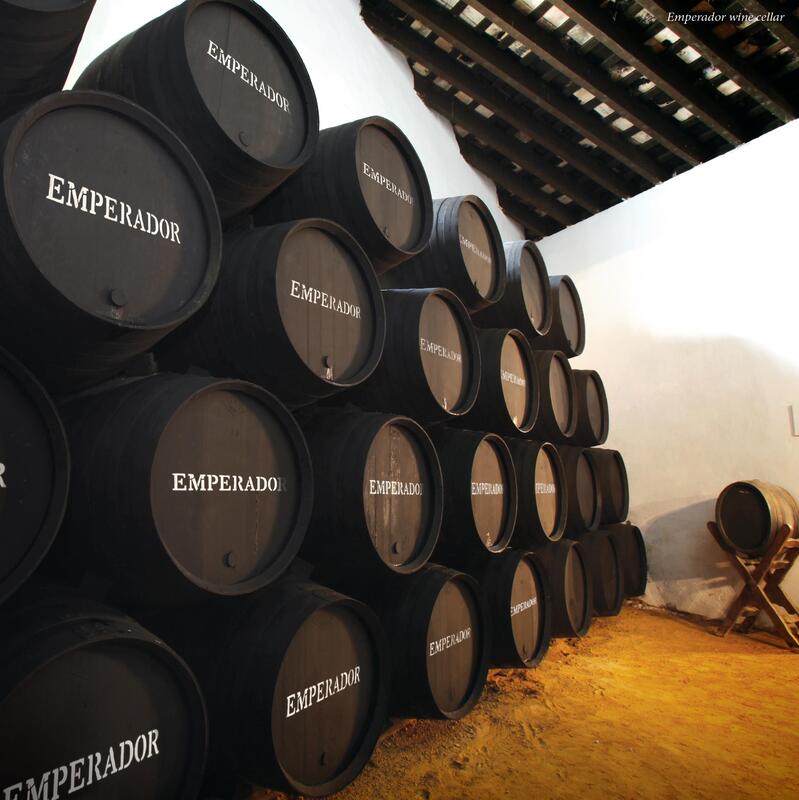
Fermentation of the grapes into wine and then the distillation of the wine occurs at the Bodegas Las Copas Distilleries in Tomelloso, Spain.  At the distillery, traditional Alquitaras stills, as well as alambiques (column) stills produce a distillate ranging between 60% ABV and 94.6% ABV, depending on the style of brandy being produced.


​  The distilled brandy is then sent to Jerez de la Frontera where it is aged in sherry casks in the bodegas of San Bruno and Las Copas.
​ Aged brandy is shipped to Sta. Rosa, Laguna in the Philippines where it is blended and bottled using an automated line.

Emperador Fast Facts

  • Emperdor is the top selling brandy worldwide, accounting for more sales than the #2 - #11 brandies combined!
  • Emperador is the #5 selling spirit worldwide, selling over 28 million cases per year.
  • Emperador represents over half of the total spirit sales by volume in the Philippines
  • Emperador Distillers controls 97% of the brandy market in this Pacific Island ocean nation.
  • Emperador is sold in over 100 countries throughout Asia and Europe, and now in the USA!

Emperado Brandy Lineup 

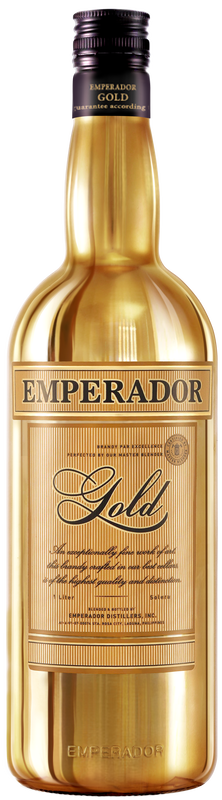
  • ​EMPERADOR GOLD (31% ABV)
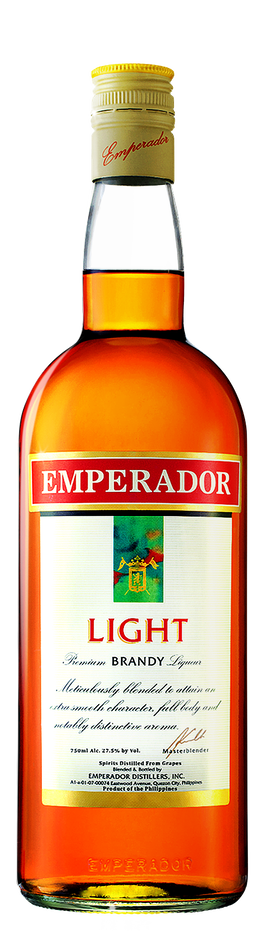
  • ​EMPERADOR LIGHT (27% ABV)
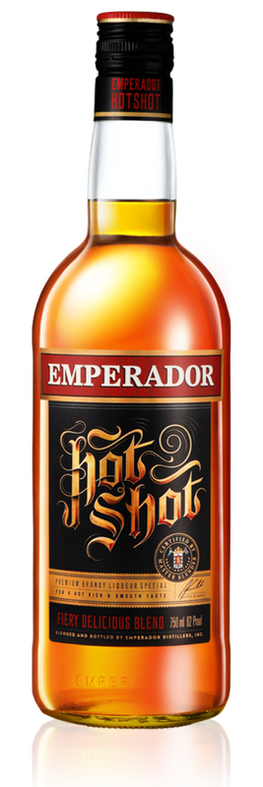
  • ​EMPERADOR HOTSHOT (31% ABV)
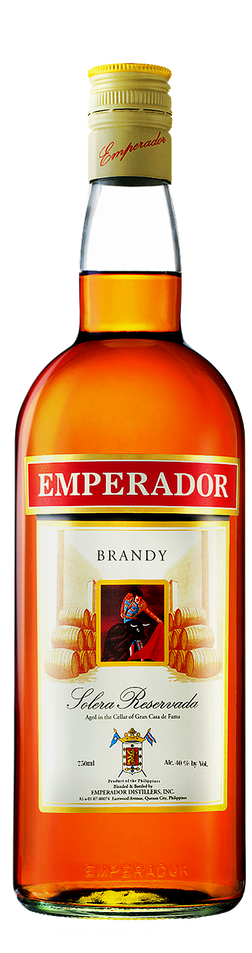
  • ​EMPERADOR SOLERA RESERVADA (40% ABV)
  • ​EMPERADOR RED (40% ABV)
<
>
Production Notes: None Available
Tasting Notes:
  • Aroma:  Bouquet of dried fruits and raisin
  • Color:  Golden amber
  • Body:  Soft, velvety mouthfeel 
  • Palate:  It’s velvety and light sweetness opens into golden raisin notes accented by allspice, clove and honey.  As the flavors dissipate, aromatic orange oil and clove notes transition into a touch of brown sugar.  For comparison, this drinks like a medium bodied XO Cognac.  This is the panicle of Emperador. 

Usage: Sip neat or on the rocks. 
Picture
Production Notes: Emperador light is a cut brandy which is diluted with neutral grain spirit and cane sugar.

Tasting Notes
  • Aroma: Bouquet of apple and raisin with hints of peach
  • Color: Medium amber
  • Body:   Sweet 
  • Palate:  Initial onset of sweetness opens into notes of dried apple with a apple-peach finish.

Usage:  
In the Philippines, Emperador Light is popular in high volume establishments and is served as a shot, or mixed with a “Club Mix Lime Juice” called Emperador and Lime (it’s a cultural phenomena worth looking up).  It’s also drank with iced tea.  

Awards
  • San Diego Distilled Spirits Competition 2019: Bronze Medal.
  • Tasting Panel – International Review Of Spirits 2016: Silver Medal.
Picture
Production Notes: Not Available
Tasting Notes
  • Aroma:  Banana toffee mixed with cinnamon undertones
  • Color:  Dark golden amber
  • Body:  Medium weight with slight viscosity
  • Palate: Initially sweet, banana and toffee flavors quickly transition into a cinnamon note similar to that found in cinnamon whiskey.  For reference, as a grape based liquor, it is fruitier than a cinnamon whiskey.
Usage:  This can be used in the same way as a cinnamon whiskey.  It can be used as a shot, with Red Bull or with cola. 
Picture
Production Notes: Aged for 12 months
Tasting Notes
  • Aroma: Fruity bouquet of dried strawberries and dried apples.
  • Color:  Reddish-amber color.
  • Body:  Light in body, especially compared to Fundador.
  • Palate:  Astringent orange oil opens into apple-cinnamon notes.  The finish remains predominantly apple and dissipates into orange and almond.
  • Usage:  Emperador and Coke is the most classic usage.

Awards
  • Tastings Panel – International Review Of Spirits 2016: Silver Medal
  • San Diego Distilled Spirits Competition 2019: Silver Medal
Picture
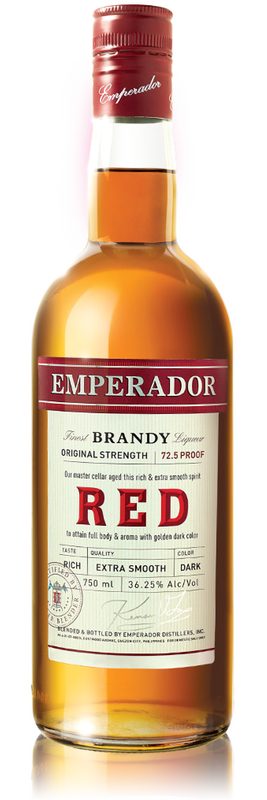
Production Notes: None available
Brand Notes: “Emperador Red is for consumers who wake up before sunrise and return when it’s dark. They are hardworking people who, at the end of the day, are looking for an extra smooth, rich drink to help them relax and recoup for the next work day.” 

Tasting Notes
  • Aroma: Banana toffee
  • Color:  Dark golden amber
  • Body:  More robust body compared to Emperador Solera Reserveda.  However, still not as robust as Fundador.
  • Palate: Onset of apricot moves into banana and toffee notes.  It then finishes similarly to Emperador Solera in the orange oil notes. 
Usage:  This can be used in the same way as Emperador Solera.  It depends on preference. 

Awards:
San Diego Distilled Spirits Competition 2019: Bronze Medal

Picture
Photos Courtesy of Emperador Brandy

Filipino Flavor Combinations

     The cocktail story is one of the Philippines’ association with Spain.  While the Philippines has had a post-colonial hangover, there have been in-roads to reclaiming its heritage, culture, and position as one of the world’s largest countries by population. One of these has been acquiring Spain’s oldest brandy producer and transforming it into a global industry leader.

The flavor of Brandy de Jerez
    The flavor of Brandy de Jerez is between Cognac and American Brandy.  While they are all barrel-aged grape products made from generally neutral grapes, variations arise from differences in grapes and aging methodologies, with longer aging resulting in more vanilla and baking spice and less fruit aroma.
  • Raisin aromas from Maillard reactions and caramelization reaction compounds
  • Banana aroma from yeast-derived 
  • isoamyl acetate. 
  • Vanilla (vanillin), coconut (coconut lactone), baking spice (eugenol), cinnamon (cinnamaldehyde), and toast aromas (furfuryl) derived from oak aging.
  • Fruit aromas from ethyl acetate are found in both fruits and brandy.

Herbs, Spices and Sweeteners
  • Sugarcane juice provides grassy aromas and slight sweetness.
  • Pandan syrup provides nutty, vanilla, floral aromas from 2-acetyl-1-pyrroline (2AP), the same aromatic compound in jasmine rice and freshly baked bread.  It gives the butter popcorn/nutty/vanilla aroma.
  • Lemongrass, in the form of syrup, enhances citrus aromatics and the amber sweetness of the brandy.
  • Galangal compliments brandy’s baking spices and raisin aromas and  can be substituted for ginger.  For more:  hawaiibevguide.com/spice-aroma-compounds-pt1.html.
  • Sugar: White sugar is neutral, while brown/muscovado and coconut sugar enhance brandy’s amber notes from Maillard reaction and caramelization products.  This goes for Oleo Saccharum recipes (fruit preserved in sugar) as well.

Ube and Ube Cream Liqueur
  • Ube’s diacetyl (creamy/buttery aroma) pairs well with cream.
  • Ube Cream Liqueur pairs with baking spice notes (like from barrel aged spirits) and not with herbaceous (like fresh herbs) or high acid (like fresh fruit, especially citrus) aromas.
  • Brandy + Ube Cream + Buttery and Oaky Chardonnay is an exploratory flavor combination as Brandy’s vanilla and baking spices aromas overlap with the oak flavors from the Chardonnay, and the diacetyl from both the Chardonnay and Ube.  The challenge: balancing acidity.

Coconut
  • Coconut milk can be used in place of cream
  • Concentrated coconut flavor from coconut rum or infused coconut can help bridge flavors between the brandy’s oak-derived flavors and other ingredients.
  • Coconut cream, milk, or dried coconut can be blended into orgeat (almonds + sugar + water + orange flower water).  This pairs the oleogustus (fat taste) in both coconut and almonds.

Southeast Asian Fruits Pairings
  • Citrus replacements include calamansi and dayap (Sour Southeast Asian orange).  These citrus have higher concentrations of R-limonene isomer (orange aroma) compared to the (S)-limonene isomer (lemons aroma).
  • Zest provides aromatics without adding sour/tart flavors.  
  • Orange aromas lend to honey, muscovado, coconut, and white sugar.
  • Calamansi or dayap liquor made from zest + neutral spirit + sugar are alternatives to orange flavored Triple sec (orange zest + neutral spirit + sugar) or Curacao (orange zest +brandy + sugar) 
  • High-acid fruits like starfruit, yellow mangosteen, pineapple 
  • Medium acid fruits like mango (ripe), mangosteen and santol.
  • Low-acid fruits like durian and duhat (Java plum) and banana (in the form of creme de banana liqueur)

Vermouth
Sweet vermouth’s higher sugar content and addition of caramelized sugar pairs well with the raisin-like aromas from Maillard compounds and caramelization reactions.  


Filipino Variation for Sour Mix
  • Replace lemon juice with calamansi or dayap. The acidity can be further enhanced with high-acid fruits like starfruit, yellow mangosteen, and pineapple.  
  • Replace egg white with coconut cream or creme de coconut. 
  • Replace simple syrup with syrups of raw or coconut sugar, recommended fruits from the Section “Filipino Flavor Concepts and Combinations: Southeast Asian Fruits,” pandan syrup, or lemongrass syrup.
Filipino Style Shrubs that pair with Brandy
(Shrub = vinegar + sugar + fruit)​
Sugar Type
Fruit
Vinegar
White
All recommended
Southeast Asian fruits,
galangal, lemongrass
Sukang Iloco 
(Dark cane vinegar)
Sukang Paombong 
(Nipa Palm Vinegar)
Raw and brown
Low-acid Southeast Asian fruits 
Ube, pandan, galangal, lemongrass
*Pairs better with robustly flavored vinegars
Sukang Iloco 
(Dark cane vinegar)
Sukang Paombong (Nipa Palm Vinegar)
Coconut
Low-acid Southeast Asian fruits 
Ube, pandan, galangal, lemongrass
*Pairs better with robustly flavored vinegars
Sukang Iloco (Dark cane vinegar)
Sukang Paombong (Nipa Palm Vinegar)

MENU

HOME

SUBSCRIBE

DIGITAL
​EDITION

BEVERAGE
​GUIDE

NEws and
​Events

ABOUT

CONTACT

©2025 Hawaii Beverage Guide
​Terms & Conditions 
Site Map
  • Subscribe
  • Digital Edition
    • Digital Edition
    • Digital Brand Index
    • Digital Archive
  • Beverage Guide
    • Flavor and Cocktail Construction >
      • A Guide to: Flavor Pairings and Recipe Development
      • A Guide to: Cocktail Construction
      • Flower Aroma Compounds
      • Peanut Aroma Compounds
      • A Guide to: Herb Aroma Compounds
      • A Guide to: Spice Aroma Compounds
      • Fruit Aroma Componds
      • Japanese Flavors
      • A Guide to Indigenous Mesoamerican Cocktail Ingredients
    • Production Fundamentals >
      • A Guide to: Water
      • A Guide to: Alcoholic Fermentation
      • Intro to the Fermentation of Grain
      • A Guide to: Distillation and Stills
      • A Guide to: Filtration
      • A Guide to: Oak Barrels
      • ​A Guide To: Non-Enzymatic ​Browning
      • Introduction to Cacao and Chocolate Making
    • Non-Alcoholic Beverages >
      • Kamaʻāina Beverages >
        • Hawaiian Sun
      • Non-Alcoholic Beer Produced by Restricted Fermentation
      • Non-Alcoholic Beer and Wine Produced by Dealcoholization
      • Hawaii Beverage Guide Perspective on: Non-Alcoholic Beer and Wine Program Integration
      • 2022 No/Low Alcohol Beverage Market Perspective
    • Beer >
      • Kamaʻāina Brewers >
        • Kauai Breweries >
          • Kaua'i Island Brewing Co.
        • Oahu Breweries >
          • Aloha Beer Co
          • Beer Lab
          • Broken Boundary Brewery
          • Hana Koa Brewing Co
          • Honolulu Beerworks
          • Inu Island Ales
          • Lanikai Brewing Co
          • Waikiki Brewing Company
        • Maui Breweries >
          • Maui Brewing Co
          • Maui Seltzer
          • Kohola Brewery
        • Big Island Breweries >
          • Big Island Brewhaus
          • Ola Brewing
          • Hilo Brewing
          • Kona Brewing
      • Athletic Brewing
      • Firestone Walker Brewing Co
      • Golden Road Brewing
      • Stella Artois Summer Solstice Lager
      • San Miguel
    • Cider >
      • Kamaʻāina Ciders >
        • Paradise Ciders
    • Sake
    • Spirits >
      • Kamaʻāina Distillers >
        • Aloha Awamori
        • Hali'imaile Distilling Company
        • Hanalei Spirits
        • Hawaii Sea Spirits
        • Hawaiian Shochu Co
        • Island Distillers
        • Ko Hana Rum
        • Kolani Distillers
        • Koloa Rum >
          • Koloa Cacao Rum
        • Ko'olau Distillery
        • Kuleana Rumworks
        • Kupu Spirits >
          • Kupu Whiskey
        • Royal Hawaiian Spirits
      • Bitters
      • Brandy >
        • Cognac >
          • Martell
        • Spanish Brandy >
          • Emperador >
            • Fundador
      • Gin >
        • Ginebra San Miguel
        • Indoggo Gin
      • Liqueurs and Cordials >
        • ​Destileria Barako: Ube Cream Liqueur
        • Skrewball
        • Chareau
      • Ready Made Cocktails >
        • 10 Barrels Brewing Co.
      • Rum >
        • Copalli Rum
        • Lemon Hart and Son
        • Real McCoy Rum
        • Tanduay Rum >
          • Tanduay: Especia Spiced Rum
      • Shochu
      • Agave Spirits
      • Tequila >
        • Del Maguey
        • Codigo 1530
        • Tequila Comisario
        • El Cristiano
        • Casa Sauza
        • Real Del Valle
        • Tequila Komos
        • El Hempe
      • Bourbon Whiskey >
        • Old Hillside Whiskey
      • Irish Whiskey >
        • Irish Distillers: Midleton Very Rare, Irish Distillers: Redbreast, Spot Whiskey, Jameson
        • Slane Irish Whiskey
      • Vodka >
        • Kai Vodka
        • Haku Vodka
    • Wine >
      • Kamaʻāina Wine Makers >
        • Maui Wine
      • Winemaking >
        • A Guide to Viticulture
        • A Guide to: Wine Prefermentation Practices
        • A Guide to: Wine Microbes
        • A Guide to: Wine Alcoholic Fermentation Physical Environment
        • A Guide to: Wine Fermentation Chemical Environment
        • A Guide to: Wine Bottling
        • A Guide to: Post Fermentation Flavor Adjustments
        • A Guide to: Post Fermentation Process: Stabilization
        • A Guide to: Wine Faults
        • A Guide to: Wine Polyphenols
        • A Guide to: Wine Aroma Compounds: Pt 1
        • A Guide to: Wine Aroma Compounds: Pt 2
        • A Guide to: High Residual Sugar Wine from Dehydrated Grapes
        • Red and White Grape Aroma Compounds
      • Wine Styles >
        • Natural Wine
        • White Wine Styles >
          • Riesling
          • Sauvignon Blanc
        • Rosé
        • Red Wine Styles >
          • Bordeaux Reds
          • Cabernet Sauvignon
          • Gewürztraminer
          • Grenache
          • Malbec
          • Merlot
          • Non-Alcoholic Wine >
            • Fre: Alcohol -Removed Wine
          • Zinfandel
        • Sparkling Wine
  • Business Strategy
    • Restaurant Finance
    • Your Dapper Consulting: Democratization of Venture Capital
    • Marketing for Small Business Pt 1: Analysis
    • Marketing for Small Business Pt 2: Marketing Communications Strategy
    • A Guide to Pricing Strategy
  • News and Events
    • Cheers to Seventy-Three Years
    • Navigating COVID-19
  • About
    • Contact
    • Terms & Conditions
  • WineAI