HBG
  • Subscribe
  • Digital Edition
    • Digital Edition
    • Digital Brand Index
    • Digital Archive
  • Beverage Guide
    • Flavor and Cocktail Construction >
      • A Guide to: Flavor Pairings and Recipe Development
      • A Guide to: Cocktail Construction
      • Flower Aroma Compounds
      • Peanut Aroma Compounds
      • A Guide to: Herb Aroma Compounds
      • A Guide to: Spice Aroma Compounds
      • Fruit Aroma Componds
      • Japanese Flavors
      • A Guide to Indigenous Mesoamerican Cocktail Ingredients
    • Production Fundamentals >
      • A Guide to: Water
      • A Guide to: Alcoholic Fermentation
      • Intro to the Fermentation of Grain
      • A Guide to: Distillation and Stills
      • A Guide to: Filtration
      • A Guide to: Oak Barrels
      • ​A Guide To: Non-Enzymatic ​Browning
      • Introduction to Cacao and Chocolate Making
    • Non-Alcoholic Beverages >
      • Kamaʻāina Beverages >
        • Hawaiian Sun
      • Non-Alcoholic Beer Produced by Restricted Fermentation
      • Non-Alcoholic Beer and Wine Produced by Dealcoholization
      • Hawaii Beverage Guide Perspective on: Non-Alcoholic Beer and Wine Program Integration
      • 2022 No/Low Alcohol Beverage Market Perspective
    • Beer >
      • Kamaʻāina Brewers >
        • Kauai Breweries >
          • Kaua'i Island Brewing Co.
        • Oahu Breweries >
          • Aloha Beer Co
          • Beer Lab
          • Broken Boundary Brewery
          • Hana Koa Brewing Co
          • Honolulu Beerworks
          • Inu Island Ales
          • Lanikai Brewing Co
          • Waikiki Brewing Company
        • Maui Breweries >
          • Maui Brewing Co
          • Maui Seltzer
          • Kohola Brewery
        • Big Island Breweries >
          • Big Island Brewhaus
          • Ola Brewing
          • Hilo Brewing
          • Kona Brewing
      • Athletic Brewing
      • Firestone Walker Brewing Co
      • Golden Road Brewing
      • Stella Artois Summer Solstice Lager
      • San Miguel
    • Cider >
      • Kamaʻāina Ciders >
        • Paradise Ciders
    • Sake
    • Spirits >
      • Kamaʻāina Distillers >
        • Aloha Awamori
        • Hali'imaile Distilling Company
        • Hanalei Spirits
        • Hawaii Sea Spirits
        • Hawaiian Shochu Co
        • Island Distillers
        • Ko Hana Rum
        • Kolani Distillers
        • Koloa Rum >
          • Koloa Cacao Rum
        • Ko'olau Distillery
        • Kuleana Rumworks
        • Kupu Spirits >
          • Kupu Whiskey
        • Royal Hawaiian Spirits
      • Bitters
      • Brandy >
        • Cognac >
          • Martell
        • Spanish Brandy >
          • Emperador >
            • Fundador
      • Gin >
        • Ginebra San Miguel
        • Indoggo Gin
      • Liqueurs and Cordials >
        • ​Destileria Barako: Ube Cream Liqueur
        • Skrewball
        • Chareau
      • Ready Made Cocktails >
        • 10 Barrels Brewing Co.
      • Rum >
        • Copalli Rum
        • Lemon Hart and Son
        • Real McCoy Rum
        • Tanduay Rum >
          • Tanduay: Especia Spiced Rum
      • Shochu
      • Agave Spirits
      • Tequila >
        • Del Maguey
        • Codigo 1530
        • Tequila Comisario
        • El Cristiano
        • Casa Sauza
        • Real Del Valle
        • Tequila Komos
        • El Hempe
      • Bourbon Whiskey >
        • Old Hillside Whiskey
      • Irish Whiskey >
        • Irish Distillers: Midleton Very Rare, Irish Distillers: Redbreast, Spot Whiskey, Jameson
        • Slane Irish Whiskey
      • Vodka >
        • Kai Vodka
        • Haku Vodka
    • Wine >
      • Kamaʻāina Wine Makers >
        • Maui Wine
      • Winemaking >
        • A Guide to Viticulture
        • A Guide to: Wine Prefermentation Practices
        • A Guide to: Wine Microbes
        • A Guide to: Wine Alcoholic Fermentation Physical Environment
        • A Guide to: Wine Fermentation Chemical Environment
        • A Guide to: Wine Bottling
        • A Guide to: Post Fermentation Flavor Adjustments
        • A Guide to: Post Fermentation Process: Stabilization
        • A Guide to: Wine Faults
        • A Guide to: Wine Polyphenols
        • A Guide to: Wine Aroma Compounds: Pt 1
        • A Guide to: Wine Aroma Compounds: Pt 2
        • A Guide to: High Residual Sugar Wine from Dehydrated Grapes
        • Red and White Grape Aroma Compounds
      • Wine Styles >
        • Natural Wine
        • White Wine Styles >
          • Riesling
          • Sauvignon Blanc
        • Rosé
        • Red Wine Styles >
          • Bordeaux Reds
          • Cabernet Sauvignon
          • Gewürztraminer
          • Grenache
          • Malbec
          • Merlot
          • Non-Alcoholic Wine >
            • Fre: Alcohol -Removed Wine
          • Zinfandel
        • Sparkling Wine
  • Business Strategy
    • Restaurant Finance
    • Your Dapper Consulting: Democratization of Venture Capital
    • Marketing for Small Business Pt 1: Analysis
    • Marketing for Small Business Pt 2: Marketing Communications Strategy
    • A Guide to Pricing Strategy
  • News and Events
    • Cheers to Seventy-Three Years
    • Navigating COVID-19
  • About
    • Contact
    • Terms & Conditions
Picture
Photo By: Ahmed Noor Khan /Shutterstock

Flower Aroma Compounds
​
By: Brent Nakano

The aroma of flowers is derived from volatile aromatic compounds that are believed to attract pollinators, with a specific set of compounds attracting a specific type of pollinator [1] [2] . There are commonalities, however, as linalool and benzaldehyde are found in over 50% of the investigated plant families [3].

In beverages, flowers can be used as aromatic descriptors or as ingredients. As noted in the July 2023 issue in the article entitled “A Guide to Cocktail Recipe Development”,(www.hawaiibevguide.com/flavor-pairings-and-recipe-development.html) recipes can be developed through:
  • Food pairing: Flavors are intensified by mixing ingredients with similar chemical compounds.
  • Food bridging: Two ingredients that do not share a strong molecular or empirical affinity are bridged through another ingredient or a path of non-repeating ingredients within a network of ingredient affinities
  • The avoidance of food-bridging and food-pairing

In this issue, we have compiled the data for common culinary flowers, as well as a few flowers associated with Hawaii. We have also found an extensive list of culinary flowers used in the Mediterranean Basin. Which can be found at
Motti, R.; Paura, B.; Cozzolino, A.; Falco, B.d. Edible Flowers Used in Some Countries of the Mediterranean Basin: An Ethnobotanical Overview. Plants 2022, 11, 3272. https://doi.org/10.3390/plants11233272

For more flower aromatic compounds correlation to pollinators
[1] Roxane Delle-Vedove, Bertrand Schatz, Mathilde Dufay, Understanding intraspecific variation of floral scent in light of evolutionary ecology, Annals of Botany, Volume 120, Issue 1, July 2017, Pages 1–20, 
https://doi.org/10.1093/aob/mcx055

[2] Schiestl, F. P. (2010). The evolution of floral scent and insect chemical communication. Ecology letters, 13(5), 643-656. Retrieved from:  www.researchgate.net/profile/Florian-Schiestl/publication/42587818_The_evolution_of_floral_scent_and_insect_chemical_communication/links/5c3c5f70458515a4c7248e49/The-evolution-of-floral-scent-and-insect-chemical-communication.pdf 

[3] Knudsen, J.T. & Gershenzon, J. (2006). The chemical diversity of floral scent. In: Biology of Floral Scent (eds Dudareva, N. & Pichersky, E.). Taylor & Francis, Boca Raton, pp. 27–52 
www.jstor.org/stable/4354511?read-now=1

How to use the following charts

The charts provide generalizations about the relative percentage of aromatic compounds that exist in common spices as found by Gas Chromatography Mass Spectrometry (GC-MS), Gas Chromatography Olfactory (GC-O) or the analytical method listed. This approach was taken because of the common variations in aroma compounds attributed to differences like environmental factors, plant varieties, cultivation practices, harvesting stage, method of storage and method of extraction. It should be noted that high concentrations of aromatic compounds generally but do not always proportionally correlate with flavor influence as some compounds can be more potent than others. We, however, have yet to find a resource that provides this information. For more on this concept:
W. Grosch, Evaluation of the Key Odorants of Foods by Dilution Experiments, Aroma Models and Omission, Chemical Senses, Volume 26, Issue 5, June 2001, Pages 533–545, https://doi.org/10.1093/chemse/26.5.533
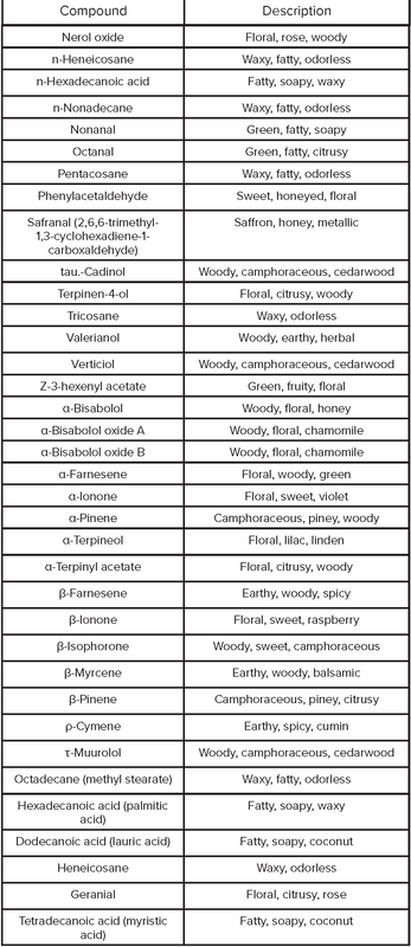
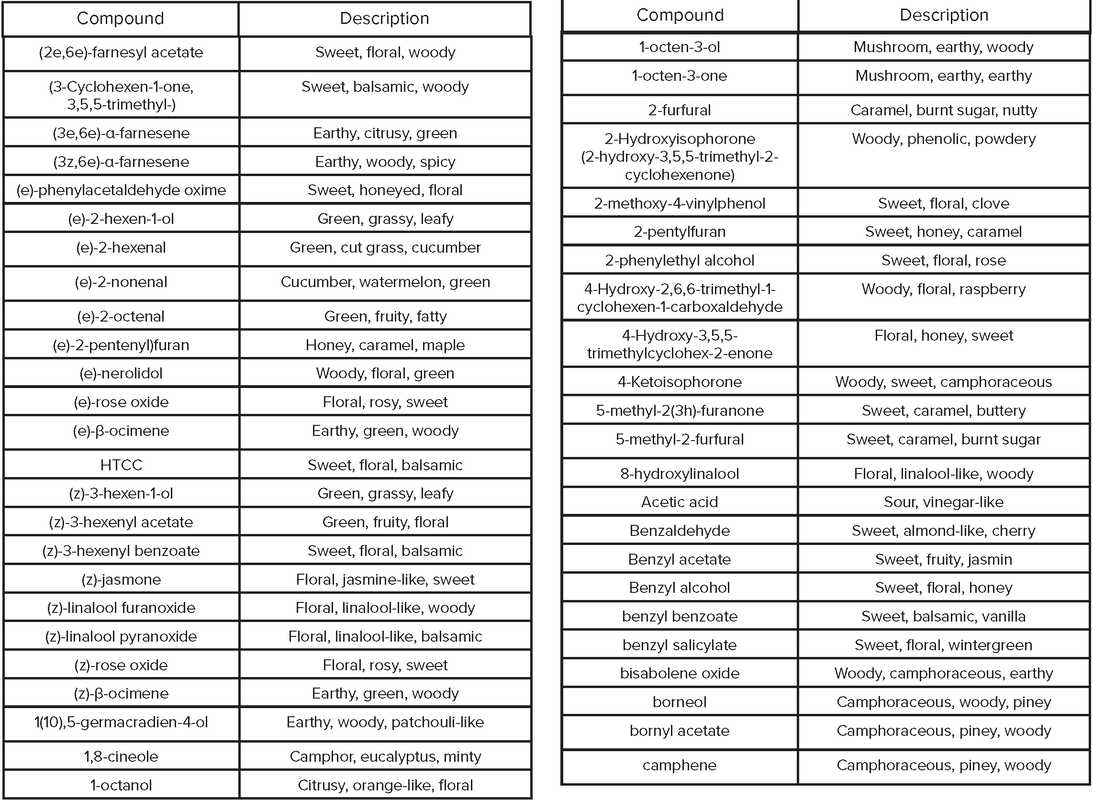
Aroma compounds and their descriptors
Picture
Picture
Picture

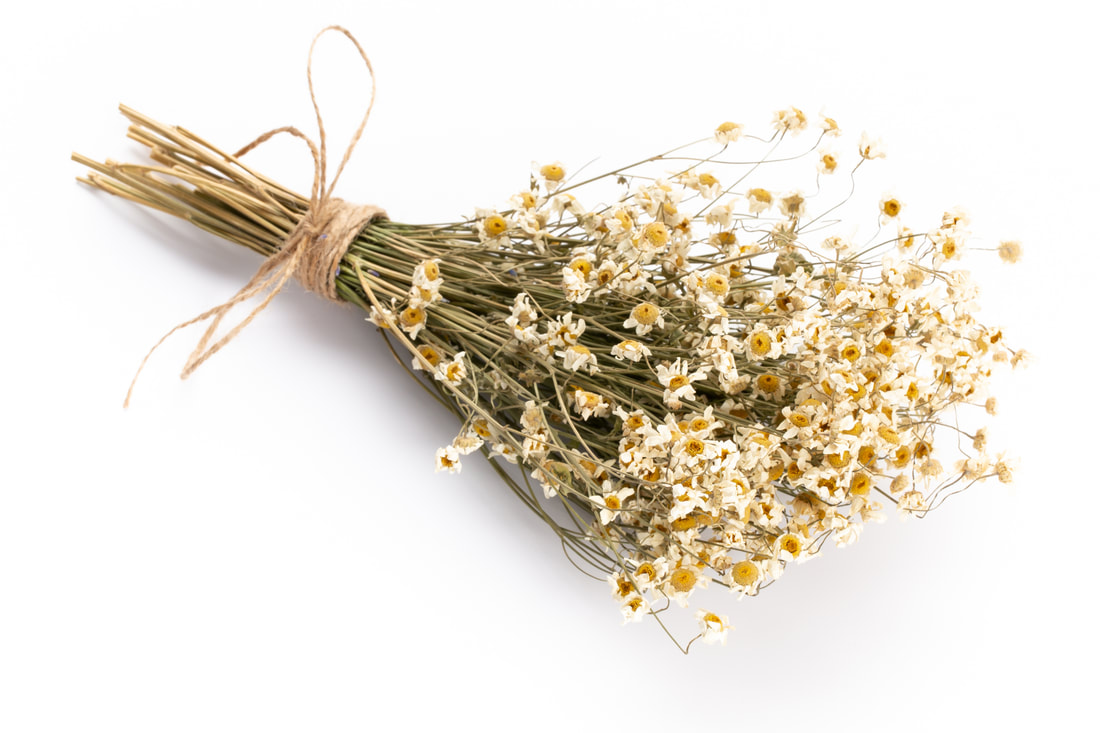
Chamomile/​German chamomile 
​(Matricaria recutita)

Picture
Image by gitusik/AdobeStock
Your browser does not support viewing this document. Click here to download the document.
Studies on M. recutita 
Süfer, Ö., & Bozok, F. (2020). Characterization of essential oil from Matricaria sevanensis by microwave-assisted distillation. Journal of Thermal Analysis and Calorimetry, 140, 253-261. 
www.researchgate.net/publication/335756384_Characterization_of_Essential_Oil_from_Matricaria_sevanensis_by_Microwave_Assisted_Distillation 
Salamon I, Ibraliu A, Kryvtsova M. Essential Oil Content and Composition of the Chamomile Inflorescences (Matricaria recutita L.) Belonging to Central Albania. Horticulturae. 2023; 9(1):47. https://doi.org/10.3390/horticulturae9010047 

Other Aroma Compounds
(Z)-β-Farnesene at 24.2% was found by Sufer et al 2020.  It and its isomer (E)-β-Farnesene is also noted in the aforementioned literature cited by Lawrence. 

For more insight
Lawrence, B. M. (2005). Progress in essential oils. Perfumer & Flavorist, 30(8), 56–61. https://img.perfumerflavorist.com/files/base/allured/all/document/2005/10/pf.PF_30_08_056_11.pdf 

Lawrence, B. M. (2012). Progress in essential oils. Perfumer & Flavorist, 37(5), 54–59. https://img.perfumerflavorist.com/files/base/allured/all/document/2012/04/pf.PF_37_05_054_07.pdf

Lawrence, B. M. (2014). Progress in essential oils. Perfumer & Flavorist, 39(11), 41–48. https://img.perfumerflavorist.com/files/base/allured/all/document/2014/10/pf.PF_39_11_041_08.pdf 
Other species
Roman Chamomile (Chamaemelum nobile/Anthemis nobilis) 
This species may be more popular as an essential oil rather than a culinary ingredient.  We also could not find open-source information at the time of this writing.  For more insight:

Klimes, I., & Lamparsky, D. (2010). Unsaturated components in the essential oil of Anthemis nobilis L. (Roman chamomile). Perfumer & Flavorist, 35(3), 54–59. https://www.perfumerflavorist.com/fragrance/ingredients/article/21861596/unsaturated-components-in-the-essential-oil-of-anthemis-nobilis-l-roman-chamomile 

Lawrence, B. M. (2009). Progress in essential oils. Perfumer & Flavorist, 34(4), 54–61. www.perfumerflavorist.com/fragrance/ingredients/article/21858707/progress-in-essential-oils

Lawrence, B. M., & Reynolds, J. (2010). Unsaturated components in the essential oil of Anthemis nobilis L. (Roman chamomile). Perfumer & Flavorist, 35(3), 48–53. https://img.perfumerflavorist.com/files/base/allured/all/document/2009/03/pf.PF_34_04_054_03.pdf 

Inflorescences (Matricaria recutita L.) Belonging to Central Albania. Horticulturae. 2023; 9(1):47. 
https://doi.org/10.3390/horticulturae9010047 

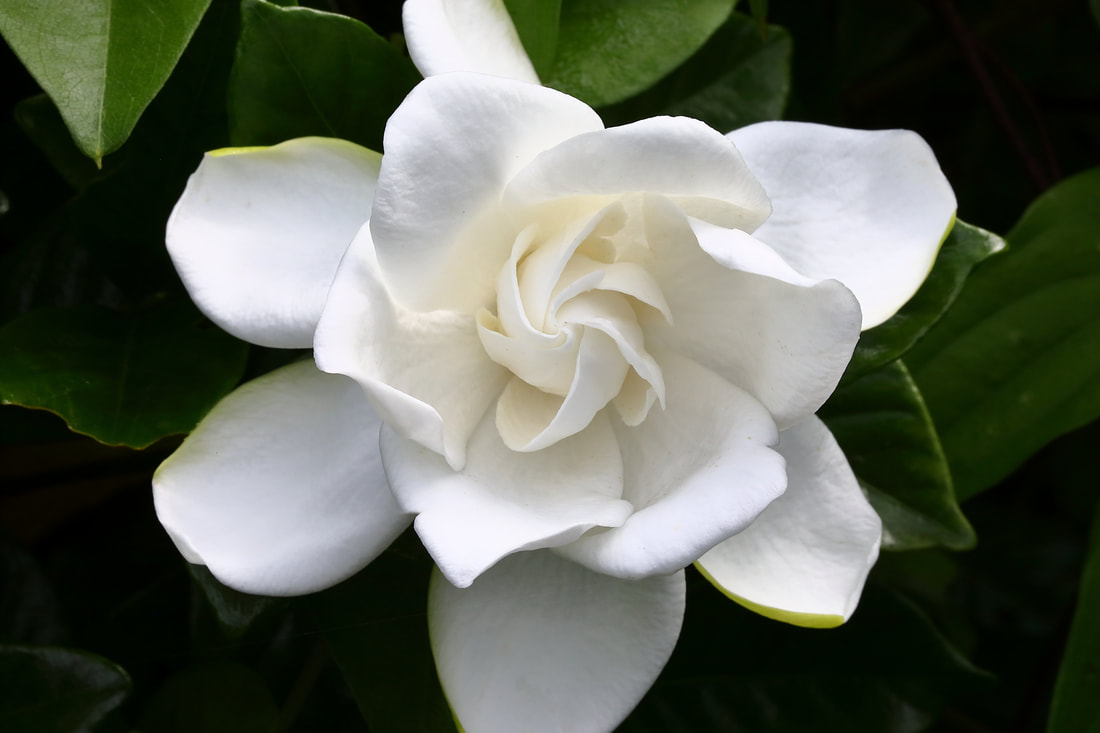
Gardenia (Gardenia spp.)​

Picture
photo by: AdobeStock/ aki_insta212
Your browser does not support viewing this document. Click here to download the document.
Studies

Zhang, N.; Luo, M.; He, L.; Yao, L. Chemical Composition of Essential Oil from Flower of ‘Shanzhizi’ (Gardenia jasminoides Ellis) and Involvement of Serotonergic System in Its Anxiolytic Effect. Molecules 2020, 25, 4702.  https://doi.org/10.3390/molecules25204702 

Zhang, N.; Bian, Y.; Yao, L. Essential Oils of Gardenia jasminoides J. Ellis and Gardenia jasminoides f. longicarpa Z.W. Xie & M. Okada Flowers: Chemical Characterization and Assessment of Anti-Inflammatory Effects in Alveolar Macrophage. Pharmaceutics 2022, 14, 966. 
https://doi.org/10.3390/pharmaceutics14050966 

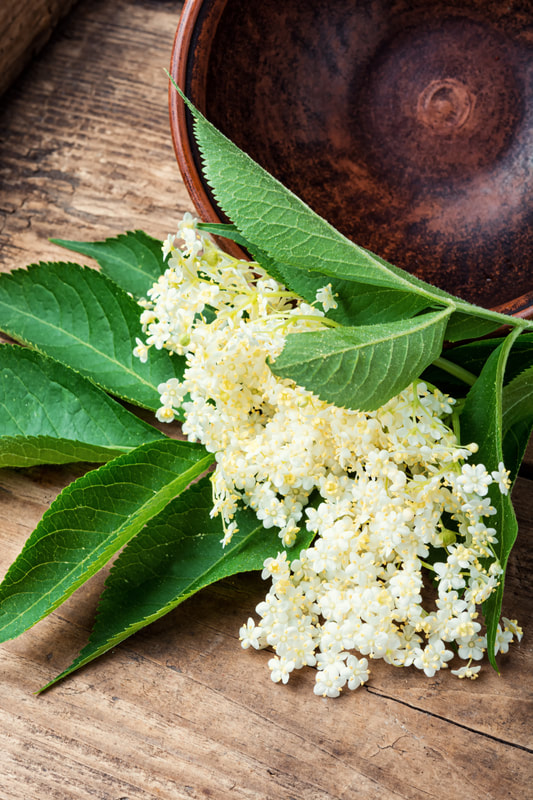
Elderflower (Sambucus nigra)

Picture
photo by: AdobeStock/ nikolaydonetsk
Your browser does not support viewing this document. Click here to download the document.
Studies
Bajer, T., Bajerová, P., & Ventura, K. (2017). Effect of harvest and drying on composition of volatile profile of elderflowers (Sambucus nigra) from wild. Natural Product Communications, 12(12), https://journals.sagepub.com/doi/pdf/10.1177/1934578X1701201231

Kaack, K., Christensen, L. P., Hughes, M., & Eder, R. (2006). Relationship between sensory quality and volatile compounds of elderflower (Sambucus nigra L.) extracts. European Food Research and Technology, 223, 57-70. Retrieved from: https://findresearcher.sdu.dk/ws/portalfiles/portal/125720364/Poster_LMC_2005_Elderflower_aroma_extracts.pdf

Jørgensen, U., Hansen, M., Christensen, L. P., Jensen, K., & Kaack, K. (2000). Olfactory and quantitative analysis of aroma compounds in elder flower (Sambucus nigra L.) drink processed from five cultivars. Journal of agricultural and food chemistry, 48(6), 2376-2383.

For more insight
Ferreira, S. S., Silva, A. M., & Nunes, F. M. (2022). Sambucus nigra L. fruits and flowers: Chemical composition and related bioactivities. Food Reviews International, 38(6), 1237-1265. Retrieved from https://www.academia.edu/43920775/Sambucus_nigra_L_Fruits_and_Flowers_Chemical_Composition_and_Related_Bioactivities 

Salvador,  . C., Silvestre, A. J., & Rocha, S. M. (2018). Comprehensive Insight into the Elderflowers and Elderberries (Sambucus nigra L.) Mono and Sesquiterpenic Metabolites: Factors that Modulate Their Composition. Secondary Metabolites: Sources and Applications, 59. https://www.intechopen.com/chapters/61808 

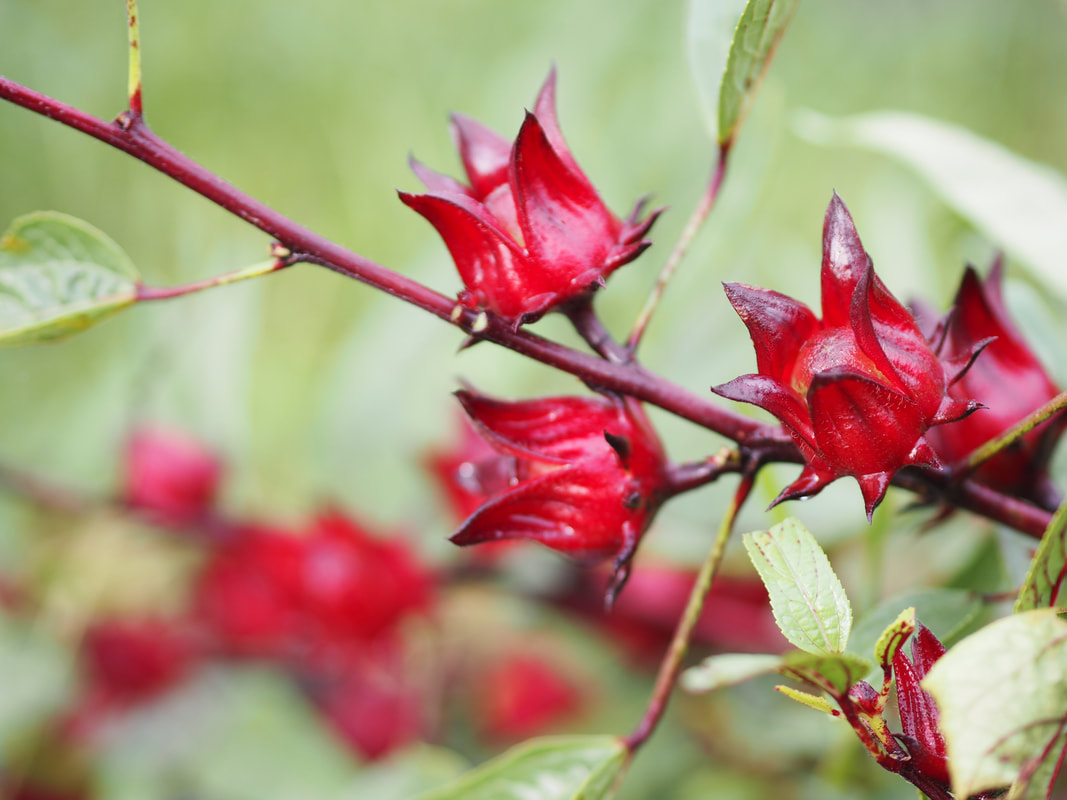
Hibiscus/Roselle
(Hibiscus sabdariffa)

Picture
photo by: AdobeStock/ pakn
Your browser does not support viewing this document. Click here to download the document.
Aroma Compounds
The studies on aromatic compounds in Hibiscus sabdariffa were highly variable in regards to which compound that were looked for via GCMS. Due to this, a table to compare the findings is unhelpful. As such, we present the following findings:

Gonzalez-Palomares et al. (2009) extracted hibiscus calyces obtained from Michoacan, Mexico with 30% ethanol and then spray dried  into a  powder at varying temperatures.  The authors reported the findings in two parts:

Volatile compounds retained in the powder
  • p-Cymene (0.13% average)
  • Limonene (1.66% average)
  • Alpha-Terpinolene (0.08% average)
  • Linalool (0.14% average)
  • Ethyl hexadecanoate (1.69% average)
  • Ethyl linoleate (0.62% average)
  • Ethyl linoleolate  (0.15% average)
  • Benzaldehyde (0.26% average)
  • Decanal (0.17% average)
  • 4-Ethylguaiacol (0.07% average)
  • Furfural (3.62% average)

Volatile compounds generated by chemical degradation of sugar derivatives
  • Eugenol (0.18% average)
  • cis-Linalool oxide (1.07% average)
  • Furanic linalool oxide Z and E (0.42% average)

Suniarti et al. 2022 extracted hibiscus calyces obtained from  Balai Tanaman Obat dan Aromatik (Balittro) Bogor, West Java, Indonesia, that were extracted by 70% ethanol and found that the primary organic acids were:
  • Propanoic acid: 12.96%
  • (2E)-5-Methyl, [2,3-D2] hexa-2,4-dieonic acid: 12.8%
  • (9E)-9-Octadeconoic acid: 9.66%

Inikpi et al. (2014) studied air-dried flowers from Lagos, Nigeria which were hydro-distilled and found that the primary contents of the essential oil were:
  • Hexadecanoic acid: 64.35%
  • Linoleic acid: 22.7%

Avalos-Martínez et al. (2019) extracted air-dried calyces obtained from the experimental field of the Universidad Autónoma de Nayarit, Mexico with 98 °C distilled water, and examined the odor active values (OAV).  

Other findings
While not reported in the experimental findings, many of the studies reported a high content of ascorbic acid.

Studies
Avalos-Martínez, E., Pino, J. A., Sáyago-Ayerdi, S., Sosa-Moguel, O., & Cuevas-Glory, L. (2019). Assessment of volatile compounds and sensory characteristics of Mexican hibiscus (Hibiscus sabdariffa L.) calyces hot beverages. Journal of food science and technology, 56(1), 360-366. https://www.ncbi.nlm.nih.gov/pmc/articles/PMC6342777/ 

Suniarti, D. F., Suwandi, T., Putri, S. A., & Kurnia, D. (2022). Potential of Hibiscus sabdariffa L. Calyx (Rosella) extract as antibacterial agent in dental disease: Phytochemical and chemical components profiling. Journal of advanced pharmaceutical technology & research, 13(3), 202–206. https://www.ncbi.nlm.nih.gov/pmc/articles/PMC9355063/ 

Gonzalez-Palomares, S., Estarrón-Espinosa, M., Gómez-Leyva, J. F., & Andrade-González, I. (2009). Effect of the temperature on the spray drying of roselle extracts (Hibiscus sabdariffa L.). Plant foods for human nutrition, 64(1), 62-67.
https://www.researchgate.net/publication/23663540_Effect_of_the_Temperature_on_the_Spray_Drying_of_Roselle_Extracts_Hibiscus_sabdariffa_L 

Inikpi, E., Lawal, O. A., Ogunmoye, A. O., & Ogunwande, I. A. (2014). Volatile composition of the floral essential oil of Hibiscus sabdariffa L. from Nigeria. American Journal of Essential Oils and Natural Products, 2(2), 04-07. https://www.essencejournal.com/pdf/2014/vol2issue2/PartA/2-2-5-354.pdf

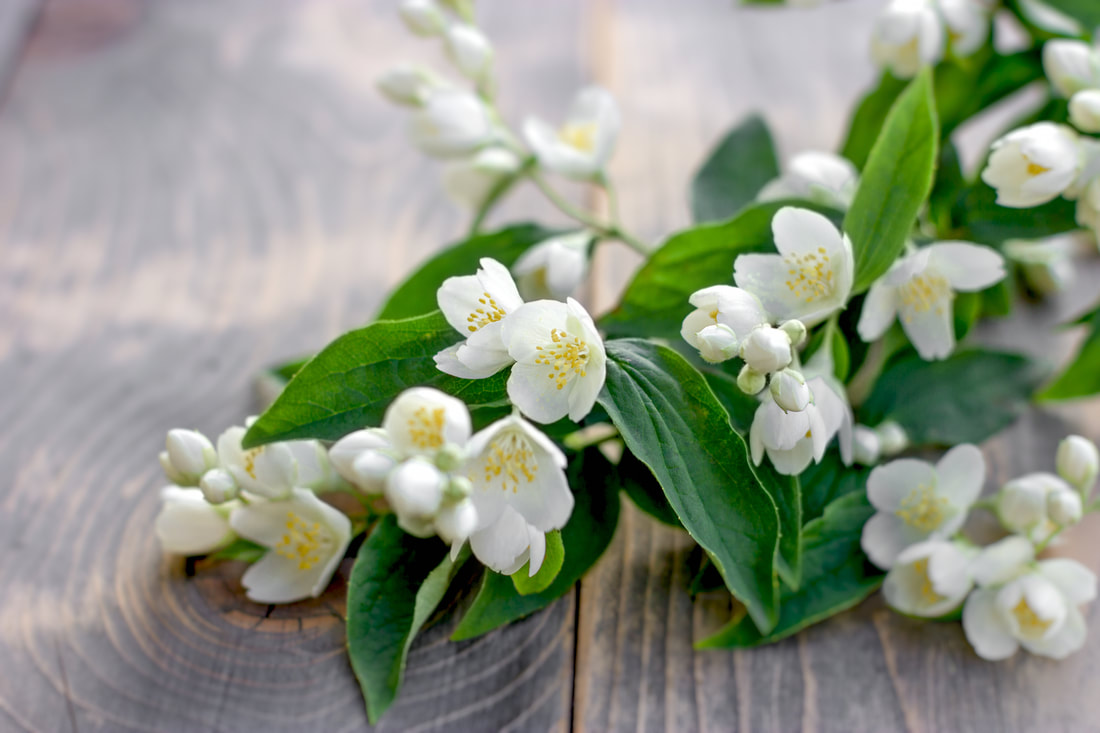
Jasmine/Pikake/Sampaguita/ Arabian Jasmine
​(Jasminum sambac)

Picture
Your browser does not support viewing this document. Click here to download the document.
Studies
Edris, A. E., Chizzola, R., & Franz, C. (2008). Isolation and characterization of the volatile aroma compounds from the concrete headspace and the absolute of Jasminum sambac (L.) Ait.(Oleaceae) flowers grown in Egypt. European Food Research and Technology, 226, 621-626. Retrieved from www.researchgate.net/publication/226381453_Isolation_and_characterization_of_the_volatile_aroma_compounds_from_the_concrete_headspace_and_the_absolute_of_Jasminum_sambac_L_Ait_Oleaceae_flowers_grown_in_Egypt 

Braun, N. A., & Sim, S. (2012). Jasminum sambac flower absolutes from India and China–Geographic variations. Natural Product Communications, 7(5), https://journals.sagepub.com/doi/abs/10.1177/1934578X1200700526
Zhang, J., Li, J., Wang, J., Sun, B., Liu, Y., & Huang, M. (2021). Characterization of aroma-active compounds in Jasminum sambac concrete by aroma extract dilution analysis and odour activity value. Flavour and Fragrance Journal, 36(2), 197-206. Retrieved from: www.researchgate.net/publication/345980403_Characterization_of_aroma-active_compounds_in_Jasminum_sambac_concrete_by_aroma_extract_dilution_analysis_and_odour_activity_value

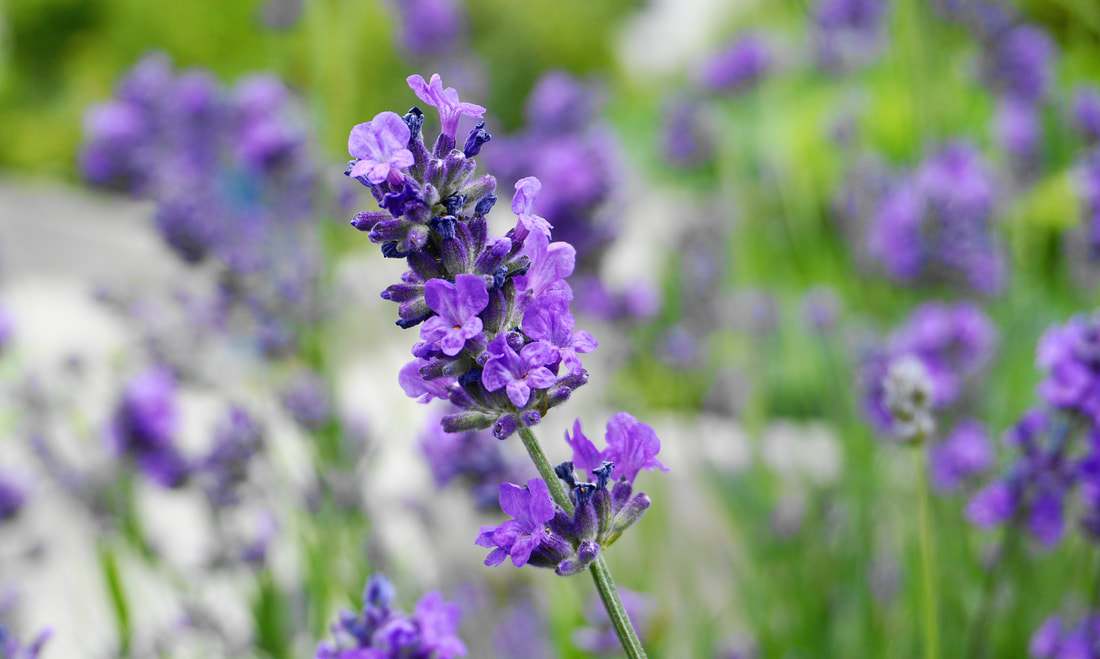
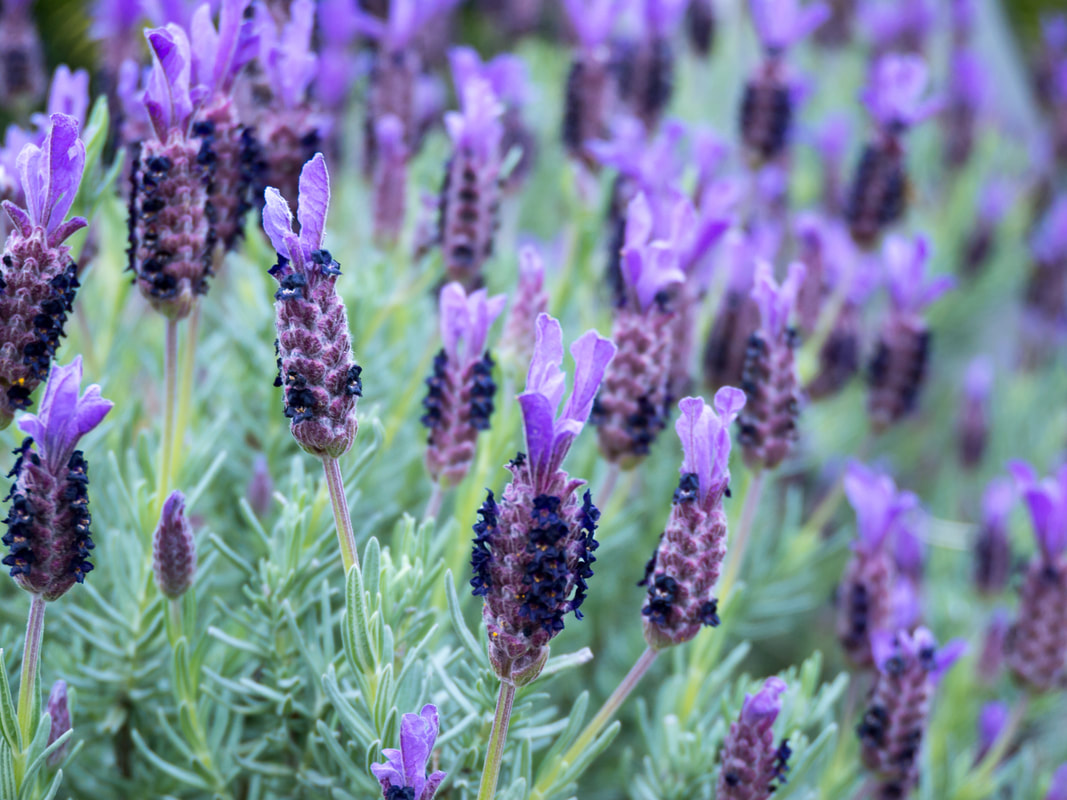
Lavander

Picture
Image by AdobeStock/lenic
Your browser does not support viewing this document. Click here to download the document.
Picture
Image by AdobeStock/photohampster
Your browser does not support viewing this document. Click here to download the document.
Studies 
Shellie, R., Mondello, L., Marriott, P., & Dugo, G. (2002). Characterisation of lavender essential oils by using gas chromatography–mass spectrometry with correlation of linear retention indices and comparison with comprehensive two-dimensional gas chromatography. Journal of Chromatography A, 970(1-2), 225-234. Retrieved from https://www.academia.edu/22243864/Characterisation_of_lavender_essential_oils_by_using_gas_chromatography_mass_spectrometry_with_correlation_of_linear_retention_indices_and_comparison_with_comprehensive_two_dimensional_gas_chromatography

Dob, T., Dahmane, D., Agli, M., & Chelghoum, C. (2006). Essential oil composition of Lavandula stoechas. from Algeria. Pharmaceutical biology, 44(1), 60-64. https://www.tandfonline.com/doi/full/10.1080/13880200500496421 

Angioni, A., Barra, A., Coroneo, V., Dessi, S., & Cabras, P. (2006). Chemical composition, seasonal variability, and antifungal activity of Lavandula stoechas L. ssp. stoechas essential oils from stem/leaves and flowers. Journal of agricultural and food chemistry, 54(12), 4364-4370. Retrieved from https://www.academia.edu/13533352/Chemical_Composition_Seasonal_Variability_and_Antifungal_Activity_of_Lavandula_stoechas_L_ssp_stoechas_Essential_Oils_from_Stem_Leaves_and_Flowers 

Kim, N. S., & Lee, D. S. (2002). Comparison of different extraction methods for the analysis of fragrances from Lavandula species by gas chromatography–mass spectrometry. Journal of Chromatography a, 982(1), 31-47. https://www.academia.edu/29756287/Comparison_of_different_extraction_methods_for_the_analysis_of_volatile_secondary_metabolites_of_Lippia_alba_Mill_N_E_Brown_grown_in_Colombia_and_evaluation_of_its_in_vitro_antioxidant_activity  ​ 

For a study on different lavender honeys
Guyot-Declerck, C., Renson, S., Bouseta, A., & Collin, S. (2002). Floral quality and discrimination of Lavandula stoechas, Lavandula angustifolia, and Lavandula angustifolia× latifolia honeys. Food Chemistry, 79(4), 453-459. Retrieved from https://citeseerx.ist.psu.edu/document?repid=rep1&type=pdf&doi=2fba25461eeadbaa029ca83bd394cd42f98295dc

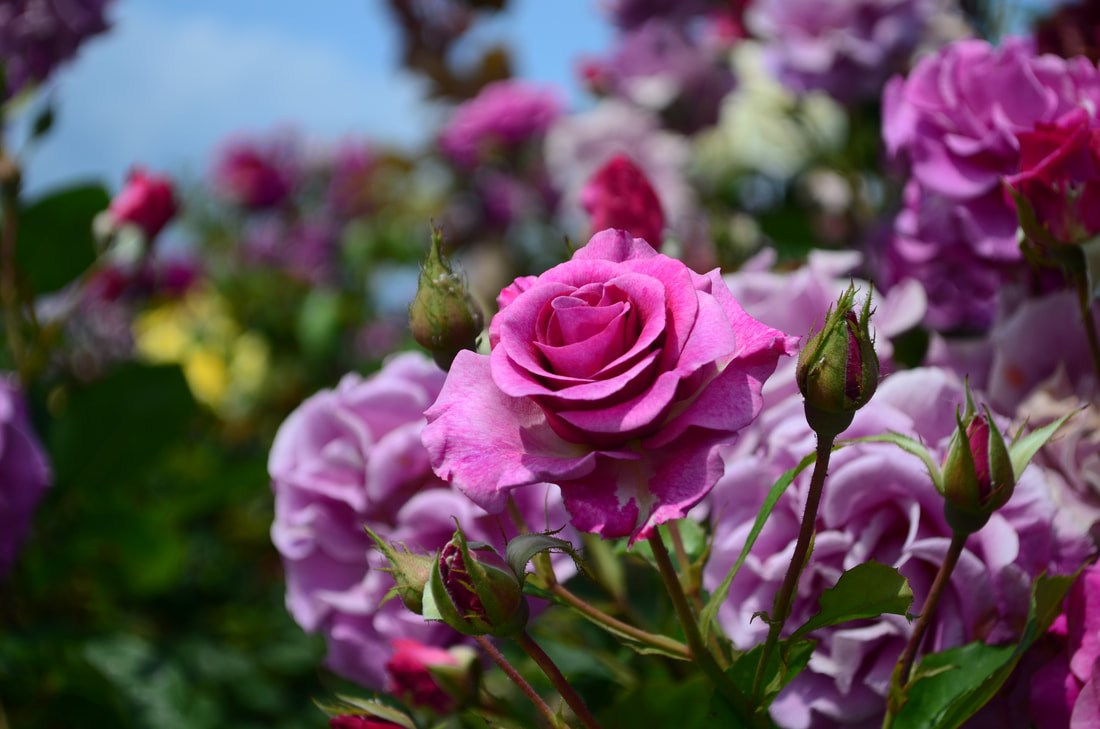
Turkish/ Damascene/ Damask rose
​ (Rosa × damascena) 

Picture
Image by AdobeStock/maria
Your browser does not support viewing this document. Click here to download the document.
Studies 
Babu, K.G.; Singh, B.; Joshi, V.P.; Singh, V. Essential oil composition of Damask rose (Rosa damascena Mill.) distilled under different pressures and temperatures. Flavour Fragr. J. 2002, 17, 136–140. Retrieved from: https://www.academia.edu/8345798/Essential_oil_composition_of_Damask_rose_Rosa_damascena_

Mill_distilled_under_different_pressures_and_temperatures
Villa, C.; Robustelli Della Cuna, F.S.; Russo, E.; Ibrahim, M.F.; Grignani, E.; Preda, S. Microwave-Assisted and Conventional Extractions of Volatile Compounds from Rosa x damascena Mill. Fresh Petals for Cosmetic Applications. Molecules 2022, 27, 3963.  https://doi.org/10.3390/molecules27123963 doi.org/10.3390/molecules27123963

Gateva, S.; Jovtchev, G.; Chanev, C.; Georgieva, A.; Stankov, A.; Dobreva, A.; Mileva, M. Assessment of anti-cytotoxic, anti-genotoxic and antioxidant potentials of Bulgarian Rosa alba L. essential Oil. Caryologia 2020, 73. https://www.researchgate.net/profile/Milka-Mileva/publication/264839964_Chemical_composition_in_vitro_antiradical_and_antimicrobial_activities_of_Bulgarian_Rosa_alba_L_essential_oil_against_some_oral_pathogens/

Hosni, K. Rosa× alba: Source of essential minerals and volatile oils. Nat. Prod. Bioprospect. 2011, 1, 57–61. https://link.springer.com/article/10.1007/s13659-011-0012-x

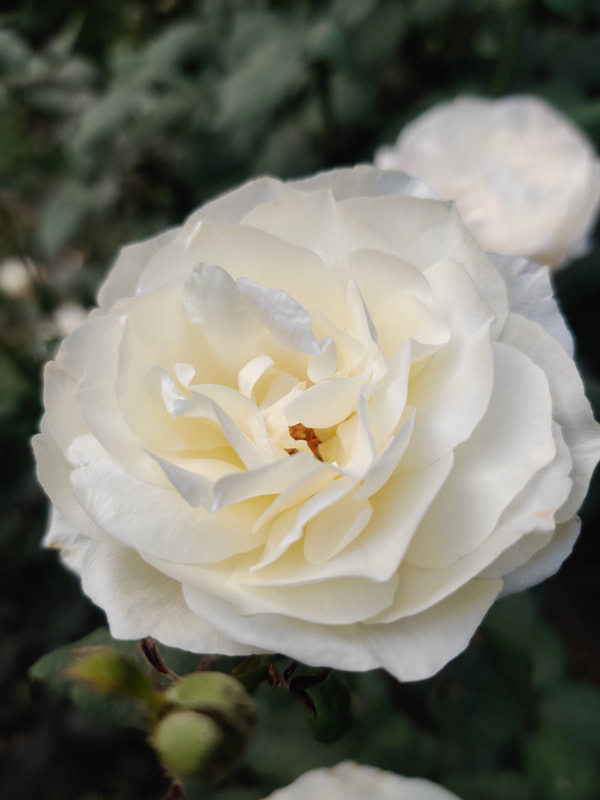
​White rose of York (Rosa × alba) 

Picture
Image by Shuttrstock/Ahmed Noor Khan
Your browser does not support viewing this document. Click here to download the document.

​Violet  (Viola odorata)

While the aroma of violets is said to be perdominantily of the iones α-ionone and β-ionone, the gas chromatography work by other has provided mixed results with little to no conclusive overlap to report.

Studies
Wikipedia contributors. (2023, April 16). Ionone. In Wikipedia, The Free Encyclopedia. Retrieved 18:26, December 7, 2023, from https://en.wikipedia.org/w/index.php?title=Ionone&oldid=1150119152

Orchard, A.; Moosa, T.; Motala, N.; Kamatou, G.; Viljoen, A.; Vuuren, S.v. Commercially Available Viola odorata Oil, Chemical Variability and Antimicrobial Activity. Molecules 2023, 28, 1676. https://doi.org/10.3390/molecules28041676 

Hammami, I., Kamoun, N., & Rebai, A. (2011). Biocontrol of Botrytis cinerea with essential oil and methanol extract of Viola odorata L. flowers. Arch. Appl. Sci. Res, 3(5), 44-51. Retrieved from  www.researchgate.net/profile/Salman-Ahmed-23/post/How_can_I_take_the_essential_oil_of_viola_odorata/attachment/59d61dcd79197b8077979e88/AS%3A273535266689063%401442227298098/ 

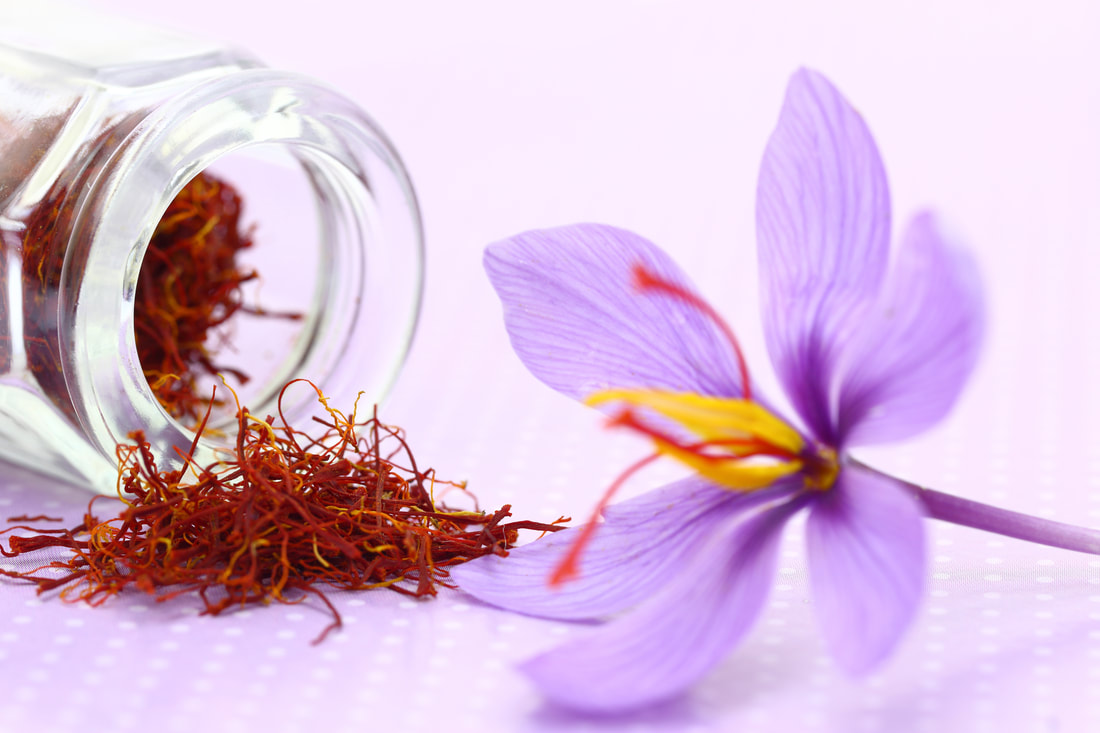
​Saffron (Crocus sativus)

Picture
Image by AdobeStock/Viper AGP
Your browser does not support viewing this document. Click here to download the document.
Other compounds
While safranal is one of the primary compounds giving saffron its “signature” taste, as noted in the above chart, other compounds have similar influences on saffron’s characteristics.  These include:
  •  Picrocrocin , which has a bitter taste and is the precursor to safranal. This compound is produced from picrocrocin during drying via heat and enzymatic action. For this reason, drying is a crucial step in saffron production. 
  • Crocin, crocetin, and to a lesser extent zeaxanthin, lycopene, and other α - and ß-carotenes provide the signature yellow-orange color of saffron 

For more insight
Cid-Pérez, T.S.; Nevárez-Moorillón, G.V.; Ochoa-Velasco, C.E.; Navarro-Cruz, A.R.; Hernández-Carranza, P.; Avila-Sosa, R. The Relation between Drying Conditions and the Development of Volatile Compounds in Saffron (Crocus sativus). Molecules 2021, 26, 6954. https://doi.org/10.3390/molecules26226954

Saffron Quality Influences and Grades
The ratio of style (flower part that joins the stigma to the flower) to red stigma influences quality as its inclusion weakens color and aromas.  

Grades of Iranian saffron:
  • Sargol: Red stigma tips only, strongest grade
  • Pushal or pushali: Red stigmas plus some yellow style, lower strength 
  • Bunch saffron:  Red stigmas plus a large amount of yellow style, bundle like a miniature wheatsheaf.
  • Konge: Yellow style only, claimed to have aroma but with little, if any, coloring potential.

Grades of Spanish saffron 
  • Coupé” The strongest grade and similar to Iranian sargol.
  • Mancha: Similar to Iranian pushal. 
  • "Rio", "standard" and "sierra" in order of further decreasing strength.
  • Spanish-grown La Mancha saffron has PDO protected status.
Studies
Amanpour, A., Sonmezdag, A. S., Kelebek, H., & Selli, S. (2015). GC–MS–olfactometric characterization of the most aroma-active components in a representative aromatic extract from Iranian saffron (Crocus sativus L.). Food chemistry, 182, 251-256. Retrieved from https://www.academia.edu/88278810/GC_MS_olfactometric_characterization_of_the_most_aroma_active_components_in_a_representative_aromatic_extract_from_Iranian_saffron_Crocus_sativus_L_

Chen, D., Xing, B., Yi, H., Li, Y., Zheng, B., Wang, Y., & Shao, Q. (2020). Effects of different drying methods on appearance, microstructure, bioactive compounds and aroma compounds of saffron (Crocus sativus L.). LWT, 120, 108913. https://www.researchgate.net/publication/337688708_Effects_of_different_drying_methods_on_appearance_microstructure_bioactive_compounds_and_aroma_compounds_of_saffron_Crocus_sativus_L 
​
Cerdá-Bernad, D.; Clemente-Villalba, J.; Valero-Cases, E.; Pastor, J.-J.; Frutos, M.-J. Novel Insight into the Volatile Profile and Antioxidant Properties of Crocus sativus L. Flowers. Antioxidants 2022, 11, 1650. https://doi.org/10.3390/antiox11091650 

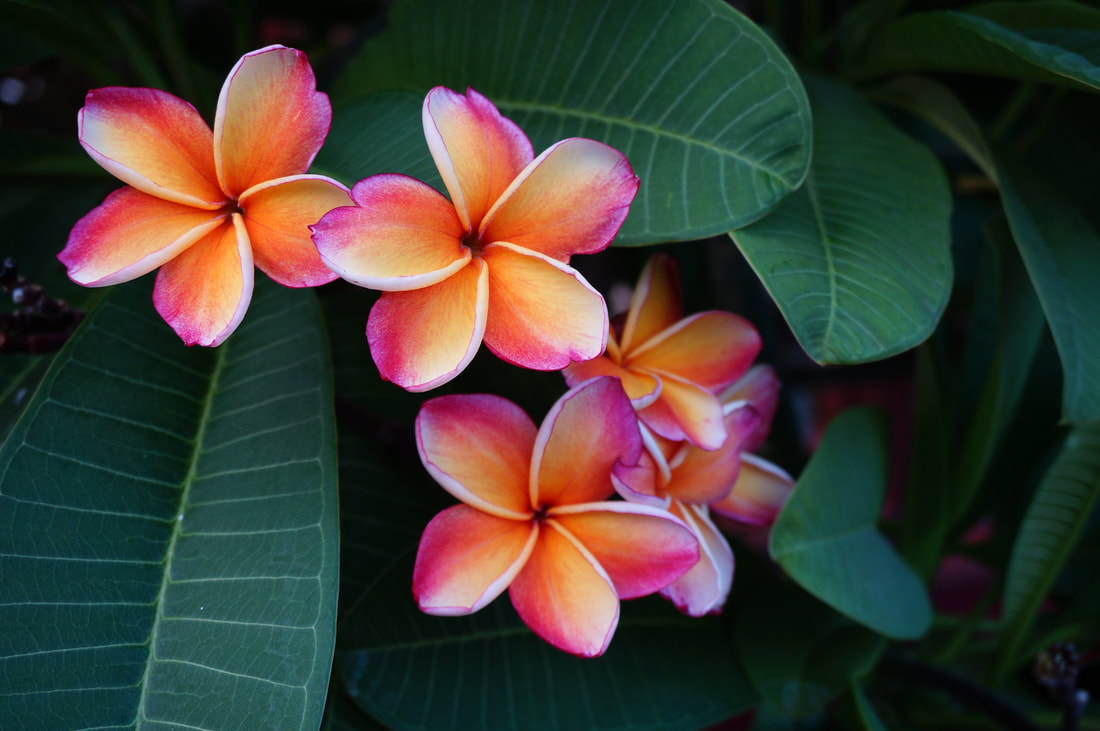
​Plumeria/frangipani  (Plumieria spp).

Picture
Image by Eqroy/AdobeStock
Your browser does not support viewing this document. Click here to download the document.
Other Aroma Compounds

Lawal et al 2014 found high percentages of 
  • Limonene 9.1%
  • Caryophyllene oxide: 7.9%
  • (E,E)-α-Farnesene b: 6.6%
  • (Z,Z)-farnesol: 4.76±0.02
  • trans-α-Bergamotene for 8.0%
  • B·caryophyllene: 3.5%
  • α-Bisabolol: 2.3%
  • Neryl acetate: 3.6%
  • Methyl eugenol: 3.6%
  • β-Pinene: 2.1%

Tohar et al 2006 found in
P. acuminsta (yellow flower) high percentages of:
  • Linoleic acid 16.8%
  • Pentacosane 8.1%

Sahoo et al 2021
  • Germacrene B: 10.30±0.05
  • (Z,E)-Geranyl linalool: 2.39±0.01
  • trans-Sabinene hydrate acetate: 2.33±0.02
Studies
Tohar, N., Awang, K., Mohd, M. A., & Jantan, I. (2006). Chemical composition of the essential oils of four Plumeria species grown on Peninsular Malaysia. Journal of Essential Oil Research, 18(6), 613-617.  Retrieved from:  https://www.researchgate.net/profile/Norsita-Tohar/publication/288672172_Chemical_composition_of_the_essential_oils_of_four_Plumeria_species_grown_on_peninsular_Malaysia/links/5b68207745851584787f2598/Chemical-composition-of-the-essential-oils-of-four-Plumeria-species-grown-on-peninsular-Malaysia.pdf

Sahoo, A., Dash, B., Jena, S., Ray, A., Panda, P. C., & Nayak, S. (2021). Phytochemical composition of flower essential oil of Plumeria alba grown in India. Journal of Essential Oil Bearing Plants, 24(4), 671-676. Retitrieved from: https://www.researchgate.net/profile/Pratap-Panda-2/publication/354315970_Phytochemical_Composition_of_Flower_Essential_Oil_of_Plumeria_alba_Grown_in_India/links/615d45505a481543a887b153/Phytochemical-Composition-of-Flower-Essential-Oil-ofe-Plumeria-alba-Grown-in-India.pdf 

Lawal, O. A., Ogunwande, I. A., & Opoku, A. R. (2014). Constituents of essential oils from the leaf and flower of Plumeria alba grown in Nigeria. Natural Product Communications, 9(11), 1934578X1400901121. https://journals.sagepub.com/doi/abs/10.1177/1934578X1400901121 

For more insight
Criley, R. A. (2005, January). Plumeria in Hawai'i. CTAHR. Retrieved November 24, 2023, from https://www.ctahr.hawaii.edu/oc/freepubs/pdf/of-31.pdf

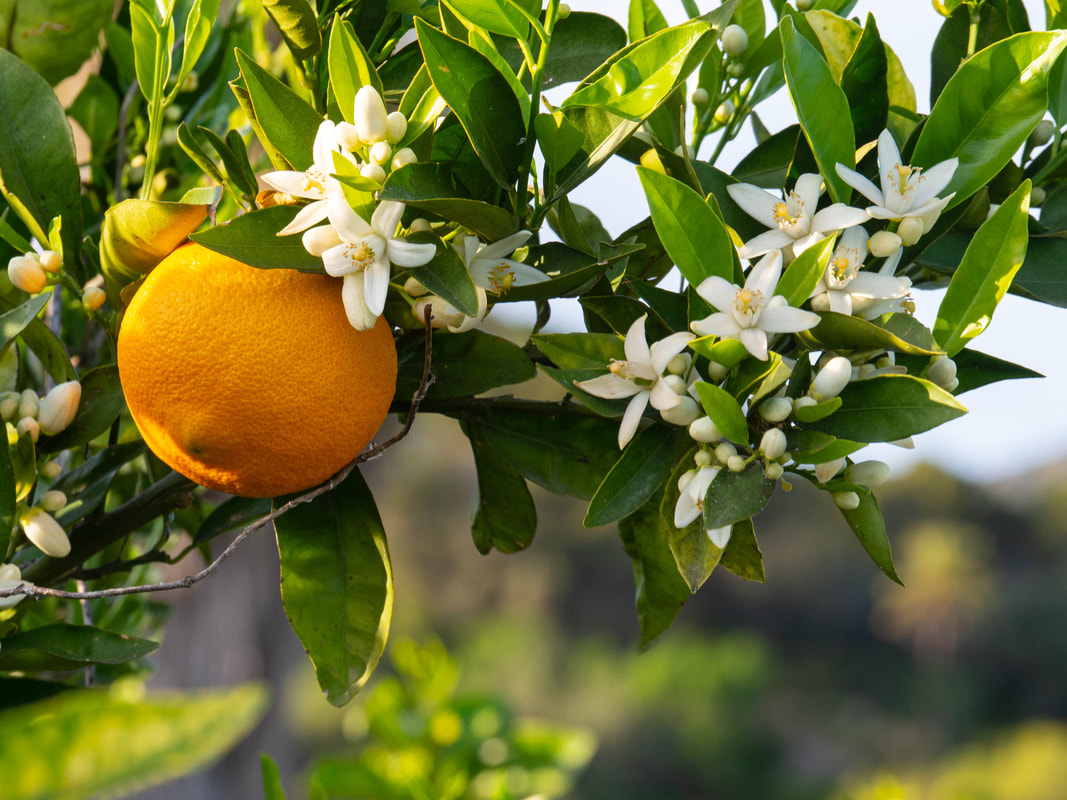
​Orange blossom (Citrus aurantium L.)

Picture
Photo by Iness_la_luz/ Shutterstock
Your browser does not support viewing this document. Click here to download the document.
Studies
​

Jeannot, V., Chahboun, J., Russell, D., & Baret, P. (2005). Quantification and determination of chemical composition of the essential oil extracted from natural orange blossom water (Citrus aurantium L. ssp. aurantium). International Journal of Aromatherapy, 15(2), 94-97. Retrieved from: www.researchgate.net/publication/251629061_Quantification_and_determination_of_chemical_composition_of_the_essential_oil_extracted_from_natural_orange_blossom_water_Citrus_aurantium_L_ssp_aurantium

Sarrou, E.; Chatzopoulou, P.; Dimassi-Theriou, K.; Therios, I. Volatile Constituents and Antioxidant Activity of Peel, Flowers and Leaf Oils of Citrus aurantium L. Growing in Greece. Molecules 2013, 18, 10639-10647. https://doi.org/10.3390/molecules180910639 

Hsouna, A. B., Hamdi, N., Halima, N. B., & Abdelkafi, S. (2013). Characterization of essential oil from Citrus aurantium L. flowers: antimicrobial and antioxidant activities. Journal of Oleo Science, 62(10), 763-772. www.jstage.jst.go.jp/article/jos/62/10/62_763/_article/-char/ja/ 

***Orange blossom essential oils is also known as neroli essential oil

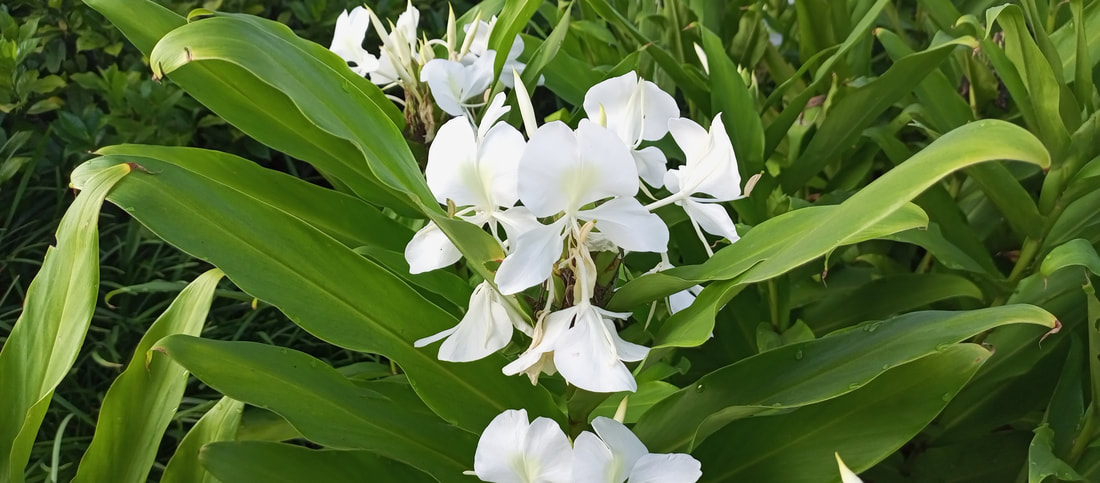
​White Ginger (Hedychium coronarium)

Picture
Photo by Shutterstock/Rickeyudha
Zhou et al. (2021) extracted by HS-SPME H. coronarium grown in a greenhouse environment at South China Agricultural University, Guangzhou, China and found:
  • (E)-β-Ocimene: 35.58 ± 1.71%
  • Linalool: 14.98 ± 0.24%
  • Eucalyptol: 8.36 ± 0.48%
  • Methyl benzoate: 6.92 ± 3.26%
  • 2,4,6-Octatriene, 2,6-dimethyl-, (E,Z): 3.33 ± 0.78%
  • α-Farnesene: 1.28 ± 0.24%
  • Butyl aldoxime, 3-methyl-, syn: 1.63 ± 0.43%
  • β-Myrcene: 1.45 ± 0.12%

Studies
Zhou, Y., Abbas, F., Wang, Z., Yu, Y., Yue, Y., Li, X., ... & Fan, Y. (2021). HS–SPME–GC–MS and electronic nose reveal differences in the volatile profiles of Hedychium flowers. Molecules, 26(17), 5425.
​https://www.mdpi.com/1420-3049/26/17/5425

MENU

HOME

SUBSCRIBE

DIGITAL
​EDITION

BEVERAGE
​GUIDE

NEws and
​Events

ABOUT

CONTACT

©2025 Hawaii Beverage Guide
​Terms & Conditions 
Site Map
  • Subscribe
  • Digital Edition
    • Digital Edition
    • Digital Brand Index
    • Digital Archive
  • Beverage Guide
    • Flavor and Cocktail Construction >
      • A Guide to: Flavor Pairings and Recipe Development
      • A Guide to: Cocktail Construction
      • Flower Aroma Compounds
      • Peanut Aroma Compounds
      • A Guide to: Herb Aroma Compounds
      • A Guide to: Spice Aroma Compounds
      • Fruit Aroma Componds
      • Japanese Flavors
      • A Guide to Indigenous Mesoamerican Cocktail Ingredients
    • Production Fundamentals >
      • A Guide to: Water
      • A Guide to: Alcoholic Fermentation
      • Intro to the Fermentation of Grain
      • A Guide to: Distillation and Stills
      • A Guide to: Filtration
      • A Guide to: Oak Barrels
      • ​A Guide To: Non-Enzymatic ​Browning
      • Introduction to Cacao and Chocolate Making
    • Non-Alcoholic Beverages >
      • Kamaʻāina Beverages >
        • Hawaiian Sun
      • Non-Alcoholic Beer Produced by Restricted Fermentation
      • Non-Alcoholic Beer and Wine Produced by Dealcoholization
      • Hawaii Beverage Guide Perspective on: Non-Alcoholic Beer and Wine Program Integration
      • 2022 No/Low Alcohol Beverage Market Perspective
    • Beer >
      • Kamaʻāina Brewers >
        • Kauai Breweries >
          • Kaua'i Island Brewing Co.
        • Oahu Breweries >
          • Aloha Beer Co
          • Beer Lab
          • Broken Boundary Brewery
          • Hana Koa Brewing Co
          • Honolulu Beerworks
          • Inu Island Ales
          • Lanikai Brewing Co
          • Waikiki Brewing Company
        • Maui Breweries >
          • Maui Brewing Co
          • Maui Seltzer
          • Kohola Brewery
        • Big Island Breweries >
          • Big Island Brewhaus
          • Ola Brewing
          • Hilo Brewing
          • Kona Brewing
      • Athletic Brewing
      • Firestone Walker Brewing Co
      • Golden Road Brewing
      • Stella Artois Summer Solstice Lager
      • San Miguel
    • Cider >
      • Kamaʻāina Ciders >
        • Paradise Ciders
    • Sake
    • Spirits >
      • Kamaʻāina Distillers >
        • Aloha Awamori
        • Hali'imaile Distilling Company
        • Hanalei Spirits
        • Hawaii Sea Spirits
        • Hawaiian Shochu Co
        • Island Distillers
        • Ko Hana Rum
        • Kolani Distillers
        • Koloa Rum >
          • Koloa Cacao Rum
        • Ko'olau Distillery
        • Kuleana Rumworks
        • Kupu Spirits >
          • Kupu Whiskey
        • Royal Hawaiian Spirits
      • Bitters
      • Brandy >
        • Cognac >
          • Martell
        • Spanish Brandy >
          • Emperador >
            • Fundador
      • Gin >
        • Ginebra San Miguel
        • Indoggo Gin
      • Liqueurs and Cordials >
        • ​Destileria Barako: Ube Cream Liqueur
        • Skrewball
        • Chareau
      • Ready Made Cocktails >
        • 10 Barrels Brewing Co.
      • Rum >
        • Copalli Rum
        • Lemon Hart and Son
        • Real McCoy Rum
        • Tanduay Rum >
          • Tanduay: Especia Spiced Rum
      • Shochu
      • Agave Spirits
      • Tequila >
        • Del Maguey
        • Codigo 1530
        • Tequila Comisario
        • El Cristiano
        • Casa Sauza
        • Real Del Valle
        • Tequila Komos
        • El Hempe
      • Bourbon Whiskey >
        • Old Hillside Whiskey
      • Irish Whiskey >
        • Irish Distillers: Midleton Very Rare, Irish Distillers: Redbreast, Spot Whiskey, Jameson
        • Slane Irish Whiskey
      • Vodka >
        • Kai Vodka
        • Haku Vodka
    • Wine >
      • Kamaʻāina Wine Makers >
        • Maui Wine
      • Winemaking >
        • A Guide to Viticulture
        • A Guide to: Wine Prefermentation Practices
        • A Guide to: Wine Microbes
        • A Guide to: Wine Alcoholic Fermentation Physical Environment
        • A Guide to: Wine Fermentation Chemical Environment
        • A Guide to: Wine Bottling
        • A Guide to: Post Fermentation Flavor Adjustments
        • A Guide to: Post Fermentation Process: Stabilization
        • A Guide to: Wine Faults
        • A Guide to: Wine Polyphenols
        • A Guide to: Wine Aroma Compounds: Pt 1
        • A Guide to: Wine Aroma Compounds: Pt 2
        • A Guide to: High Residual Sugar Wine from Dehydrated Grapes
        • Red and White Grape Aroma Compounds
      • Wine Styles >
        • Natural Wine
        • White Wine Styles >
          • Riesling
          • Sauvignon Blanc
        • Rosé
        • Red Wine Styles >
          • Bordeaux Reds
          • Cabernet Sauvignon
          • Gewürztraminer
          • Grenache
          • Malbec
          • Merlot
          • Non-Alcoholic Wine >
            • Fre: Alcohol -Removed Wine
          • Zinfandel
        • Sparkling Wine
  • Business Strategy
    • Restaurant Finance
    • Your Dapper Consulting: Democratization of Venture Capital
    • Marketing for Small Business Pt 1: Analysis
    • Marketing for Small Business Pt 2: Marketing Communications Strategy
    • A Guide to Pricing Strategy
  • News and Events
    • Cheers to Seventy-Three Years
    • Navigating COVID-19
  • About
    • Contact
    • Terms & Conditions