HBG
  • Subscribe
  • Digital Edition
    • Digital Edition
    • Digital Brand Index
    • Digital Archive
  • Beverage Guide
    • Flavor and Cocktail Construction >
      • A Guide to: Flavor Pairings and Recipe Development
      • A Guide to: Cocktail Construction
      • Flower Aroma Compounds
      • Peanut Aroma Compounds
      • A Guide to: Herb Aroma Compounds
      • A Guide to: Spice Aroma Compounds
      • Fruit Aroma Componds
      • Japanese Flavors
      • A Guide to Indigenous Mesoamerican Cocktail Ingredients
    • Production Fundamentals >
      • A Guide to: Water
      • A Guide to: Alcoholic Fermentation
      • Intro to the Fermentation of Grain
      • A Guide to: Distillation and Stills
      • A Guide to: Filtration
      • A Guide to: Oak Barrels
      • ​A Guide To: Non-Enzymatic ​Browning
      • Introduction to Cacao and Chocolate Making
    • Non-Alcoholic Beverages >
      • Kamaʻāina Beverages >
        • Hawaiian Sun
      • Non-Alcoholic Beer Produced by Restricted Fermentation
      • Non-Alcoholic Beer and Wine Produced by Dealcoholization
      • Hawaii Beverage Guide Perspective on: Non-Alcoholic Beer and Wine Program Integration
      • 2022 No/Low Alcohol Beverage Market Perspective
    • Beer >
      • Kamaʻāina Brewers >
        • Kauai Breweries >
          • Kaua'i Island Brewing Co.
        • Oahu Breweries >
          • Aloha Beer Co
          • Beer Lab
          • Broken Boundary Brewery
          • Hana Koa Brewing Co
          • Honolulu Beerworks
          • Inu Island Ales
          • Lanikai Brewing Co
          • Waikiki Brewing Company
        • Maui Breweries >
          • Maui Brewing Co
          • Maui Seltzer
          • Kohola Brewery
        • Big Island Breweries >
          • Big Island Brewhaus
          • Ola Brewing
          • Hilo Brewing
          • Kona Brewing
      • Athletic Brewing
      • Firestone Walker Brewing Co
      • Golden Road Brewing
      • Stella Artois Summer Solstice Lager
      • San Miguel
    • Cider >
      • Kamaʻāina Ciders >
        • Paradise Ciders
    • Sake
    • Spirits >
      • Kamaʻāina Distillers >
        • Aloha Awamori
        • Hali'imaile Distilling Company
        • Hanalei Spirits
        • Hawaii Sea Spirits
        • Hawaiian Shochu Co
        • Island Distillers
        • Ko Hana Rum
        • Kolani Distillers
        • Koloa Rum >
          • Koloa Cacao Rum
        • Ko'olau Distillery
        • Kuleana Rumworks
        • Kupu Spirits >
          • Kupu Whiskey
        • Royal Hawaiian Spirits
      • Bitters
      • Brandy >
        • Cognac >
          • Martell
        • Spanish Brandy >
          • Emperador >
            • Fundador
      • Gin >
        • Ginebra San Miguel
        • Indoggo Gin
      • Liqueurs and Cordials >
        • ​Destileria Barako: Ube Cream Liqueur
        • Skrewball
        • Chareau
      • Ready Made Cocktails >
        • 10 Barrels Brewing Co.
      • Rum >
        • Copalli Rum
        • Lemon Hart and Son
        • Real McCoy Rum
        • Tanduay Rum >
          • Tanduay: Especia Spiced Rum
      • Shochu
      • Agave Spirits
      • Tequila >
        • Del Maguey
        • Codigo 1530
        • Tequila Comisario
        • El Cristiano
        • Casa Sauza
        • Real Del Valle
        • Tequila Komos
        • El Hempe
      • Bourbon Whiskey >
        • Old Hillside Whiskey
      • Irish Whiskey >
        • Irish Distillers: Midleton Very Rare, Irish Distillers: Redbreast, Spot Whiskey, Jameson
        • Slane Irish Whiskey
      • Vodka >
        • Kai Vodka
        • Haku Vodka
    • Wine >
      • Kamaʻāina Wine Makers >
        • Maui Wine
      • Winemaking >
        • A Guide to Viticulture
        • A Guide to: Wine Prefermentation Practices
        • A Guide to: Wine Microbes
        • A Guide to: Wine Alcoholic Fermentation Physical Environment
        • A Guide to: Wine Fermentation Chemical Environment
        • A Guide to: Wine Bottling
        • A Guide to: Post Fermentation Flavor Adjustments
        • A Guide to: Post Fermentation Process: Stabilization
        • A Guide to: Wine Faults
        • A Guide to: Wine Polyphenols
        • A Guide to: Wine Aroma Compounds: Pt 1
        • A Guide to: Wine Aroma Compounds: Pt 2
        • A Guide to: High Residual Sugar Wine from Dehydrated Grapes
        • Red and White Grape Aroma Compounds
      • Wine Styles >
        • Natural Wine
        • White Wine Styles >
          • Riesling
          • Sauvignon Blanc
        • Rosé
        • Red Wine Styles >
          • Bordeaux Reds
          • Cabernet Sauvignon
          • Gewürztraminer
          • Grenache
          • Malbec
          • Merlot
          • Non-Alcoholic Wine >
            • Fre: Alcohol -Removed Wine
          • Zinfandel
        • Sparkling Wine
  • Business Strategy
    • Restaurant Finance
    • Your Dapper Consulting: Democratization of Venture Capital
    • Marketing for Small Business Pt 1: Analysis
    • Marketing for Small Business Pt 2: Marketing Communications Strategy
    • A Guide to Pricing Strategy
  • News and Events
    • Cheers to Seventy-Three Years
    • Navigating COVID-19
  • About
    • Contact
    • Terms & Conditions

Cider

History/TTB Definition
Cider at its core is wine made from fruit other than grapes.  This allows it to be a very diverse category.

According to the Alcohol Tobacco Tax Bureau, as of January 1, 2017, the "hard cider" applies to wine that:
  • Contains no more than 0.64 gram of carbon dioxide per 100 milliliters;
  • Is derived primarily from apples or pears, or from apple juice concentrate or pear juice concentrate and water;
  • Contains no fruit product or fruit flavoring other than apple or pear; and
  • Contains at least one-half of 1 percent and less than 8.5 percent alcohol by volume.
  • Ingredients and Production Process
  • Standard Cider Styles
  • Specialty Cider Styles
<
>

Ingredients

  • Fruit
    • Base Ingredients 
      • Apples
        • Apples or Apple Juice Concentrate
      • Pears
        • Pears or Pear Juice concentrate
    • Supplementary Ingredients
      • Other Fruit including lilikoi (passion fruit), dragon fruit, mango
  • Yeast

Production Process

  1. Fruit is turned into Juice
  2. Primary Fermentation 
    The apple juice is then put through a low temperature fermentation alongside Saccharomyces Cerevisiae, a principle yeast used to dry down the apple cider profile in order to reduce the strong flavors of the apple while elevating the ethanol level.


  3. Secondary Fermentation
    In the secondary fermentation, additional ingredients, often fruit, are added. During this phase some cidermakers may add additional sugar, while others will not.  Carbonation is then introduced to the ferment.


  4. Bottling
Styles
According to the United States Association of Cider Makers:
https://ciderassociation.org/wp-content/uploads/2018/12/USACM-Style-Guidelines-V2p0-1.pdf

Standard Styles
  • Modern Ciders are made primarily from culinary/table apples. Compared to other Standard styles, these ciders are generally lower in tannins, higher in acidity, and their flavor is bright and refreshing. 
    • Aroma/Flavor- Sweet or low-alcohol ciders may have an apple aroma and flavor. Dry ciders will be more wine-like with some esters. Sugar and acidity will typically combine to give a refreshing character. Acidity is medium to high—refreshing, but must not be harsh or biting. 
    • Appearance- Typically pale to yellow in color. Ranges from brilliant to hazy, depending on the cider maker’s intention. 
    • Varieties- Commonly grown varieties such as McIntosh, Golden Delicious, Jonagold, Granny Smith, Gala and Fuji are often found in Modern Ciders.

  • Heritage Ciders are made primarily from the fresh juice of multi-use or cider-specific bittersweet/ bittersharp apples and heirloom varieties; wild or crab apples are sometimes used for acidity/tannin balance. These ciders will generally be higher in tannins and more complex than Modern Ciders.
    • English Style Ciders
      ​This style encompasses those produced in the West Country of England (notably Somerset and Herefordshire)

    • French Style Ciders
      Northern France (notably Normandy and Brittany), Northern Spain (notably Basque and Asturias regions).

    • German Style Ciders (notably the state of Hesse around the the city of Frankfurt)
    • Regional American ciders and others in which cider-specific apple varieties and production techniques are used. 
      • Aroma/Flavor- Complexity derived from the cider maker’s selection of apples and production techniques. Common attributes include increased astringency, bitterness and complex aromatics. 
      • Appearance- Typically yellow to amber in color. Ranges from brilliant to hazy, depending on the cider maker’s intention. 
      • Varieties- Commonly used varieties include Dabinett (bittersweet), Kingston Black (bittersharp), Roxbury Russet (American heirloom) and Wickson (crab). Modern Perries (singular, perry) are made from culinary/table pears. Compared to Heritage Perry, 
 
  • Modern Perry is generally lower in tannins. 
    • Aroma/Flavor-There is a pear character, but not obviously fruity. No bitterness. Ranges from dry to sweet. 
    • Appearance- Slightly cloudy to clear. Generally pale in color. 
    • Varieties- Common varieties include Bartlett, Comice, Bosc and Anjou.


  • Heritage Perries are made from pear varieties grown specifically for perry production. Compared to Modern Perry, Heritage Perry is generally more complex and higher in tannins. 
    • Aroma/Flavor-There is a pear character, but not obviously fruity. May have slight bitterness. Ranges from dry to sweet depending on varieties used. 
    • Appearance- Slightly cloudy to clear. Generally pale in color. 
    • Varieties- Examples include Gin, Brandy, Barland, Blakeney Red, Thorn, and Moorcroft.
According to the United States Association of Cider Makers:
https://ciderassociation.org/wp-content/uploads/2018/12/USACM-Style-Guidelines-V2p0-1.pdf
  • Fruit Ciders are ciders with non-pome fruits or fruits/fruit juices added either before or after fermentation. 
    • Aroma/Flavor- The added fruit will be prevalent in the overall flavor and aroma. 
    • Appearance- The added fruit will typically influence color and clarity. 
    • Varieties- Apple varieties not specified, often dessert/culinary varieties are used. Examples of fruit additions include cherry, cranberry, blueberry, and peach.


  • Hopped Ciders are simply ciders with added hops. 
    • Aroma/Flavor- The intensity of hop aroma, flavor and bitterness will be determined by hop variety and production process used. 
    • Appearance- Ranges from brilliant to hazy, depending on the cider maker’s intention. 
    • Varieties- Apple varieties not specified; often dessert/culinary varieties are used. Examples of commonly used hops include Citra, Cascade, Galaxy, and Mosaic. 
 
  • Botanical Ciders are ciders made with any combination of herbs, nectars and leaves (including tea) added either before or after fermentation. 
    • Aroma/Flavor- The added ingredient(s) will be prevalent in the overall flavor and aroma. 
    • Appearance- The added ingredients may influence color and clarity. 
    • Varieties- Apple varieties not specified, often dessert/culinary varieties.


  • Rosé Ciders: There are two sub-styles of rosé cider, both of which have a pinkish hue. Heritage Rosé Cider is made with heritage cider apples, including red-fleshed varieties. Modern Rosé Cider is made with culinary apples and most often added adjuncts. A cider may be pinkish in color and the cider maker may choose not to use the Rosé Cider nomenclature, but all Rosé Ciders are pinkish in color. 
    • Heritage Rosé Ciders are pink-hued ciders made with heritage cider apples, including redfleshed varieties, without additional adjunct flavors or colors. 
    • Aroma/Flavor- These ciders will have increased complexity derived from the cider maker’s selection of apples, including ref-fleshed varieties, and production techniques. Can range from dry to sweet. Common attributes include increased astringency, bitterness and complex aromatics. Many red-fleshed apple varieties can possess flavor notes of other red-fleshed fruits including berries, watermelon, and cranberries. 
    • Appearance- Various pink hues possible including pale blush, rose gold, pale orange, and copper. 
    • Varieties- Niedzwetzkyana, Geneva Crab, Redfield, Hidden Rose® are examples of redfleshed varieties used in heritage rosé cider.
 
  • Modern Rosé Ciders are pink in color and are often made with culinary apples and added adjuncts. These ciders would typically fall under one of the other specialty categories (such as Fruit or Botanical), but are often instead marketed as Rosé because of their pink hue. 
  • Aroma/Flavor- Can range from dry to sweet. Typically higher in acid and lacking bitterness. Some adjuncts may add slight tannins (e.g. hibiscus tea, currants). The added ingredient(s) will be prevalent in the overall flavor and aroma. 
  • Appearance- Can range from pale pink to hot pink depending on the adjuncts used to add flavor and color. 
  • Varieties- Modern Rosés are most often made with a Modern Cider base and apple varieties are not specified. 
 
  • Spiced Ciders are ciders made with any combination of spices or spicy vegetables added either before or after fermentation. 
    • Aroma/Flavor-The added ingredient(s) will be prevalent in the overall flavor and aroma. 
    • Appearance- The added spice may influence color and clarity. 
    • Varieties- Apple varieties not specified. Often dessert/culinary varieties used. Examples of additions include ginger, cinnamon, habanero.


  • Wood-Aged Ciders are ciders in which the wood and/or barrel character is a notable part of the overall flavor profile. 
    • Aroma/Flavor- There is a wide continuum of intensity of flavor based on the wood to cider ratio used and the previous use of the wood. 
    • Appearance- Color may be influenced by the wood/barrel character and time in contact with the wood. 
    • Varieties- Apple varieties not specified.


  • Sour Ciders are made intentionally sour using non-standard yeasts and bacterial fermentation.
    • Aroma/Flavor- A sour cider will typically have relatively high levels of a variety of acids not normally present in apples. Predominant among them are acetic and lactic acids. 
    • Appearance- A sour cider is usually an unfiltered cider that is naturally conditioned, so they range from clear to cloudy in appearance. 
    • Varieties- Apple varieties not specified; botanicals and other fruit are commonly added.


  • Ice Ciders are made by concentrating apple juice before fermentation, either by freezing the fruit before pressing, or by freezing juice and then drawing off the sugar and acid-rich concentrate as it thaws. Ice Cider can be made using artificial refrigeration, although only those ciders made by natural freezing outdoors may be labeled ‘Ice Cider’ per the TTB (it is the only TTB-regulated cider style name). Typically, the fermentation is stopped or is arrested before the cider reaches dryness to retain a significant amount of residual sugar. Aroma / Flavor- Intensely flavored, with pome fruit and tropical fruit flavors and aromas prevalent. There must be enough acidity to prevent the flavor from being cloying.. Mouthfeel is smooth and full bodied. May be very slightly tannic (astringent and/or bitter). Appearance- Brilliant. Color is deeper than a Standard cider, from gold to dark amber. High viscosity. Varieties- Apple varieties not specified.


  • New England Style Cider are made by chaptalization with additional sugars and typically fermented to an alcohol range of 7 to 13% by volume. Under some circumstances they are labeled as Apple Wine per TTB regulations. Raisins are commonly added. These ciders are still or carbonated and often barrel-aged. It is thought that this style of cider was produced in Colonial America. 
    • Aroma/Flavor- The added sugars and raisins will be prevalent in the overall flavor. The addition of raisins may add tannins. Notes of caramel, spices and barrel impressions can exist. 
    • Appearance- The added sugars and raisins may influence color and clarity. May range from dark honey to deep amber. 
    • Variety- Apple varieties not specified


  • Specialty Cider and Perry is an open-ended category for cider or perry with added ingredients or special processes that do not fit an existing category. Aroma/Flavor, appearance and varieties may vary widely.

Professional Certifications and Programs

American Cider Association
ciderassociation.org/

Certified Cider Professional Program
​https://ciderassociation.org/certification/
Cider Available for Sale in Hawaii

Featured Brands

CATEGORY REVIEW: SWEET SPOT FOR CIDER

10/29/2020

1 Comment

 
Picture
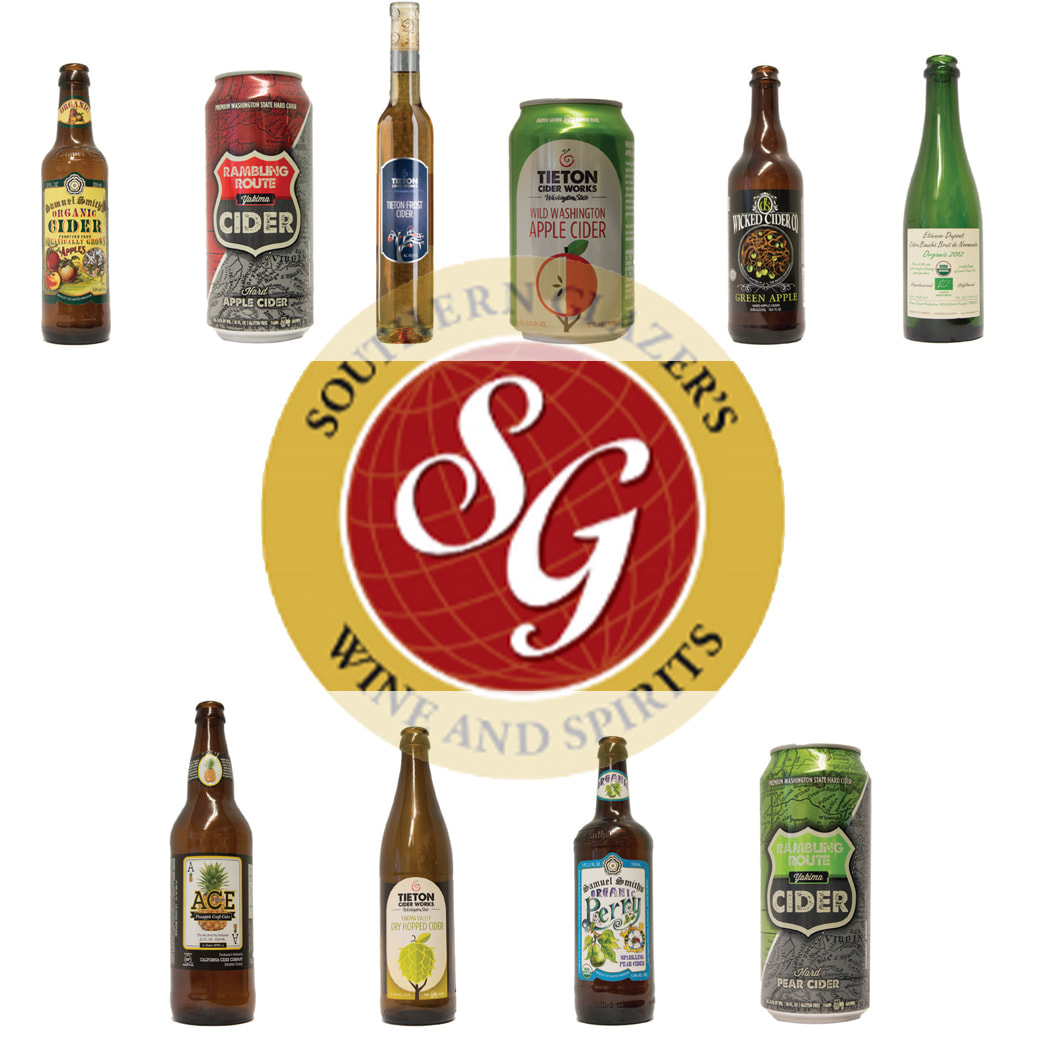
To better understand the ciders available in the Hawaii Market, Hawaii Beverage Guide was guided through a cider tasting by Southern Wine and Spirits’ Dave Powers. 

By Chef Jamal Lahiani
Given the recent boom in craft breweries throughout the United States and brewers’ willingness to innovate, it has been an interesting time for craft beer. Unbeknownst to many, this is also an interesting time for cider. Whereas beers like IPA's may be challenging due to their elevated ABV and formidable bitterness, the challenge for cider may lie in its perceived sweetness and traditionally low ABV%.  

SWEET SPOT FOR CIDER
Ciders can be categorized under four headings: apple only, pear only, pear with or without an apple base, and apple with flavored fruit added in a secondary fermentation process. Cider at its purest has two ingredients: Apple and yeast.  To produce cider, direct fermentation is implemented in a process akin to wine making.  This means terroir.  With ciders continental history and producer advancement via globalist society, we have Americans doing French style, British doing American, and well, French doing French.  These multitude of styles provide options of interest for producers, buyers, and consumers that can extend into a discussions of single origins and blends.  
Picture
Multi varietal ciders
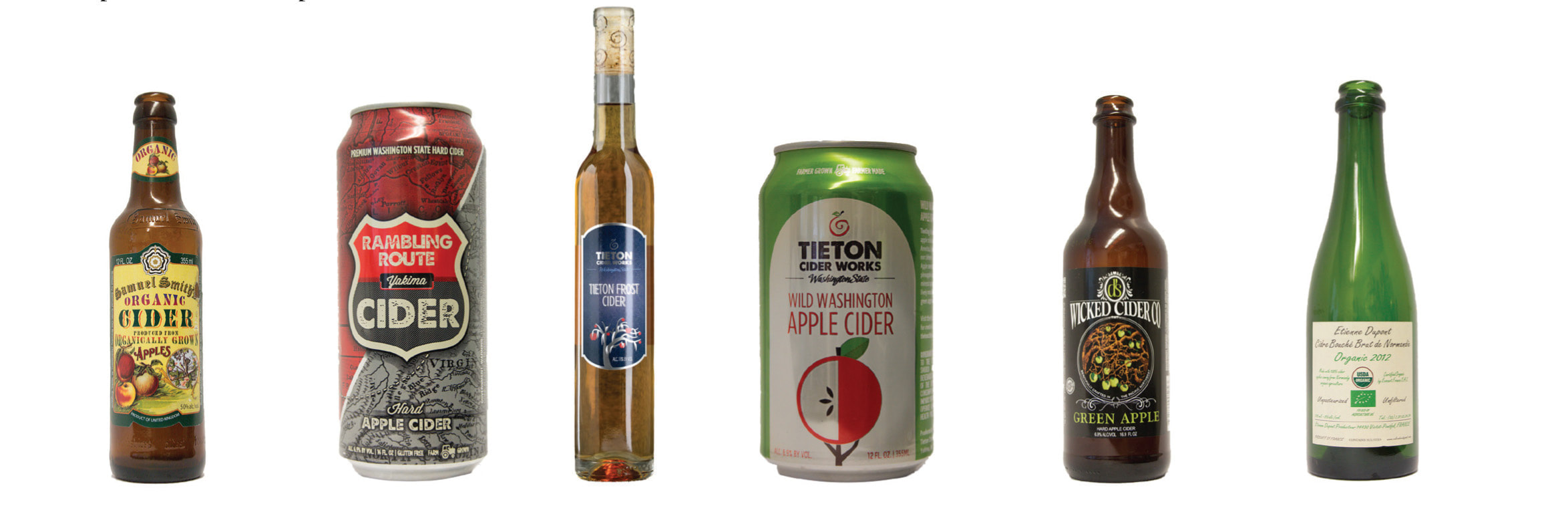
First up, Organic Apple Cider from Samuel Smith's. This cider was anything but dry. Its crisp bite carried a British sense of pure simplicity. Once the first bottle was set aside, our cider guide excitedly opened our second example of apple purity - a three-ingredient apple blend from Washington. He spoke of admiration for this Rambling Route Red from Washington’s Tieton Cider Works, an elegant liquid that was more French than American and made with champagne yeast and apple. It drinks just as well served in two tall flutes as it does in its ironic tallboy can. In flavor it is reminiscent to dry white wine at the moment that you bite into an apple after a sip of sauvignon blanc and right before you reach for a bite of cheese. This offering from Tieton Ciderworks should come as no surprise, as Craig and Sharon Campbell’s Harmony Orchards has been growing apples since the 1920's.  Another offering we sampled was the chic and deeply golden Tieton Frost which contained three apple varieties reminiscent of a sauternes. This mix of Winter Banana apples, Jonagolds, and Pinova’s are as intentional as any blended can hope to be. The affordability vs. quality of Tieton remained my favorite until the not bitter end.

 
Single Varietal Ciders
As cidermaking’s similarities to winemaking continued to reoccur, we began to wonder if there were parallels between blends utilized in continental wine making versus new world single varietals.  Just then, in a sea of blends, bobbed a lone Green Apple from D's Wicked. This cider was a welcomed 6.9% ABV, dry and food friendly, liquid lunch. For tasting notes, someone from the group suggested notes of brie rind or barnyard then another offered up, "cave-aged, bandaged wrapped, cheddar". Understandably, whenever band-aids find their way into a tasting reference, it may be the point of no return.  However, for some, there is intrigue to live yeast developing from the proverbial rotten apple which “spoils the barrel” due to the funky flavors. In the wine world, this is similar to produced like that of a Brettanomyces impacted old world wine. For these people, something like Etienne Dupont from Normandie can hang out in the cellar from four to eight years where it would “be at home” being paired with a bandaged musty cheese. Whether or not the buyer is willing cellar this bottle, this cider bouche brut can emerge into wine bars and discerning dining rooms and be right at home with cheese courses and thoughtful appetizers.  ​
​
Picture
Flavored Ciders
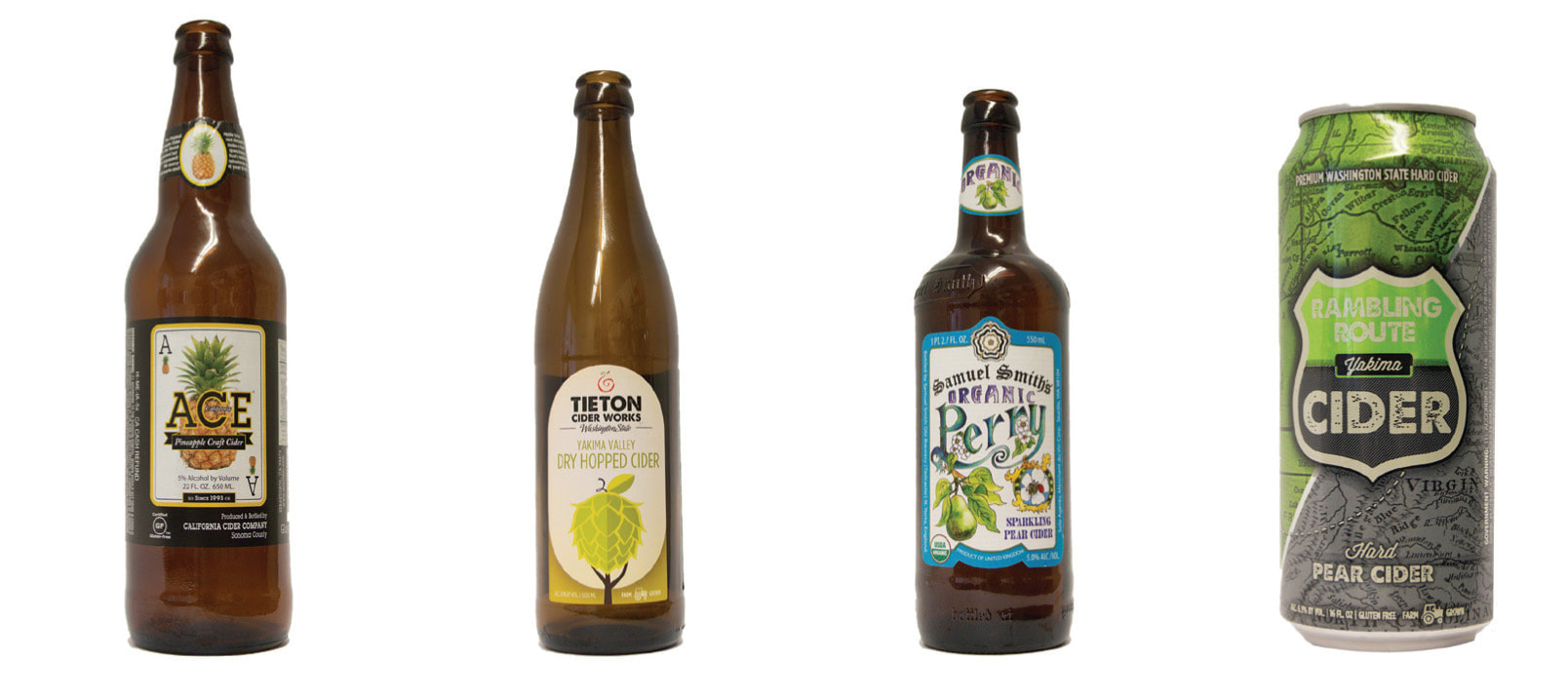
Ace Pear, Pineapple, or Blood Orange is a good bet alike for a beerhall or sitting tall on the drink menu of a trusted restaurant. This cider from Sebastopol, California is popular and delicious by the glass or as a cocktail ingredient.  
 
The Tieton Cider Works Dry-Hopped Cider has the potential to catch a drinker off guard at first sip due to its nature of beer meets cider.  This cider fits in at a beer-centric venue but could have a hard time finding a home elsewhere as hops are not everyone’s cup of tea. However due to the attention to balance between apple’s sweetness and the aroma from the hops (dry hopping minimizes bitterness), it would be fun to include this one on the lineup of a cider vs. beer dinner.

Bobbing for Pears
Pear in no way is under the shade of the apple tree. The first time we came across Sir Perry, containing 100% pear, was a cider epiphany. This is unlike pear flavored ciders which have an apple base. The reason perry’s are not as popular to produce is because apple juice is cheaper than pear reducing cost. Sam Smiths Perry was sparkling and very fizzy, with a nose of bubble gum and pure pear on the tongue. 
 
HBG Prospective 
All things considered, whether it be storage space or taps available to dedicate to one or more ciders, bringing in units of the well-known best sellers or the more obscure lower allocation. as only a Etienne Dupont from Normandie for example needs to be picked up by the venues that can really charge what this is worth -.
 
Cider occupies a limbo. Not beer, nor wine it’s a rare breed as a mediator able to maneuver cross categories in so many ways. Buyers often decide to bring in standard or experimental stock based on one's own tastes and instincts so long as they fulfil an active role.  Diligent buyers should track sales to know when to hold or fold within any market niche.  If you don’t have space on tap there are many reliable styles and costs in the cider options that can fit your niche. 
 
Chef’s Tip
Let’s afford ourselves some cider stock that we personally enjoy, and if we find ourselves with any left over I’d recommend running a kitchen special sauced by a gastrique - a savory reduction made of a vinegar caramel, in this case apple.
1 Comment
Portsmouth Dogging link
10/28/2024 05:01:02 pm

Very niice blog you have here

Reply


Leave a Reply.

    Author

    Write something about yourself. No need to be fancy, just an overview.

    Archives

    October 2020

    Categories

    All

    RSS Feed

MENU

HOME

SUBSCRIBE

DIGITAL
​EDITION

BEVERAGE
​GUIDE

NEws and
​Events

ABOUT

CONTACT

©2025 Hawaii Beverage Guide
​Terms & Conditions 
Site Map
  • Subscribe
  • Digital Edition
    • Digital Edition
    • Digital Brand Index
    • Digital Archive
  • Beverage Guide
    • Flavor and Cocktail Construction >
      • A Guide to: Flavor Pairings and Recipe Development
      • A Guide to: Cocktail Construction
      • Flower Aroma Compounds
      • Peanut Aroma Compounds
      • A Guide to: Herb Aroma Compounds
      • A Guide to: Spice Aroma Compounds
      • Fruit Aroma Componds
      • Japanese Flavors
      • A Guide to Indigenous Mesoamerican Cocktail Ingredients
    • Production Fundamentals >
      • A Guide to: Water
      • A Guide to: Alcoholic Fermentation
      • Intro to the Fermentation of Grain
      • A Guide to: Distillation and Stills
      • A Guide to: Filtration
      • A Guide to: Oak Barrels
      • ​A Guide To: Non-Enzymatic ​Browning
      • Introduction to Cacao and Chocolate Making
    • Non-Alcoholic Beverages >
      • Kamaʻāina Beverages >
        • Hawaiian Sun
      • Non-Alcoholic Beer Produced by Restricted Fermentation
      • Non-Alcoholic Beer and Wine Produced by Dealcoholization
      • Hawaii Beverage Guide Perspective on: Non-Alcoholic Beer and Wine Program Integration
      • 2022 No/Low Alcohol Beverage Market Perspective
    • Beer >
      • Kamaʻāina Brewers >
        • Kauai Breweries >
          • Kaua'i Island Brewing Co.
        • Oahu Breweries >
          • Aloha Beer Co
          • Beer Lab
          • Broken Boundary Brewery
          • Hana Koa Brewing Co
          • Honolulu Beerworks
          • Inu Island Ales
          • Lanikai Brewing Co
          • Waikiki Brewing Company
        • Maui Breweries >
          • Maui Brewing Co
          • Maui Seltzer
          • Kohola Brewery
        • Big Island Breweries >
          • Big Island Brewhaus
          • Ola Brewing
          • Hilo Brewing
          • Kona Brewing
      • Athletic Brewing
      • Firestone Walker Brewing Co
      • Golden Road Brewing
      • Stella Artois Summer Solstice Lager
      • San Miguel
    • Cider >
      • Kamaʻāina Ciders >
        • Paradise Ciders
    • Sake
    • Spirits >
      • Kamaʻāina Distillers >
        • Aloha Awamori
        • Hali'imaile Distilling Company
        • Hanalei Spirits
        • Hawaii Sea Spirits
        • Hawaiian Shochu Co
        • Island Distillers
        • Ko Hana Rum
        • Kolani Distillers
        • Koloa Rum >
          • Koloa Cacao Rum
        • Ko'olau Distillery
        • Kuleana Rumworks
        • Kupu Spirits >
          • Kupu Whiskey
        • Royal Hawaiian Spirits
      • Bitters
      • Brandy >
        • Cognac >
          • Martell
        • Spanish Brandy >
          • Emperador >
            • Fundador
      • Gin >
        • Ginebra San Miguel
        • Indoggo Gin
      • Liqueurs and Cordials >
        • ​Destileria Barako: Ube Cream Liqueur
        • Skrewball
        • Chareau
      • Ready Made Cocktails >
        • 10 Barrels Brewing Co.
      • Rum >
        • Copalli Rum
        • Lemon Hart and Son
        • Real McCoy Rum
        • Tanduay Rum >
          • Tanduay: Especia Spiced Rum
      • Shochu
      • Agave Spirits
      • Tequila >
        • Del Maguey
        • Codigo 1530
        • Tequila Comisario
        • El Cristiano
        • Casa Sauza
        • Real Del Valle
        • Tequila Komos
        • El Hempe
      • Bourbon Whiskey >
        • Old Hillside Whiskey
      • Irish Whiskey >
        • Irish Distillers: Midleton Very Rare, Irish Distillers: Redbreast, Spot Whiskey, Jameson
        • Slane Irish Whiskey
      • Vodka >
        • Kai Vodka
        • Haku Vodka
    • Wine >
      • Kamaʻāina Wine Makers >
        • Maui Wine
      • Winemaking >
        • A Guide to Viticulture
        • A Guide to: Wine Prefermentation Practices
        • A Guide to: Wine Microbes
        • A Guide to: Wine Alcoholic Fermentation Physical Environment
        • A Guide to: Wine Fermentation Chemical Environment
        • A Guide to: Wine Bottling
        • A Guide to: Post Fermentation Flavor Adjustments
        • A Guide to: Post Fermentation Process: Stabilization
        • A Guide to: Wine Faults
        • A Guide to: Wine Polyphenols
        • A Guide to: Wine Aroma Compounds: Pt 1
        • A Guide to: Wine Aroma Compounds: Pt 2
        • A Guide to: High Residual Sugar Wine from Dehydrated Grapes
        • Red and White Grape Aroma Compounds
      • Wine Styles >
        • Natural Wine
        • White Wine Styles >
          • Riesling
          • Sauvignon Blanc
        • Rosé
        • Red Wine Styles >
          • Bordeaux Reds
          • Cabernet Sauvignon
          • Gewürztraminer
          • Grenache
          • Malbec
          • Merlot
          • Non-Alcoholic Wine >
            • Fre: Alcohol -Removed Wine
          • Zinfandel
        • Sparkling Wine
  • Business Strategy
    • Restaurant Finance
    • Your Dapper Consulting: Democratization of Venture Capital
    • Marketing for Small Business Pt 1: Analysis
    • Marketing for Small Business Pt 2: Marketing Communications Strategy
    • A Guide to Pricing Strategy
  • News and Events
    • Cheers to Seventy-Three Years
    • Navigating COVID-19
  • About
    • Contact
    • Terms & Conditions